
The Short Answer: Upgrade When Short Fiber Fails in Service
Short fiber parts often pass a lab test and fail in service, because the failure is not a single overload. It is fatigue over many cycles, impact at a weak point, creep under sustained load, or a crack starting at a weld line, a rib root, or a sharp corner. Long fiber changes the mechanism: longer fibers bridge load across a crack, carry load over a longer length, and hold stiffness and impact where short fibers break out of the resin. The upgrade question is therefore not whether long fiber is stronger in general. It is whether the short fiber part fails in a way that longer fibers fix, and whether the part, tool, and joint can take long fiber molding.
The short answer is a failure check, not a grade swap. If the short fiber part meets stiffness, impact, fatigue, and dimensional stability in service, and the failure is a design error, a molding defect, or a wrong resin, changing fiber length alone will not fix it. If the part fails in fatigue, impact, or creep, and the resin family is right, long fiber is a candidate, and the trial must run on the real part, with the real tool and joint, before production is decided.
Why Short Fiber Parts Fail First
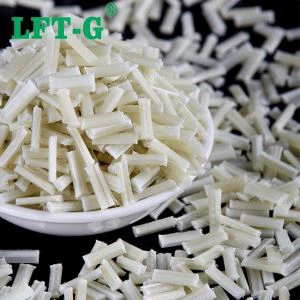
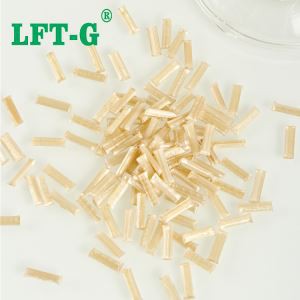
Short fibers are shorter than 3 mm, while long fibers run 6–25 mm, and standard long fiber pellets run 10–12 mm. That length difference decides how load moves. A short fiber ends quickly, so load must jump from fiber to resin to fiber again, and each jump is a weak point. Under repeated load, those weak points open into cracks. Under impact, a short fiber network cannot bridge a crack far enough to stop it. Under sustained load, short fibers hold less against creep, especially when heat or moisture is present.
Geometry makes the difference worse. A short fiber part shaped for metal, or for a stiffer resin, can hide the failure until service: thin walls, sharp corners, weld lines, and bolted joints holding preload. A lab bar has none of those features; it is molded clean, tested dry, at room temperature, for a short time. The part in service has all of them, plus vibration, heat spikes, moisture, and preload, so a bar-strong short fiber part can fail where the load actually goes.
What Longer Fibers Change, and What They Do Not
Longer fibers change how a part carries load, not what resin it is. Long fibers bridge a crack over a longer length, so a crack must break or pull out more fiber before it grows, and they carry load further from a rib, a boss, or a joint, so stress spreads instead of concentrating. They hold stiffness and impact under repeated load better than short fibers in the same resin family, because the network stays connected longer.
Longer fibers do not change resin limits. A PP long fiber part still softens at the PP heat boundary, and a PA66 long fiber part still absorbs moisture and shifts dimensions. Longer fibers do not fix a wrong resin, a wrong wall thickness, a weld line in the worst place, or a joint that cannot hold preload. They also do not fix molding defects: a part molded with a small gate, high shear, or poor process control loses fiber length in molding, and a long fiber pellet that starts long does not guarantee a long fiber part. The upgrade must therefore be screened as a system, resin plus fiber plus tool plus joint, not as a pellet swap.
Short Fiber vs Long Fiber: A Direction Table, Not a Ranking
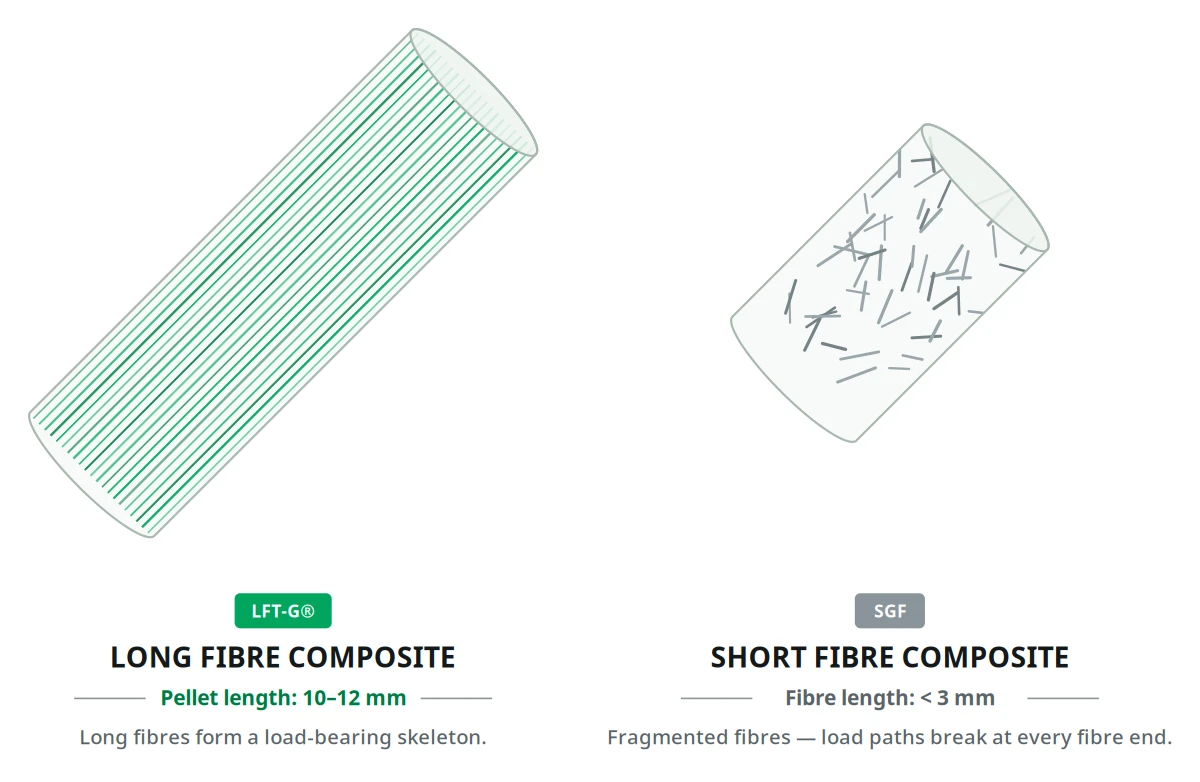
Schematic, not to scale. Long fibers, short fibers, and the same resin family.
The table below compares direction only, in the same resin family. It does not compare a short fiber grade from one resin with a long fiber grade from another, and it gives no percentage improvement, because improvement depends on part, tool, and process.
| Item | Short fiber | Long fiber |
|---|---|---|
| Fiber length | Below 3 mm | 6–25 mm, standard pellets 10–12 mm |
| Load transfer | Short jumps, more weak points | Longer bridges, load spreads further |
| Fatigue and crack growth | Cracks grow sooner at weak points | Cracks must break more fiber to grow |
| Impact | Lower in direction for the same resin family | Higher in direction for the same resin family |
| Stiffness and creep | Baseline for the resin family | Higher stiffness, lower creep in direction |
| Molding demand | Lower shear sensitivity, smaller gates possible | Needs a gate the grade datasheet allows, lower shear |
| Surface and flow | Easier flow, finer detail in direction | Harder flow, more attention to gate, wall, and weld lines |
| Cost as a system | Lower pellet and tool demand in direction | Higher pellet and tool demand, weighed against failure and scrap |
Two readings matter more than the table. First, the upgrade pays only when the failure is fiber-length limited: a part failing in fatigue, impact, or creep, with the right resin, is fiber-length limited, while a part failing because the resin is wrong, the wall is too thin, or the joint cannot hold, is not. Second, upgrade cost is a system cost, not a pellet price: tool change, gate change, drying and molding control, trial, and scrap belong in the same count.
When the Upgrade Fits, and When Short Fiber Is Enough
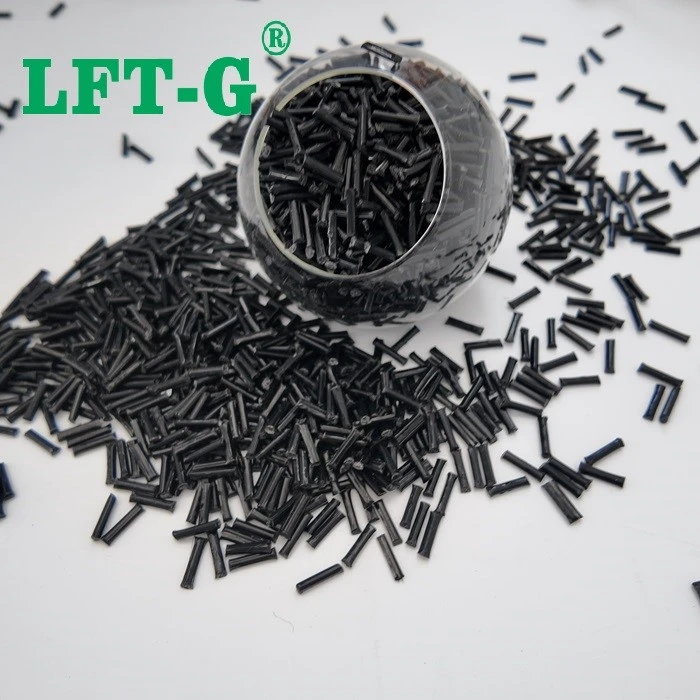
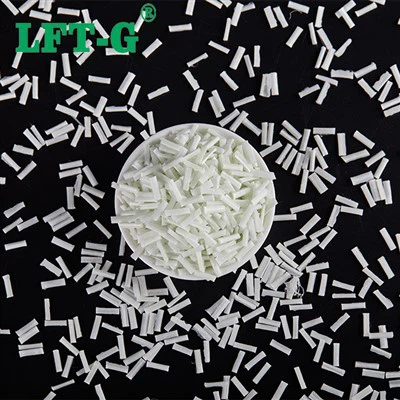
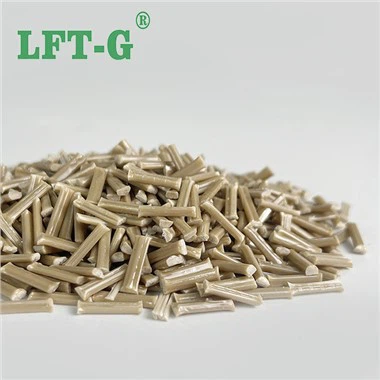
PP LGF40 black pellets.
The upgrade fits a part where short fiber has already shown its limit in service. A part that cracks in fatigue, breaks on impact, creeps out of tolerance, or loses stiffness under sustained load, while the resin family still fits heat, chemical, and environment, is a candidate. Large parts, structural parts, parts with ribs and bosses that carry load, and parts that must survive repeated use are the usual first candidates, and even then the trial must prove the upgrade on that part, not on a bar.
Short fiber is enough when the part already meets its service requirement, when the failure is not fiber-length limited, or when the part cannot take long fiber molding: a small, non-structural part with margin, a part with a small gate that cannot change, a part with fine detail long fiber flow cannot fill, or a part where cost matters more than extra margin. Upgrading a part that already works adds cost, tool risk, and molding demand without fixing a failure.
How to Switch Without Losing the Fiber Advantage
Switching starts with the tool, not the pellet. Gate size is a first check: as a general rule for long fiber pellets, the gate should be at least 3 mm, and the specific grade datasheet sets the real value. For the LGF40 grades named here, the gate is 5–6 mm, and pin-point gates are not used, because a small gate breaks fibers. A short fiber tool that cannot take a gate that large should not switch without a tool change, or the long fiber advantage will be lost in molding.
Drying, melt temperature, mold temperature, and injection pressure follow the grade datasheet for the grade being trialed, not the short fiber window. Screw speed and back pressure must stay low enough to keep fiber length, fiber retention must be checked after molding, and wall, ribs, bosses, weld lines, and joint must suit long fiber flow. A trial changing gate, wall, and joint together proves nothing about any one of them.
How to Trial a Short-to-Long Fiber Upgrade for Your Part
For a part, an upgrade trial follows a fixed sequence, and it comes before production use:
- Send the part application and a product photo, so the load path, failure location, and joint can be seen.
- Send the current short fiber grade and its datasheet, plus the failure: fatigue, impact, creep, or dimensional shift, with service conditions.
- State the resin family, the proposed long fiber grade, and whether gate, wall, and joint can change.
- Run a trial at a fixed tool and process on the real part, tool, and joint, and test it with the same standards as the short fiber baseline, including fatigue, impact, and dimensions where they apply.
- Decide on production only if the trial meets stiffness, impact, fatigue, dimensional stability, and repeatability for that part.
If the trial fails, the answer is not a higher fiber content by guess. Check whether the failure was fiber-length limited, whether the tool kept fiber length, and whether resin, wall, or joint must change first.
FAQ
Is long fiber always stronger than short fiber?
In the same resin family, long fiber holds stiffness, impact, and fatigue better in direction, because longer fibers bridge load further. It does not fix a wrong resin, a wrong wall, or a joint that cannot hold.
Can I drop long fiber pellets into a short fiber tool?
Only if the tool meets the long fiber grade datasheet, including gate size. For the LGF40 grades named here, the gate is 5–6 mm and pin-point gates are not used. A tool that cannot take that gate should change before the trial.
Will long fiber fix a part that cracks at a weld line?
It can help, because longer fibers bridge a crack further, but it does not guarantee a fix. Weld line position, wall, gate, and process must also be checked, and the trial must run on the real part.
Does long fiber cost more as a system?
Pellet and tool demand are higher in direction, but failure, scrap, and warranty belong in the same count. The upgrade pays only when it removes a service failure that short fiber cannot remove.
What should I send to trial a short-to-long fiber upgrade?
Send the part application and a product photo, the current short fiber grade and its datasheet, the failure and service conditions, and whether gate, wall, and joint can change.
Trial a Short-to-Long Fiber Upgrade for Your Part
Send your part application, current short fiber grade datasheet, and the failure you need to fix. LFT-G will review whether longer fibers fix that failure, and what the upgrade trial needs to prove.
Email: candyhu@lfrtplastic.com
WhatsApp: https://wa.me/8613950095707