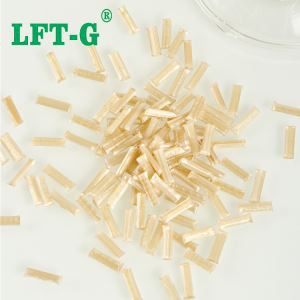

LFT-G® LFT-PP-LGF Composites:
Strength & Lightweight Performance
Unlock superior performance with our advanced LFT-PP-LGF materials. Engineered for demanding applications, these composites offer a high-strength, lightweight, and cost-effective alternative to metals and short-fiber plastics, dramatically improving your product's durability and design freedom.

An Introduction to LFT PP-LGF Materials
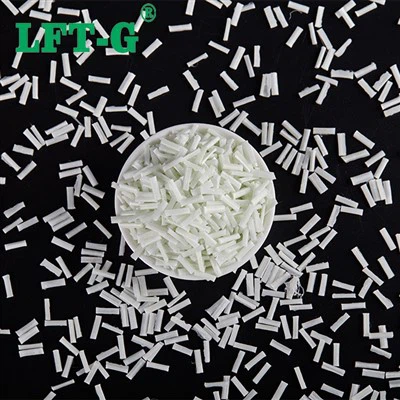
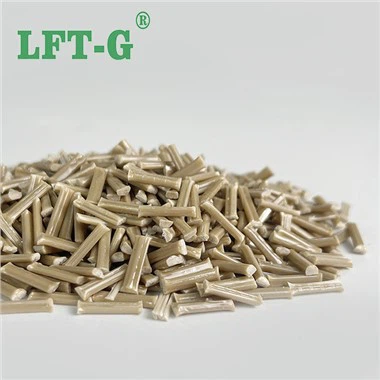
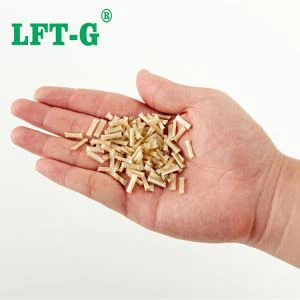
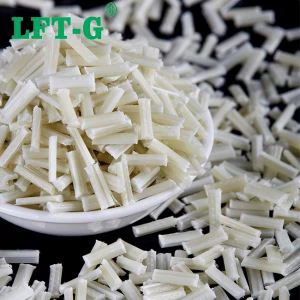
Long Fiber Thermoplastic Polypropylene with Long Glass Fiber (LFT-PP-LGF) is a state-of-the-art composite material from LFT-G®. What is PP LGF? It is fiber reinforced PP polymer that 20-70% long glass fiber filled polypropylene matrix for reinforced performance applied.The LFT-G, long fiber thermoplastic for Granule process technology, produced by pultrusion, a process that fully impregnates continuous glass fibers with a polypropylene (PP) matrix. This creates pellets where the fibers are the same length as the pellet (typically 12mm or 25mm).
During injection molding, these long fibers interlock to form a robust internal "skeletal" network within the final part. This fiber skeleton is the key to its exceptional performance.
Core Features & Advantages:
- High Strength-to-Weight Ratio: Delivers performance comparable to metals like aluminum and magnesium at a fraction of the density.
- Exceptional Impact Resistance: The long fiber network effectively absorbs and distributes impact energy, preventing catastrophic failure.
- Superior Creep & Fatigue Resistance: Maintains structural integrity under constant load and cyclical stress over long periods.
- Excellent Dimensional Stability: Exhibits low warpage and maintains precise tolerances across a wide temperature range.
- Design Freedom: Enables the consolidation of multiple parts into a single, complex component, simplifying assembly and reducing costs.
Technical Specifications & Performance Data
Data-driven decisions are critical. Below is a detailed breakdown of the typical properties of our LFT-PP-LGF materials, benchmarked against traditional alternatives. All our materials are tested according to rigorous ISO and ASTM standards.
Typical Material Properties (Example: LFT-G® LFT-PP-LGF40)
|
Property |
LFT-G® PP LGF20 |
LFT-G® PP LGF30 |
LFT-G® PP LGF40 |
LFT-G® PP LGF50 |
LFT-G® PP LGF60 |
Test Method |
|---|---|---|---|---|---|---|
| Long Glass Fiber | 20% | 30%±2 | 40%±2 | 50%±2 | 60%±2 | ISO 1172 |
| Density(g/cm3) | 1.01 | 1.11 | 1.22 |
1.32 |
1.11 | ASTM D-792 |
|
Tensile Strength(Mpa) |
108 |
119 | 130 |
148 |
155 | ISO 527-2 |
| Tensile Modulus(Mpa) | 4828 | 7268 | 8668 |
11916 |
13987 | ISO 527-2 |
| Flexural Strength(Mpa) | 134 | 148 | 184 |
209 |
218 | ASTM D-790 |
| Flexural Modulus/(Mpa) | 4386 | 5159 | 8105 | 10684 | 12275 | ASTM D-790 |
| Charpy Impact (Notched)/KJ/m2 | 31 | 43 | 50 | 55 | 52 | ISO 179/1eA |
| Heat Deflection Temp (1.8MPa) | 156°C | 159°C | 158°C | 159°C | 159°C | ISO 75-2 |
(Data from www.lfrt-plastic.com lab, for typical data, not be for actual guideline)
Contact With Material Expert For More TDS
How to Select the Right LFT-G® Grade
LFT PP LGF Series
Choosing the correct material grade is crucial for project success.
Use this guide as a starting point, and always consult our technical team for a detailed analysis of your needs.

PP+20%LGF Copo/Homo Polymer
- 1.05g/cm3 low density
- Flexural Modulus: 3-5 GPa (3x stiffer than standard PP).
- Impact Strength: >180 J/m
- HDT>148°C
- Tensile Strength: >100 MPa (High strength-to-weight ratio).

PP+30%LGF Copo/Homo Polymer
- 1.11g/cm3 low density
- Flexural Modulus: 4-6 GPa
- Impact Strength:>32 KJ/m2
- HDT>148°C
- Tensile Strength:120-140 MPa (High strength for metal replacement).
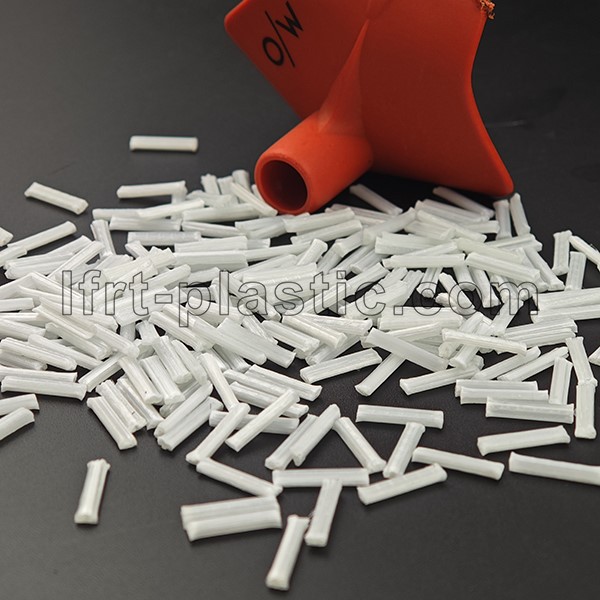
PP+40%LGF Copo/Homo Polymer
- 1.22g/cm3 low density
- Flexural Modulus: 7-9 GPa
- Impact Strength: >38 KJ/m2
- Max Grade>48KJ/m2 for pump body part
- HDT>150°C
- Tensile Strength: 140-160 MPa

PP+50%LGF Copo/Homo Polymer
- 1.32g/cm3 low density
- Flexural Modulus: 9-11 GPa
- Impact Strength: >42 KJ/m2 (Exceptional toughness for Wash Machine Drum structural parts, the best cost-properties effective choice).
- HDT>150°C
- Tensile Strength: 140-160 MPa

PP+60%LGF Copo/Homo Polymer
- 1.49g/cm3 density
- Flexural Modulus: 11-12 GPa
(The peak of pp properties)
- Impact Strength: >48 KJ/m2 (Exceptional toughness for mix pp resin to improve properties to reduce cost)
- HDT>148°C
- Tensile Strength: 150-170 MPa

PP+30%LGF Copo FR V0 Grade Polymer
- 94-V0 @1.5mm Excellent Flame Resistance Properties
- Tensile Modulus: 8-9 GPa
- Flexural Strength:145-159 MPa (High strength-to-weight ratio)
- Impact Strength: >35KJ/m2
- HDT>153°C

PP+40%LGF Homo Heat Resistance Polymer
- Long term heat resistance
(1000 Hours @150°C for automotive engine part)
- Tensile Strength: 130-145 MPa (High strength-to-weight ratio)
- Flexural Modulus:6-8GPa
- Impact Strength: >35KJ/m2
- HDT>153°C

PP+40%LGF Copo UV Resistance Polymer
- Long term UV resistance
for outdoor sport part)
- Tensile Strength: 132-145 MPa (High strength-to-weight ratio)
- Flexural Modulus:6-8GPa
- Impact Strength: >35KJ/m2
- HDT>153°C
- For Maximum Stiffness and Load-Bearing: Higher glass fiber content (40-60%).
- For Unmatched Impact and Toughness: Medium glass fiber content (20-30%).
- For High-Flow and Complex Geometries: Specialty grades with enhanced flow modifiers.
Application Spotlight: Expert Consultations
Our LFT-G® composites are not just materials; they are solutions. Here are dialogues from recent consultations showing how we solve real-world engineering challenges.
 Case Study 1: Automotive Front-End Module
Client Engineer: "Our current front-end module is a heavy, 20-piece steel assembly. It's a bottleneck for production and adds too much weight. We need a radical simplification."
LFT-G® Expert: "This is a classic application for LFT-PP. We can help you design a single, injection-molded part that integrates all mounting points. By using our LFT-PP-LGF40 grade, you'll gain immense stiffness and the impact strength needed for crash performance."
Client Engineer: "A single part? What are the expected results?"
LFT-G® Expert: "You can realistically expect a 30% weight reduction and about a 25% total cost reduction when you factor in part consolidation and faster assembly. We've seen it time and again."
 Case Study 2: Industrial Pump Housing
Client Engineer: "We manufacture industrial pumps, and our cast iron housings are failing prematurely due to chemical corrosion. They're also incredibly heavy, which our field technicians complain about."
LFT-G® Expert: "That's a perfect fit for our chemically-resistant LFT-PP-LGF grades. Polypropylene is inherently resistant to a wide range of chemicals where metals struggle. The long fiber structure will provide the mechanical strength and pressure resistance you need."
Client Engineer: "What about the weight?"
LFT-G® Expert: "You'll see a weight reduction of up to 75% compared to cast iron. This will dramatically simplify logistics and on-site handling for your team, not to mention the extended service life due to zero corrosion."
Frequently Asked Questions (FAQ)
1. What is the primary difference between LFT and SFT composites?
The key difference is fiber length. In LFT, the fibers are significantly longer, forming an internal structural skeleton that provides superior mechanical properties, especially in impact strength, creep, and fatigue resistance. SFT fibers act more as simple reinforcement fillers.
2. Can LFT-G® parts be colored?
Yes. The material can be compounded with pigments to match most color requirements. We offer both standard colors and custom color-matching services.
3. Is LFT-PP-LGF suitable for outdoor applications?
Standard grades are not recommended for prolonged UV exposure. However, we offer UV-stabilized grades that provide excellent long-term weather resistance. Please specify this requirement during your consultation.
Ready to Engineer Your Next Breakthrough with LFT-G®?
Take the next step toward creating lighter, stronger, and more cost-effective products. Our team of engineering experts is ready to help you select the perfect material for your application.