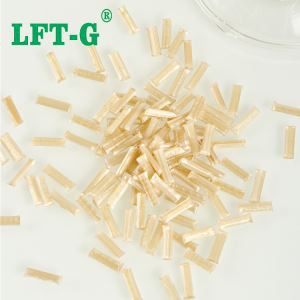

Why Choose Glass Fiber PA12 Composite?
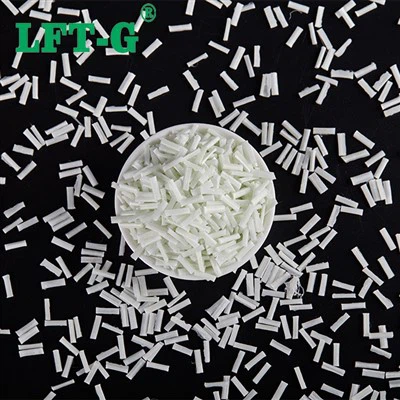
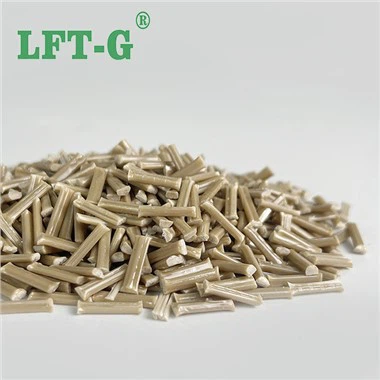
Long glass fiber reinforced nylon 12 (LGF PA12) material is a high-performance engineering plastic, which is made by compounding long glass fibers (typically ranging in length from 5mm to 25mm) with a nylon 12 matrices. This material combines the inherent properties of nylon 12 with the significant advantages of long fiber reinforcement, and is widely used in fields with high requirements for mechanical properties, heat resistance and dimensional stability.

The Benefits of Choosing LGF PA12 Composite
Although the raw material cost of long glass fiber nylon 12 is higher than that of ordinary plastics, its overall cost is lower - due to its high strength, wear resistance and fatigue resistance, the service life of components is significantly extended, reducing the frequency of replacement and maintenance costs. At the same time, lightweight design can reduce transportation and assembly costs. Especially in the automotive and aerospace fields, weight reduction can also lead to improved fuel efficiency or load optimization.
This material conforms to the trend of sustainable development. The nylon 12 matrices is recyclable, and the long glass fiber reinforced structure reduces material usage (compared to metal or pure plastic parts), lowering resource consumption. In terms of design freedom, long glass fiber nylon 12 supports the one-piece molding of complex geometric shapes, reducing the welding, riveting and other processes in traditional metal processing and shortening the product development cycle.
Key Advantage of LGF Nylon 12 Plastic Pellets:
High strength and high rigidity: The addition of long glass fibers significantly enhances the tensile strength, flexural modulus and impact toughness (especially notched impact strength) of nylon 12, which is superior to the short glass fiber reinforced version.
The continuous structure of fibers can more effectively transfer stress and prevent stress concentration.
Improved heat resistance: The heat distortion temperature (HDT) is increased, allowing performance to be maintained at higher temperatures (higher than that of pure nylon 12).
Dimensional stability:Low moisture absorption (nylon 12 itself has a lower moisture absorption rate than nylon 6 or nylon 66), and long fibers further reduce dimensional changes caused by moisture absorption.
It has a lower anisotropic shrinkage rate and is suitable for precision components.
Chemical resistance: It retains the good resistance of nylon 12 to fuel, grease, salt solutions, etc., and is suitable for automotive and chemical applications.
Lightweight: It has a lower density and is lighter than metal materials, making it suitable for weight reduction designs.
A new wave of future development
In the field of high-end engineering plastics, long glass fiber reinforced nylon 12 (LGF PA12) plastic pellet is increasingly becoming the preferred material for engineers. This advanced composite material, through a unique fiber-reinforced technology, significantly enhances the overall performance of the material while maintaining the excellent properties of nylon 12. The three-dimensional network structure of its long glass fibers endows the material with outstanding mechanical strength, excellent impact resistance and superior fatigue resistance, making it particularly suitable for harsh working conditions that bear dynamic loads. Compared with traditional short glass fiber reinforced materials, LGF PA12 exhibits more balanced isotropic performance and more durable dimensional stability, and can maintain precise dimensional tolerances even in a wet and hot environment. Meanwhile, the significantly enhanced heat resistance of the material greatly expands its working temperature range, while its lightweight feature provides an innovative solution for product weight reduction. From automotive power systems to precision electronic components, from industrial transmission parts to aerospace components, LGF PA12, with its outstanding performance combination, is redefining the application boundaries of engineering plastics and providing a more reliable and economical material option for modern industrial design.


Injection molding process
Special screw and mold designs are required to prevent excessive fiber breakage (maintaining fiber length).
It is recommended to adjust the appropriate melt temperature and mold temperature.
The injection molding speed should be moderate. If it is too high, it will cause uneven fiber orientation.
Product knowledge
The common content of glass fiber is 20% to 60%. The higher the content, the stronger the rigidity, but the fluidity decreases. Long glass fiber nylon 12 material has significant advantages in terms of technology, economy and environmental protection, and is one of the key materials promoting the upgrading of the manufacturing industry.