
Understanding LCF PA from Different PA Materials
In traditional material systems, metals (steel, aluminum) have long played the role of structural components, while general-purpose plastics have been more commonly used in appearance parts or low-load scenarios. However, with the development of polymer material technology, especially the combination of the PA (polyamide) system and long-fiber reinforcement technology, engineering plastics have gradually entered the field of structural components, forming an important technical path of "plastic replacing steel".
The core value of LCF PA lies not in the "material itself", but in its threefold roles within the industry:
Structural substitutes
Replace metals to achieve lightweighting
Function integrator
Realizes integration of complex structures through injection molding
Performance customization platform
Realize performance regulation through fiber length, content, and substrate selection
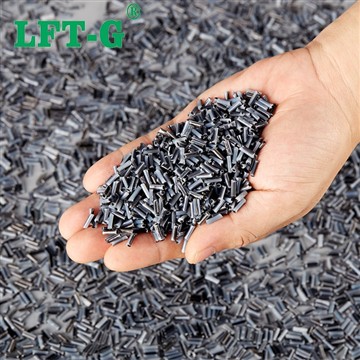
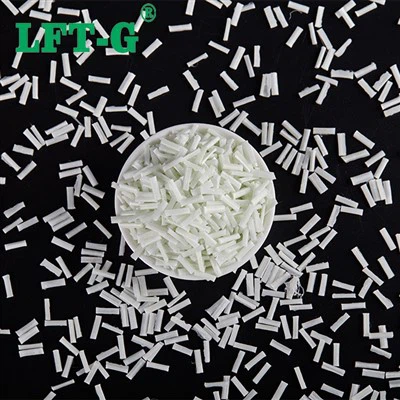
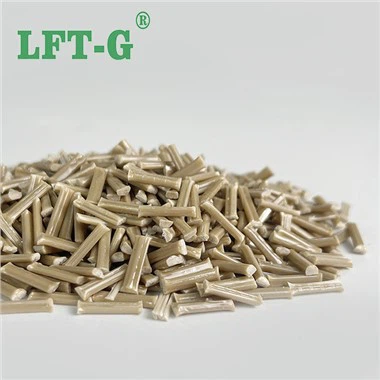
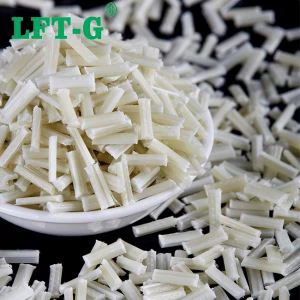
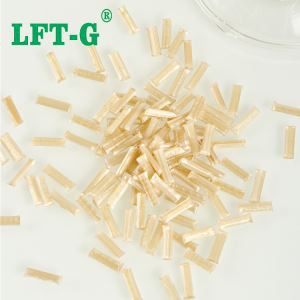
Compared with short-fiber reinforced (SCF), the fiber length of LCF is usually in the range of 5–25 mm (in granular form), and it can still retain a relatively long effective fiber length after injection molding, thereby achieving higher mechanical continuity and energy transfer efficiency.
The "improvement" of PA material by LCF technology
LCF is not a simple enhancement; rather, it involves a change in the hierarchical structure of the material.
1. Mechanical properties: From "point reinforcement" to "continuous reinforcement"
Short-fiber materials: Short fiber length → Load transfer interrupted
Long fiber material: Fibers penetrate → Forms a "microscopic framework structure"
Result:
Tensile strength increased, impact strength increased by several times
2. Anti-fatigue Performance: A Key Indicator for Engineering Structures
In the automotive and mechanical industries, fatigue life is more important than strength.
LCF PA:
Fiber bridging crack propagation
Delaying material failure
3. Dimensional Stability and Warpage Control
The long-fiber structure can reduce:
Uneven shrinkage rate
Warpage deformation
This advantage is particularly evident in large-sized injection molded parts.
4. Anisotropic Optimization
For traditional short fiber materials:
Strength is highly dependent on the flow direction.
For LCF materials:
The performance in all directions is more balanced. Increase the degree of design freedom
Why are "different PA systems suitable for different scenarios"?
In industrial applications, "PA material" is not a single material but rather a multi-branch system. The differences among various types of PA mainly stem from:
Molecular chain structure
Differences in water absorption rate
Crystallinity and crystallization speed
Thermal properties (HDT, melting point)
Friction and wear resistance properties
PA6: The Balancer of Processing Properties and Cost
Industry positioning: General structural materials
Advantages: Good fluidity, low cost, excellent toughness
Disadvantages: High water absorption rate, average dimensional stability
Applying logic, PA6 is more suitable for:
Injection molded parts with complex structures
Components with moderate requirements for dimensional stability
Medium-intensity load scenarios
Typical applications:
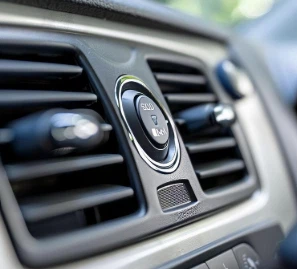
In the automotive industry, PA6 LCF can be used for:
Front-end module brackets
Fan frames
Its core function is: to achieve structural substitution at a lower cost while ensuring impact toughness.
Industry positioning: High-load structural materials
Higher crystallinity → Higher rigidity
Higher melting point (approximately 260℃) → Better heat resistance
Better creep resistance performance
Applying logic, PA66 is suitable for:
High-temperature environments (engine compartments)
Long-term stressed structural components
Scenarios with high requirements for dimensional stability
Typical functions:
Engine mount
Seat frame replaces metal
Core logic: Upgrade from "material strength" to "structural reliability"

PA12: Precise material with low water absorption and stable dimensions

Industry positioning: High stability and environmentally resistant materials
Low water absorption rate (<1%)
Excellent chemical resistance
Outstanding low-temperature performance
Application logic:
Precise structural components
Long-term exposure to humid and hot environment
Fluid systems (fuel, gas)
Typical applications:
Battery structural components for new energy vehicles
Pipeline support system
Core value: Maintain "performance stability" in a complex environment
Different engineering problems solved by LCF PA Material
Automotive Industry: Balancing Lightweighting and Safety
Reduce weight (energy saving / battery life)
Ensure collision safety
Control costs
Industrial equipment: Durability and Reliability
Long-term load
Vibration and Impact
High maintenance cost
Electrical and Electronic Industry: Dimension Stability and Heat Resistance
High-temperature welding (SMT)
Precise dimension control
Electrical insulation
Transportation and Aviation: Adaptation to Extreme Environments
Flame retardant
Low smoke and low toxicity
High intensity
The "synergistic relationship" of different PA materials
In actual engineering projects, it is rare to use only one type of PA material. Instead, a combination system is formed:
PA6 → Complex structure + Cost control
PA66 → High-strength core components
PA12 → Environmental Stabilization Component
The LCF technology is a "unified enhancement platform" that enables these materials to possess the ability for structural applications.
As the industry shifts from "whether to use engineering plastics" to "how to make the best use of engineering plastics", what LCF PA represents is no longer merely the advancement of a single material technology, but rather an upgrade of an entire set of engineering thinking.
The value of different PA materials does not lie in their quality or superiority, but in:
Whether they are suitable for the application environment
Whether they can solve the industry's pain points
Whether to achieve the optimal solution between cost and performance
The value of different PA materials is no longer reflected in simple performance parameter comparisons. Instead, it lies in their "adaptability" in real working conditions - who can maintain stability under multiple variables such as temperature, humidity, load and time, who is closer to the essential requirements of engineering. And the significance of LCF technology lies precisely in this process, where it transforms the originally scattered material properties into structural capabilities that can be designed, predicted and amplified.