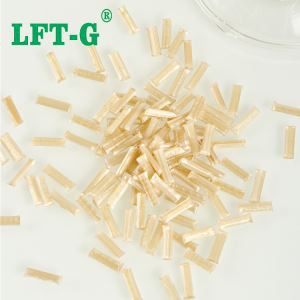

Why Does the Industry Attach Importance to LCF PA12?
As engineering plastics continue to evolve towards higher performance, lightweighting, and system integration, the performance boundaries between traditional short fiber-reinforced materials and general engineering plastics are being constantly crossed.
In particular, in the fields of automobiles, new energy, industrial automation, consumer electronics, and special equipment, more complex requirements have been imposed on materials:
Higher structural stability
Lower density and weight
Better resistance to environmental factors and fatigue
Longer lifecycle reliability
It was under such circumstances that the LCF (Long Carbon Fiber) PA12 system gradually shifted from an "engineering alternative" to a "structural material choice" and has established a clear development path in various industrial applications.
The Industry Standing of PA12 in Engineering Plastics
PA12 (Polyamide 12) has long been regarded as a type of material with extremely balanced comprehensive properties among engineering plastics. Its industry value mainly lies in the following aspects:
1. The inherent stability brought about by the molecular structure
Compared with fatty acid-based polyamides such as PA6 and PA66, PA12 has longer methylene chain segments, which results in the following characteristics:
Lower water absorption rate
Smaller size variations
Higher stability of mechanical performance retention rate
This gives PA12 a distinct advantage in applications where there is frequent exposure to humid conditions and temperature fluctuations.
2. Wide processing window and high forming stability
The melt flow behavior of PA12 is relatively mild, and the molding shrinkage rate is controllable, which is beneficial to:
Thin-walled structure
Complex geometric components
Components with high dimensional accuracy requirements
This is also the key reason why PA12 can remain active in the fields of industrial components and precision structural parts for a long time.
3. The industry application has reached a highly mature stage
In the fields of fuel systems, gas path systems, and connection components, PA12 has established a stable industry application foundation, providing a realistic environment for its integration with advanced enhancement technologies.
A Turning Point in the Industry's Direction
The performance bottlenecks of traditional short-fiber reinforced materials
Although short-fiber-reinforced PA materials have improved in terms of rigidity and strength, they gradually show deficiencies in the following aspects:
The fiber length is limited, and the load transfer efficiency is insufficient
The improvement space for impact performance and fatigue life is limited
Structural components are prone to performance degradation under long-term stress
For an increasing number of load-bearing and semi-structural components, the short-fiber system can no longer meet the requirements.
The core value of LCF technology
The LCF technology achieves a fundamental change in the material performance mechanism by introducing longer and more continuous fiber structures into the material:
Forming a "framework-like" reinforcing structure
Significantly improving the uniformity of stress distribution
Enhancing the fracture behavior and impact resistance
In the PA12 system, the introduction of LCF is no longer merely "performance addition", but rather a reconfiguration of material-level performance.
Analysis of the Advantages of LCF PA12
From the perspective of industry application results, LCF PA12 compound resin mainly demonstrates systematic advantages in the following performance dimensions:
Balancing the enhancement of strength and resilience
Long-term fatigue and creep performance improvement
Dimensional stability and environmental adaptability
The LCF PA12 plastic pellet can enhance rigidity and strength while maintaining or even improving the material's fracture toughness. This is particularly crucial in the following scenarios:
Dynamic load structure
High-frequency vibration environment
Multi-axis stressed components
Compared with traditional reinforced PA materials, LCF PA12 demonstrates the following characteristics during long-term use:
Lower performance degradation rate
More stable deformation control
More reliable life expectancy prediction
This directly promotes the expansion of its application in industrial equipment and new energy systems.
The inherently low water absorption property of PA12, combined with the advantages of the LCF structure, enables the material to:
High humidity
Temperature variation
Contact with chemical media
It can still maintain structural integrity even under complex working conditions.

Application Trends in Different Industries
1. Automotive transportation industry
As the automotive industry continues to promote lightweight and modular design, LCF PA12 is gradually being applied to:
Supporting auxiliary structures
Functional integration components
Replacing some metal and traditional engineering plastic structures
Its value lies not only in weight reduction but also in system performance optimization and integration of component quantities.
2. New Energy and Electrical Systems
In the field of new energy, materials not only need to meet structural requirements but also need to consider
Environmental resistance
Electrical safety
Long-term reliability
The stable performance of LCF PA12 makes it an important candidate material for structural and functional composite components in new energy systems.
3. Industrial Automation and Equipment Manufacturing
The requirements for materials in industrial equipment are more focused on:
Long-term stable operation
Maintenance cost control
Resistance to fatigue and impact: LCF PA12 plays a more "structural support material" role in this field.
Although LCF PA12 shows great potential, the industry still needs to address the following issues:
The difficulty in coordinating material design and processing
The application standards have not yet been fully unified
The threshold for understanding the design and process ends is relatively high
The future development direction will focus on:
More stable control of fiber distribution
Deep coupling of material systems and structural design: customized solutions tailored for specific industries
Viewing LCF PA12 Material
From the perspective of industry development, LCF PA12 is not merely an upgrade of a single material; rather, it represents the evolution of engineering plastics towards structural and system-level materials. What it signifies is the trend of the coordinated development of material science, manufacturing processes, and engineering design.
As the downstream industries increasingly demand the comprehensive performance of materials, LCF PA12 is expected to play a key role in more high-value application scenarios and become an indispensable component in the engineering plastic system.