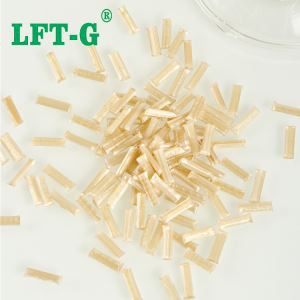

Trend Analysis of LCF TPU Material
Evolution of Composite Materials
In the modern material industrial system, single resin materials have become unable to meet the multi-dimensional demands of high-end manufacturing for "strength - toughness - lightweight - durability". With the continuous upgrading in the automotive industry, electrical and electronic sector, industrial equipment, and consumer goods sectors, high-performance composite materials have gradually become an important solution to replace metals and traditional plastics.

Thermoplastic polyurethane (TPU), as a material that combines the elasticity of rubber with the processing properties of plastics, has long held a significant position in the field of flexible applications. However, traditional TPU has certain limitations in terms of structural strength, dimensional stability, and long-term load-bearing capacity. Therefore, introducing long fiber reinforcement technology to form the LCF TPU system has become one of the important directions for material upgrading.
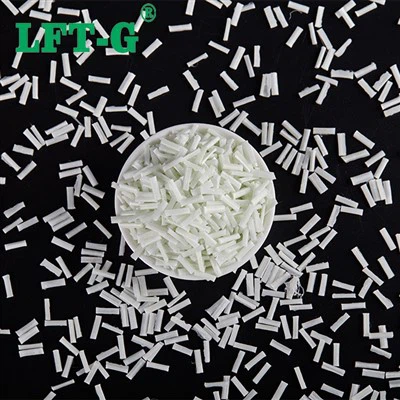
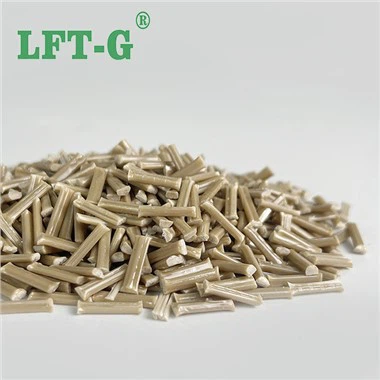
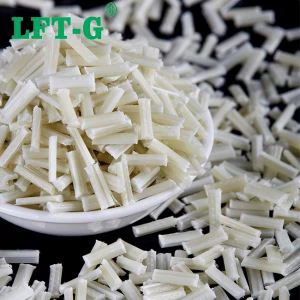
LCF TPU plastic pellet not only extends the performance boundary of TPU, but also constitutes a key branch of "flexible reinforcing materials" in the composite material system. Its position in the industry is shifting from being a "functional material supplement" to a "structurally and functionally integrated material".
The Material System and Technical Content of LCF TPU
The core logic of long fiber reinforcement technology
The fundamental difference between long fiber reinforcement and traditional short fiber reinforcement lies in the length of the fibers and their retention in the matrix. Long fibers typically reach lengths of several millimeters or even longer, and they can still maintain a high aspect ratio during injection molding, thereby forming a more effective stress transfer path.
The core advantages brought by this structure include:
Higher impact strength and fracture toughness
Better fatigue performance
Stronger structural承载 capacity
Better dimensional stability
Introducing long fibers into the TPU system enables the originally flexible material to acquire "structural capabilities", thus entering more advanced application fields.
The Uniqueness of TPU Matrix
TPU is a block copolymer composed of a soft segment (polyol) and a hard segment (isocyanate + chain extender). Its microphase separation structure endows the material with excellent elasticity, wear resistance, and low-temperature resistance.
In the LCF TPU system, the TPU matrix plays the following key roles:
Providing flexibility and energy absorption capability
Providing excellent interfacial wettability
Providing the basis for impact resistance and fatigue resistance
Compared with common reinforcing matrices such as PA and PP, the addition of TPU gives the composite material a significant differentiation advantage in the "rigidity - toughness balance".

The Uniqueness of TPU Matrix
TPU is a block copolymer composed of a soft segment (polyol) and a hard segment (isocyanate + chain extender). Its microphase separation structure endows the material with excellent elasticity, wear resistance, and low-temperature resistance.
In the LCF TPU system, the TPU matrix plays the following key roles:
Providing flexibility and energy absorption capability
Providing excellent interfacial wettability
Providing the basis for impact resistance and fatigue resistance
Compared with common reinforcing matrices such as PA and PP, the addition of TPU gives the composite material a significant differentiation advantage in the "rigidity - toughness balance".
The positioning of LCF TPU in the composite materials industry
The leap from "flexible materials" to "structural materials"
Traditional TPU is mainly used in:
Hoses, films
Footwear materials
Seals
The emergence of LCF TPU has expanded its application boundaries to:
Semi-structural components
Integrated functional and structural parts
Impact-resistant components
This leap has established a unique position for it in the material system:
An "intermediate layer material" between rubber, engineering plastics and composite materials.
Analysis of the industrial chain structure
Upstream: Raw materials and technical barriers
The upstream of LCF TPU includes:
TPU resin suppliers
Long fiber manufacturers
Coupling agent and additive enterprises
The key barriers are:
TPU formula design capability
Long fiber impregnation and dispersion technology
Extrusion and granulation process control
Midstream: Composite Modified Enterprises
Midstream enterprises are mainly responsible for:
Long fiber composite granulation
Performance customization development
Application introduction support
This stage is the core competitive area of the LCF TPU industry, determining whether the material can truly enter the end application.
Downstream: Application Industries
The downstream applications of LCF TPU mainly focus on:
Automotive industry
Industrial equipment Electrical and Electronic
Exercise and Consumer Goods Among them, the automotive industry is the main driving force.
Future Development Prospects
As the manufacturing industry moves towards higher performance and lightweighting, LCF TPU is expected to make breakthroughs in the following areas:
Replace some metal materials
Replace some engineering plastics with enhanced systems
Become the core solution for flexible structural materials
Its industry position will gradually evolve from "sub-specialized materials" to "key materials".
LCF TPU represents an important direction for the integration of thermoplastic elastomers and composite materials. Through the long fiber reinforcement technology, it has achieved the transition from flexible materials to structural materials, and occupies a unique position in the composite material system.
From an industry perspective, LCF TPU is not only the result of material performance improvement, but also a direct response of the manufacturing industry to the demand for "high performance, lightweight, and multi-functionality". In the future, as technology matures and applications expand, its position in the material system will continue to rise and it will play a key role in multiple high-end fields.