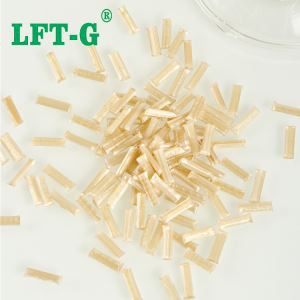

LCF PA6 Industry Value Analysis
For a considerable period of time in the past, PA6 and its reinforcing materials mainly played the role of functional materials, being used to meet basic requirements such as strength, wear resistance, or chemical resistance. However, with the acceleration of the trends towards lightweighting, modularization, and high integration design of complete machine systems, engineering plastics are being pushed towards a new positioning-quasi-structural materials.
The industry significance of LCF PA6 (long carbon fiber reinforced PA6) stems precisely from this role transformation. It no longer merely serves a single performance metric but is instead employed to address a range of comprehensive issues such as structural rigidity, long-term stability, fatigue life, and system-level weight control.
The Material Value of LCF PA6 Material
The influence of long carbon fiber structure on material performance
From the perspective of materials science, the core of LCF PA6 is not "the carbon fibers themselves", but rather the structural retention ability of the long fibers in the matrix.
Compared to short fiber-reinforced PA6, long carbon fibers can still maintain a high effective fiber length after injection molding, thereby forming a more continuous stress transfer path.
This directly affects the material's industry value in the following dimensions:
Structural stiffness retention: Slower performance degradation under long-term loads
Impact resistance and crack propagation resistance: More suitable for load-bearing components
Fatigue life stability: Suitable for repeated loads and vibration environments
These characteristics make LCF PA6 closer to the "structural material logic" in engineering applications rather than the traditional logic of modified plastics.
Analysis of the Industry Compatibility of LCF PA6
Reliability requirements in long-term service environments
In fields such as automobiles, electrical equipment, and industrial machinery, materials often need to perform for an extended period under conditions involving temperature fluctuations, changes in mechanical loads, and the influence of environmental media.
The key point of concern for LCF PA6 in these scenarios lies in its more gradual performance degradation curve, which is particularly important for system-level reliability assessment.
Dimensional Stability and Structural Consistency
For medium- and large-sized injection-molded structural components, dimensional stability directly affects assembly accuracy and system reliability.
Because long carbon fibers form a relatively stable framework structure within the matrix, LCF PA6 compound resin is more conducive to maintaining structural consistency and predictability in complex geometries, reducing design redundancy.
The Manifestation of Value in Application

The trend of structural integration in automobiles and new energy systems
Under the trends of automotive lightweighting and platformization of new energy, more and more secondary structural components that were originally made of metals are being replaced by engineering plastics.
The role that LCF PA6 plays in this process is not merely "replacing metals", but rather, through structural integration, it reduces the number of components and the complexity of assembly.
In battery modules, electric drive system components, and surrounding supporting parts, this material helps engineers achieve overall system optimization while meeting structural requirements.

The long-term value in the field of industrial equipment and automation
In industrial automation, conveying systems and robot structures, the long-term stability of materials and maintenance costs directly affect the total life cycle cost of the equipment.
The industry value of LCF PA6 plastic pellets is reflected in
Reduce the risk of downtime caused by material fatigue
Improve the reliability of the structural components during long-term operation
Support the development of equipment towards the direction of lightweighting and high-speeding.
The Decision-Making Logic of LCF PA6
In engineering practice, LCF PA6 composite is usually not regarded as the "default option" but appears in the material evaluation stage where there are clear requirements for structural performance.
The selection logic often relies on the following considerations:
Is there a risk of insufficient structural rigidity or fatigue failure?
Is it necessary to achieve higher load-bearing capacity within a limited space?
Is there a desire to reduce the complexity of metal parts or composite structures?
This makes LCF PA6 material an important tool material for engineers during the system optimization stage, rather than merely a material for performance enhancement.
The Future Direction of LCF PA6 Polymer
From the perspective of industry development, the application of LCF PA6 is evolving to a higher level:
The material model and simulation data are being improved to support structural-level design
The forming process and fiber orientation research are being deepened to enhance design controllability
It is being combined with sustainable material systems to meet requirements for carbon reduction and circular economy
Cross-material collaborative design is being carried out, forming complementarity with metals and continuous fiber composite materials. These trends will drive LCF PA6 plastic granules to gradually shift from being a "high-performance option" to becoming a mature structural material solution within the engineering plastic system.