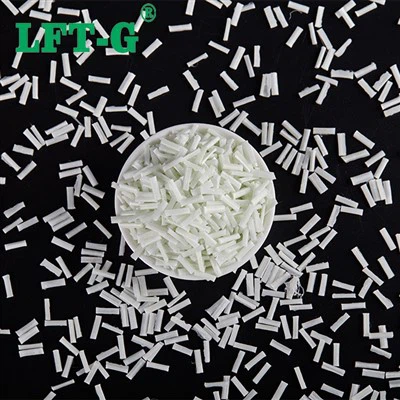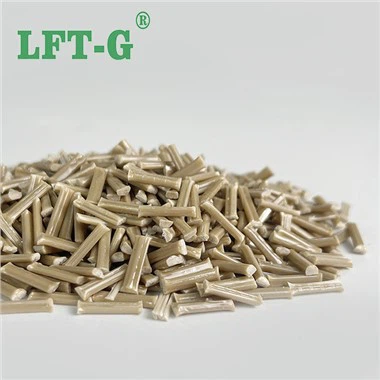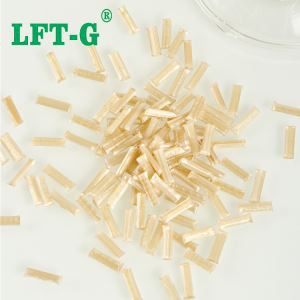

LCF30 PA66 Material: Lightweight Structural Plastic
Engineering Plastics at a Turning Point
Over the past decade, engineering plastics have moved far beyond their traditional role as simple metal substitutes. As industries pursue lightweighting, structural integration, cost efficiency, and sustainability, material performance expectations have fundamentally changed.
PA66 (polyamide 66), long recognized for its excellent mechanical strength and thermal stability, has become a core polymer in automotive, industrial equipment, and electrical systems. However, conventional short glass fiber–reinforced PA66 increasingly struggles to meet modern structural and durability requirements.
This shift has driven the rapid adoption of long carbon fiber–reinforced PA66 (LCF30 PA66) as a new-generation structural engineering material.
What Is LCF30 PA66 from an Industry Perspective?
LCF30 PA66 refers to a PA66 matrix reinforced with 30% long carbon fibers, typically produced through specialized long-fiber impregnation and compounding processes. Unlike short-fiber systems, long carbon fibers maintain a higher aspect ratio during processing, enabling more effective load transfer within the polymer matrix.
From an industry standpoint, LCF30 PA66 compound resin is not merely a "stronger PA66." It represents a structural material solution that bridges the gap between traditional plastics and lightweight metals.
Key industry-recognized characteristics include
Structural-grade stiffness with reduced material thickness
Superior fatigue resistance under cyclic loading
Dimensional stability in complex, integrated parts
Weight reduction without sacrificing mechanical integrity
Why Long Carbon Fiber Matters More Than Fiber Content?
In many material discussions, fiber percentage is often emphasized. However, industry experience shows that fiber length plays a more decisive role in real-world performance than fiber content alone.
For applications exposed to vibration, repeated mechanical stress, or temperature fluctuation, LCF30 PA66 demonstrates a clear advantage in durability and reliability.
Compared with short-fiber PA66:
Long carbon fibers form a quasi-skeletal network inside the polymer
Stress distribution becomes more uniform across the component
Crack propagation is significantly delayed
Our Application

Automotive Lightweighting and Structural Integration
In modern vehicle design, reducing weight is no longer limited to body panels. Structural and semi-structural components-such as front-end modules, seat structures, battery housings, and pedal systems-are increasingly redesigned using high-performance composites.
LCF30 PA66 enables:
Metal replacement with fewer design compromises
Part consolidation through injection molding
Improved NVH (noise, vibration, harshness) performance

Industrial Equipment and Automation
Industrial machinery demands materials that can withstand continuous mechanical stress, heat, and chemical exposure. LCF30 PA66 compound resin offers long-term stiffness and fatigue resistance, making it suitable for load-bearing housings, brackets, and motion-control components.

Electrical and Power Systems
In electrical infrastructure and power management systems, materials must balance mechanical strength with thermal stability and dimensional precision. LCF30 PA66 composite supports compact designs while maintaining structural safety under heat and load.
Design Freedom and Manufacturing Efficiency
From a manufacturing perspective, LCF30 PA66 aligns well with modern production goals:
-
Injection molding compatibility enables high-volume manufacturing
-
Complex geometries can be achieved without secondary machining
-
Integrated ribs, bosses, and reinforcements reduce assembly steps
-
Lower part weight improves logistics and installation efficiency
For OEMs and tier suppliers, these advantages translate into lower system cost, not just lower material cost.

LCF30 PA66 Material Sustainability
As sustainability becomes a central concern, material selection is increasingly evaluated over the entire product lifecycle.
LCF30 PA66 contributes to sustainability goals by:
Reducing component weight and energy consumption during use
Enabling part consolidation, reducing overall material usage
Offering long service life, minimizing replacement frequency
While carbon fiber composites are often perceived as less sustainable, their durability and performance efficiency can significantly lower total environmental impact when evaluated holistically.
The Future Role of LCF30 PA66 in Engineering Materials
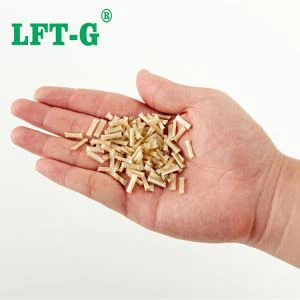
LCF30 PA66 plastic granules are expected to play a growing role in industries where structural performance, lightweight design, and manufacturing efficiency intersect in the future.
As design engineers push the limits of integration and performance, long carbon fiber–reinforced thermoplastics will continue to replace traditional materials-not by imitation, but by redefining what polymer-based structures can achieve.
LCF30 PA66 stands as a clear example of this evolution.
The LCF30 PA66 plastic pellet is not simply an upgraded nylon material. It represents a strategic shift in how industries approach structural design, combining the processing advantages of thermoplastics with the performance expectations of advanced composites. As engineering demands continue to rise, materials like LCF30 PA66 will increasingly define the future of high-performance applications.