

U.S. Retail Growth Continues to Support Plastic Demand
U.S. Retail Growth Continues to Support Plastic Demand, with Automotive and Electronics Driving Market Expansion
The resilience of the U.S. consumer market continues to provide strong support for plastic product demand. With steady growth across automotive, electronics, electrical appliances, and consumer goods sectors, the plastics industry is expected to maintain a stable development outlook.
According to the latest analysis from the Plastics Industry Association (PLASTICS), demand across major end-use markets for plastics remains strong. The assessment is based on the latest economic data released by the U.S. Census Bureau and the Federal Reserve.
U.S. Retail Growth Supports Stable Plastic Demand
In the first half of 2026, U.S. retail sales increased by 5.1% year over year, reaching approximately $4.4 trillion. In June 2026, seasonally adjusted retail sales totaled $768.6 billion, representing a 6.7% increase compared with the same period last year, reflecting continued consumer spending strength.
As a key material supporting modern manufacturing, plastics are widely used in automotive components, electronic products, packaging, household goods, and consumer products. The continued expansion of retail markets provides stable demand growth opportunities for plastic manufacturers and material suppliers.

Automotive Market Recovery Boosts High-Performance Plastic Applications
The automotive industry remains one of the most important application markets for plastic materials.
According to industry data, U.S. automotive and parts retailer sales increased by 5.7% year over year. Meanwhile, Federal Reserve data showed that automotive and parts production increased by 1.2% in June, indicating a gradual recovery in vehicle manufacturing after previous market adjustments.

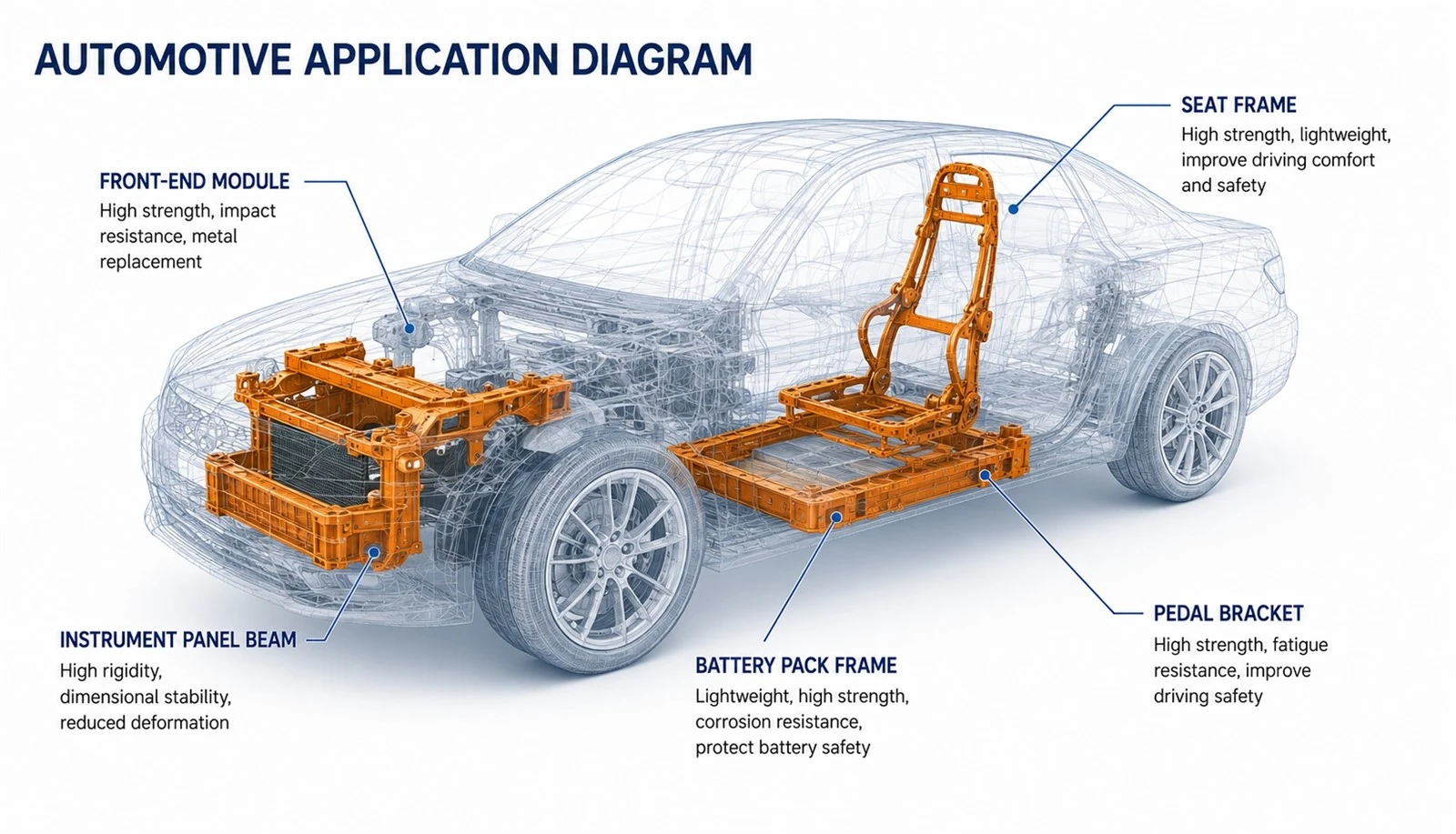
With the rapid development of electric vehicles (EVs) and the increasing demand for lightweight vehicle design, automakers are seeking advanced materials that offer high strength, reduced weight, and improved manufacturing efficiency.
Compared with traditional metal materials, high-performance plastics provide advantages such as lightweight construction, corrosion resistance, design flexibility, and efficient processing. These materials are increasingly used in automotive structural components, interior and exterior parts, electrical systems, and new energy vehicle battery-related applications.
As automotive technologies continue to evolve toward electrification and intelligent systems, reinforced engineering plastics and composite materials are expected to play a greater role in future vehicle development.
AI Development Drives Growth in Electronics and Electrical Plastic Applications
The electronics and electrical sector has become another major growth area for plastic demand.
U.S. retail sales of electronics and electrical products increased by 8.6% year over year. According to the Plastics Industry Association, the rapid adoption of artificial intelligence (AI) technologies is driving demand for computers, data centers, networking equipment, consumer electronics, and automotive electronic systems.
These products rely heavily on plastic components, including:
- Equipment housings
- Electrical connectors
- Cable insulation components
- Precision structural parts
As electronic devices become smaller, more integrated, and more powerful, material requirements for heat resistance, dimensional stability, mechanical strength, and long-term reliability continue to increase.
High-performance engineering plastics and reinforced composites are expected to gain wider adoption in advanced electronic and electrical applications.
Consumer Growth Expands Plastic Application Opportunities
Beyond automotive and electronics, several U.S. retail segments also demonstrated strong growth.

Sales of sporting goods, hobby products, musical instruments, and bookstores increased by 15.2%, while e-commerce sales grew by 14.2%.
Miscellaneous retailers increased by 6.0%, department stores grew by 3.7%, and food service establishments increased by 3.8%.
Many of these industries involve extensive plastic applications, including sports equipment, consumer product packaging, logistics materials, household products, and daily-use goods, providing continued support for plastic demand.
Meanwhile, grocery and beverage store sales increased by 1.0%, and health and personal care store sales grew by 0.2%. Stable demand for essential consumer products continues to support long-term requirements for plastic packaging, medical products, and household applications.
Plastics Industry Moves Toward Higher Performance and Lightweight Solutions
Driven by automotive electrification, smart electronics, and evolving consumer markets, plastic materials are expanding from traditional applications into more demanding structural and high-performance fields.
Future industry development will increasingly focus on lightweight design, enhanced mechanical performance, thermal resistance, sustainability, and overall material efficiency.
Advanced engineering plastics, reinforced composites, and high-performance thermoplastic materials will continue to create new opportunities across automotive, electronics, electrical, and industrial applications.