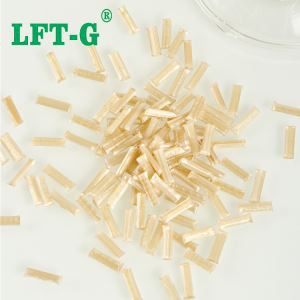

Thermoplastic Composites Head to Space: FibreCoat and Lofith Announce 2026 Orbital Test
Thermoplastic composites are about to face their toughest test yet - not in a laboratory, but in the vacuum of space.
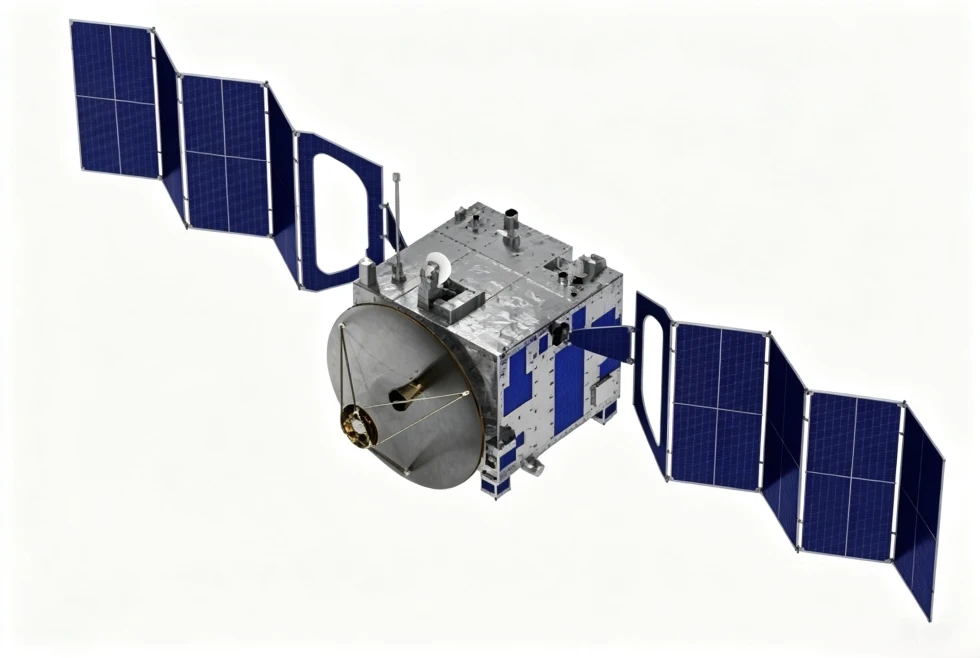
FibreCoat, a German leader in coated fiber technology, and Lofith Composites, a Spanish advanced materials company, have announced a strategic partnership to develop next-generation thermoplastic composites for space applications. The first orbital demonstration is scheduled for 2026, when a satellite will carry test panels into orbit for a 12-month mission to validate their performance under real space conditions.
This marks the first long-duration in-orbit validation of thermoplastic composites - a milestone that could reshape how the aerospace industry thinks about structural materials.

| 50% Weight Reduction vs. Aluminum | 30% Higher Strength vs. Aluminum | 90% Less Energy in Manufacturing | 12 Months in Orbit |
A Partnership Built for the Extremes
The collaboration brings together two complementary technology platforms.
FibreCoat, founded in Germany in 2020, has developed a novel fiber-coating process that applies metals and plastics onto fibers during the spinning process itself. Its products offer strength and conductivity at a fraction of the weight and cost of conventional materials. The company recently secured €500,000 in funding after winning the Industry category in the DLR INNOspace Masters Challenge and was named overall winner of INNOspace in Pioneering Technology.
Lofith Composites, launched in Spain in 2024, specializes in long fiber thermoplastic (LFT) composites and unidirectional (UD) tapes. The company has developed a unique impregnation process that delivers up to 50% weight reduction, 30% higher strength than aluminum, and full recyclability. The process also consumes significantly less water than conventional methods.
The big picture: By integrating FibreCoat's coated fibers into Lofith's recyclable, high-performance composites, the companies aim to produce lightweight structural materials designed specifically to meet the extreme demands of space.
The Mission: 12 Months in Orbit
The orbital demonstration, expected to take place between the first and second quarters of 2026, will see test panels carried aboard a satellite. During the mission, detectors attached to the panels will track:
- Dangerous ionizing radiation - both with and without shielding
- Temperature fluctuations - measuring thermal cycling effects in the vacuum of space
- Other environmental factors - including atomic oxygen, micrometeoroid impacts, and UV exposure
These results will be critical in determining whether the materials are truly "space-ready" - and whether they can meet the growing demand from space companies for resilient, lightweight, and cost-efficient materials.
Technology Deep Dive: What Makes These Materials Different
Coating at the Fiber Level
FibreCoat's proprietary process coats individual fibres during spinning - not after. This approach enables the combination of fiber properties with coating material properties in a single step, eliminating costly post-processing. The manufacturing process is claimed to use about 90% less energy than conventional methods and to be deployable modularly worldwide. Its latest Bismuth-based coating brings added functionality for radiation shielding.
Long Fiber Thermoplastic Innovation
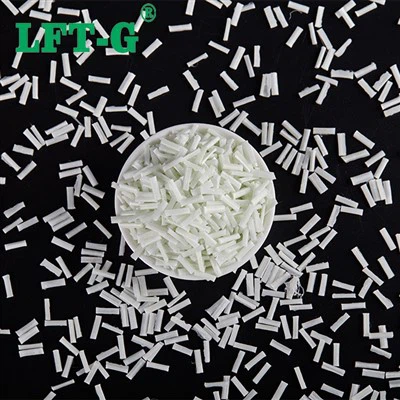
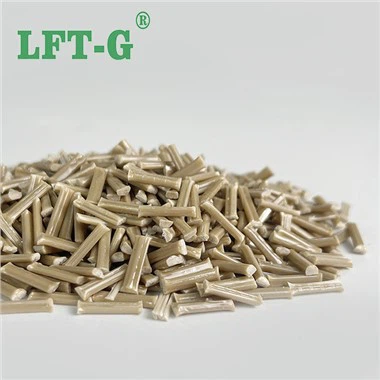
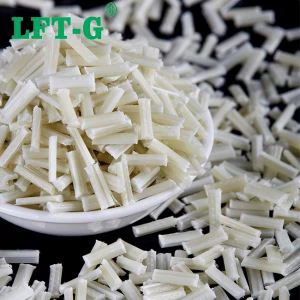
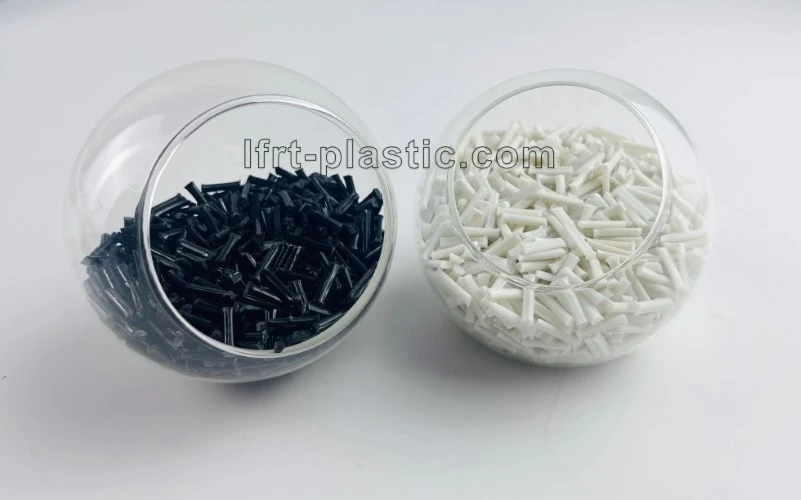
Lofith's impregnation process is at the heart of its LFT technology. By preserving long fiber lengths (10–12mm) during compounding - versus the sub-1mm fibers typical of short-fiber compounds - Lofith's materials achieve:
- 50% weight reduction vs. aluminum
- 30% higher strength vs. aluminum
- Full recyclability - a critical advantage over thermoset composites
- Reduced water consumption in manufacturing
| Performance Metric | FibreCoat + Lofith TPC | Aluminum | Advantage |
|---|---|---|---|
| Weight | 50% lighter | Baseline | ⬇️ 50% |
| Mechanical Strength | 30% higher | Baseline | ⬆️ 30% |
| Manufacturing Energy | 90% less | Baseline | ⬇️ 90% |
| End-of-Life | Fully recyclable | Recyclable | ✅ Circular |
| Water Consumption | Significantly lower | Baseline | ⬇️ Reduced |
What This Means for LFT-G®
For LFT-G®, this milestone carries three important implications:
-
Thermoplastic composites are entering the most demanding environments. The FibreCoat–Lofith mission proves that the industry is serious about qualifying thermoplastics for extreme applications - from launch vehicles to satellites to deep-space infrastructure.
-
Long fiber technology is the platform. Lofith's LFT and UD tape technologies are built on the same long fiber principles that underpin LFT-G®'s entire product portfolio - PA, PP, PPS, and specialty polymers reinforced with long glass and long carbon fibers.
-
High-temperature thermoplastics are the next frontier. While the FibreCoat–Lofith materials are focused on advanced coated fibers, the mission validates the broader thesis that thermoplastic composites can meet the extreme thermal, radiation, and mechanical demands of space. LFT-G®'s PPS-based LFT series, with continuous use temperatures exceeding 240°C, is directly relevant to this market - where thermal stability and structural integrity are non-negotiable.
The bottom line: When thermoplastic composites pass the ultimate test - 12 months in orbit - the message to every engineer, procurement professional, and OEM is clear: thermoplastics are no longer just "alternatives." They are the future of high-performance structural materials - on Earth and beyond.
Xiamen LFT Composite Plastic Co., Ltd is a global supplier of long fiber reinforced thermoplastics with 20+ years of innovation. We specialize in LFT‑PP, LFT‑PA, LFT‑PPS, and LFT‑Elastomers – offering high‑strength, lightweight alternatives to metal for automotive, aerospace, and industrial applications.