
301 Tariff Measures Take Effect, Creating New Challenges
July 24, 2026 | the United States implemented a new round of Section 301 tariff measures, imposing additional tariffs of 10% to 12.5% on imports from 60 economies. The policy adjustment marks another tightening of U.S. trade measures and introduces new uncertainties for global manufacturers, including companies involved in advanced materials and industrial supply chains.
New Tariff Measures Replace Temporary Global Tariff
According to the announcement from the Office of the United States Trade Representative (USTR), the new tariffs were introduced under Section 301 of the Trade Act of 1974, citing concerns related to forced labor practices in global supply chains.
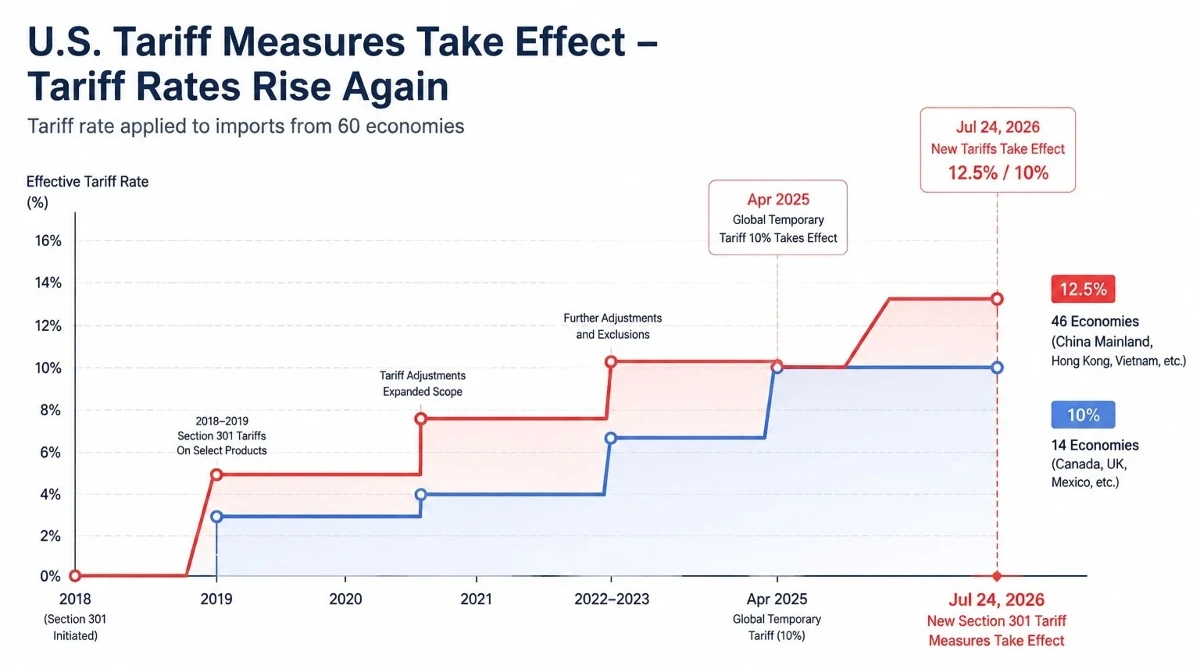
The new measures replace the previous 10% temporary global tariff that expired on July 24, 2026. The tariffs apply to imports from 60 economies, covering approximately 99.4% of total U.S. imports.
Among the affected economies:
- 46 economies, including Mainland China, Hong Kong, and Vietnam, are subject to the higher 12.5% tariff rate;
- 14 economies, including Canada, the United Kingdom, and Mexico, are subject to the 10% tariff rate.
Certain products remain excluded from the new measures, including products already covered under Section 232 measures, such as steel, aluminum, and automobiles, as well as selected energy and food products. In addition, textile products from Bangladesh, Cambodia, Indonesia, and Malaysia are subject to tariff-rate quota arrangements.
Rising Trade Costs Put Pressure on Manufacturing Supply Chains
The latest tariff adjustment reflects the continued evolution of U.S. trade policies and highlights the growing complexity of global manufacturing operations.
For companies exporting products to the U.S. market, additional tariffs may increase overall supply chain costs and affect purchasing decisions. Manufacturers may need to reconsider sourcing strategies, supplier locations, and production networks to maintain competitiveness.
The impact may be particularly significant for industries with international supply chains, including:
- Automotive components;
- Electric vehicle manufacturing;
- Industrial equipment;
- Electronics;
- Advanced engineering materials.
As global manufacturers continue to seek lightweight, high-performance solutions, material suppliers must balance technical performance, cost efficiency, and supply chain stability.
Challenges and Opportunities for Long-Fiber Reinforced Materials
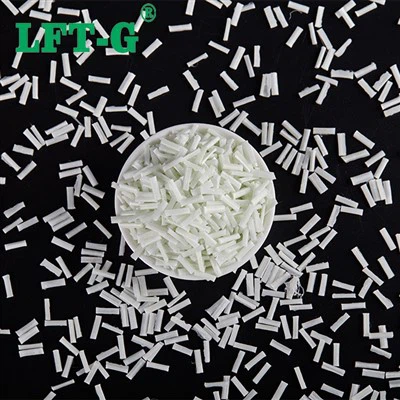
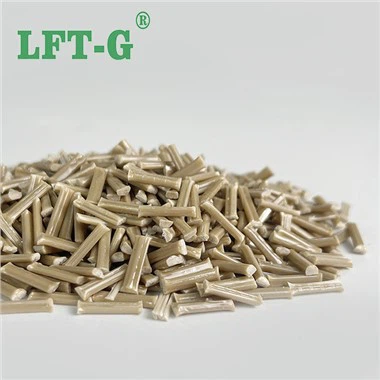
Long-fiber reinforced materials, including Long Glass Fiber (LGF) and Long Carbon Fiber (LCF) composites, have gained increasing attention in automotive lightweighting, EV applications, and industrial components due to their excellent mechanical performance.
Compared with traditional short-fiber reinforced materials, long-fiber composites provide:
-
Higher tensile strength and stiffness
-
Improved fatigue resistance
-
Better dimensional stability
-
Enhanced creep resistance
-
Potential for metal replacement in structural applications
However, changes in international trade policies may create additional challenges for material suppliers exporting to the U.S. market. Higher import costs, shifting procurement strategies, and regional competition could influence future market expansion.
For Chinese advanced material manufacturers, maintaining competitiveness will increasingly depend on product performance, technical support, application development, and global supply chain flexibility.
LFT-G Continues to Strengthen Global Market Development
As a supplier specializing in long-fiber reinforced materials, LFT-G® continues to monitor global market changes and actively develop solutions for international customers.
Through continuous investment in material innovation and application support, LFT-G provides customized LGF and LCF solutions for industries such as automotive, electric vehicles, industrial equipment, and consumer products.
Although global trade policies continue to evolve, the demand for lightweight, durable, and high-performance materials remains strong. LFT-G believes that long-term competitiveness will come from technological innovation, reliable quality, and the ability to support customers with comprehensive material solutions.
Moving forward, LFT-G will continue expanding cooperation with global partners while improving its international service capabilities and adapting to the changing global manufacturing landscape.