
3D Printing vs. LFT Injection Molding: Why Layer‑by‑Layer Can't Match Long Fiber Performance
3D printing has revolutionized prototyping. It has democratized access to complex geometries. It has enabled rapid iteration and on‑demand production. But when the application demands structural integrity, long‑term durability, and predictable mechanical performance, additive manufacturing still falls short.
This article compares two manufacturing approaches for fiber‑reinforced thermoplastics - FDM/FFF 3D printing and LFT injection molding - across five critical dimensions: fiber length, mechanical properties, anisotropy, layer adhesion, and production economics.

The Fiber Length Gap
The single most important factor determining the performance of a fiber‑reinforced composite is fiber length. Longer fibers create a reinforcing network that transfers load efficiently, resists crack propagation, and delivers superior fatigue life.
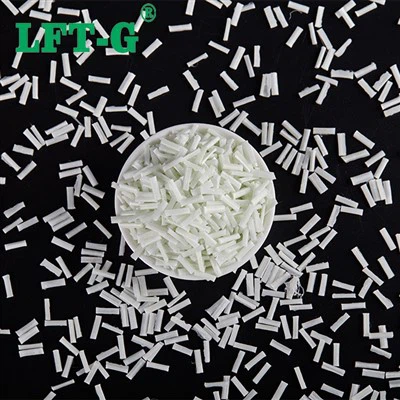
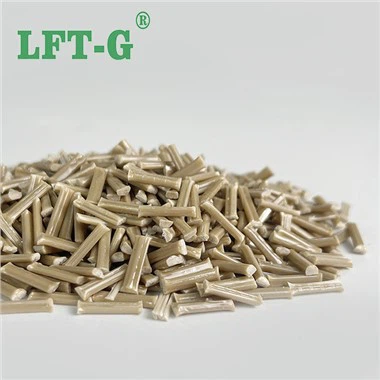
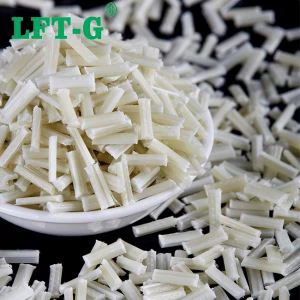
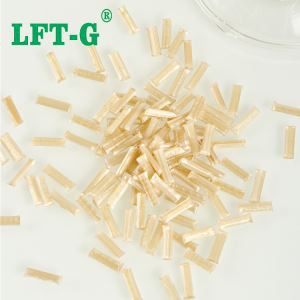
In LFT injection molding, continuous glass or carbon fibers are preserved at 6–12 mm during compounding. These long fibers form a three‑dimensional skeletal network within the polymer matrix that delivers superior mechanical performance across all directions.
In FDM/FFF 3D printing, the story is different. The extrusion process - combined with the need to pass fibers through a 0.4mm or 0.6mm nozzle - severely limits fiber length. A 2026 study comparing injection molding and FGF‑3D printing of flax fiber‑reinforced biocomposites found that injection‑molded samples retained an average fiber length of 930 μm, while 3D‑printed samples averaged just 659 μm - a 29% reduction. More strikingly, 30% of fibers in injection‑molded samples exceeded 1mm, compared to only 16% in 3D‑printed samples.
The takeaway: 3D printing inherently shortens fibers. What starts as a long‑fiber compound often exits the printer as a short‑fiber composite - losing the very reinforcement that made the material attractive in the first place.

Mechanical Performance: The Data Doesn't Lie
The fiber length gap translates directly into a performance gap. Multiple recent studies have quantified the difference.
In the same 2026 flax fiber study, injection‑molded samples achieved a stiffness of 4.90 GPa and tensile strength of 42.4 MPa. The 3D‑printed counterparts delivered just 2.22 GPa and 11.5 MPa - a 121% higher stiffness and 269% higher tensile strength for injection molding. Dynamic mechanical analysis confirmed injection‑molded samples had a storage modulus of 3,620 MPa, versus just 800 MPa for 3D‑printed samples - a 4.5× improvement in stiffness.
A separate 2026 theoretical study comparing injection molding and FDM 3D printing for polypropylene found that on every mechanical measure, injection‑molded polypropylene outperformed its 3D‑printed counterpart. The authors attributed this to two process‑level factors: the high pressures in injection molding produce a denser molecular structure, while FDM parts are inherently weakened by interlaminar discontinuities - the boundaries between each deposited layer.
| Property | Injection Molded LFT | 3D Printed (FDM/FFF) | Advantage |
|---|---|---|---|
| Fiber Length | 6–12 mm | < 1 mm | ⬆️ 10× longer |
| Stiffness (GPa) | 4.90 | 2.22 | ⬆️ 121% |
| Tensile Strength (MPa) | 42.4 | 11.5 | ⬆️ 269% |
| Storage Modulus (MPa) | 3,620 | 800 | ⬆️ 4.5× |
| Layer Adhesion | Continuous (isotropic) | Discontinuous (weak Z‑axis) | ✅ Superior |
Anisotropy: The Directional Dependence Problem
One of the most cited advantages of 3D printing is the ability to orient fibers in specific directions. In practice, this creates a significant challenge: parts are strong in one direction and weak in another.
A 2025 study on recycled carbon fiber‑reinforced PA11 composites found that AFT‑printed specimens achieved an axial tensile modulus of 14.5 GPa - about 32% higher than injection‑molded samples (11.0 GPa). However, the transverse (90°) properties dropped to just 2.3 GPa - an 84% reduction. In other words, the same part that performed well in one direction was six times weaker in another.
This orientation‑dependent performance is a fundamental limitation of layer‑by‑layer fabrication. Designers must account for anisotropy in every application - a constraint that injection‑molded LFT, with its more isotropic fiber distribution, does not impose.
Layer Adhesion: The Weakest Link
Here's where LFT injection molding fundamentally changes the equation. Unlike layer‑by‑layer additive processes, injection molding creates a fully continuous, void‑free structure - no interfaces, no weak planes, no directional dependency.
The long fibers inside an LFT part - preserved at 10–12mm - form a three‑dimensional reinforcing network that distributes load across all directions. This is why LFT injection molding delivers balanced, isotropic performance that additive manufacturing simply cannot match, regardless of how advanced the printer.
The result is a material that performs predictably under load, absorbs impact without catastrophic failure, and maintains structural integrity over millions of cycles. For engineers designing safety‑critical or load‑bearing components, LFT doesn't just offer a better manufacturing process - it offers the confidence that the part will perform as designed, every time, in every direction.
LFT Injection Molding
- Continuous, void‑free structure
- No layer interfaces
- Predictable, isotropic performance
- Suitable for structural applications
3D Printing (FDM/FFF)
- Layer‑by‑layer construction
- Weak interlaminar bonding
- Z‑axis strength only ~50% of XY
- Limited to prototypes & non‑structural parts

Production Economics: Volume Changes Everything
3D printing's strength is zero tooling investment. For low volumes - prototypes, one‑off parts, or frequent design iterations - it is often the economically rational choice.
But as volumes scale, the economics invert. Injection molding carries a substantial upfront investment in tooling - but that cost is recovered and ultimately made cost‑effective when spread across large production runs, at which point unit cost falls dramatically.
| Factor | LFT Injection Molding | 3D Printing (FDM/FFF) |
|---|---|---|
| Tooling Investment | High (mold) | Zero |
| Unit Cost (low volume) | High | Low |
| Unit Cost (high volume) | Very low | High |
| Cycle Time | Seconds | Hours |
| Design Change Cost | High (re‑tooling) | Zero |
| Best Use Case | Production (1000+ units) | Prototyping, low‑volume |
The takeaway: 3D printing is a prototyping tool. LFT injection molding is a production process. The two are not substitutes - they are complementary tools for different stages of the product lifecycle.

Xiamen LFT Composite Plastic Co., Ltd is a global supplier of long fiber reinforced thermoplastics with 20+ years of innovation. We specialize in LFT‑PP, LFT‑PA, LFT‑PPS, and LFT‑Elastomers – offering high‑strength, lightweight alternatives to metal for automotive, aerospace, and industrial applications.