HPP-LCF40B | Ultra-Rigid PP CF40: The Magnesium Alternative

HPP-LCF40B | Ultra-Rigid PP CF40: The Magnesium Alternative

Details
Model: LFT-G® PP-LCF40-BC04B
Material Type: Long Carbon Fiber Reinforced Polypropylene (LCF)
Fiber Content: 40% Carbon Fiber
Color: Black /
Custom Processing: Injection Molding
Category
PP LCF Compound
Share to
Send Inquiry
Chat Now
Description
Technical Parameters

LFT-G® HPP-LCF40B | Ultra-Rigid PP CF40: The Magnesium Alternative

LFT-G® 40% Long Carbon Fiber PP (Homo Grade)

When 30% carbon isn't stiff enough, and aluminum is too heavy, LFT-G® HPP-LCF40B is the engineered answer. This grade represents the pinnacle of Polypropylene stiffness, designed specifically to replace Magnesium AZ91 and Aluminum die-castings in weight-critical structures.

By reinforcing a highly crystalline Homopolymer PP matrix with 40% Long Carbon Fibers, we achieve a Flexural Modulus exceeding 22,000 MPa. Unlike Copolymer grades which prioritize impact, this Homo-grade prioritizes absolute structural rigidity and dimensional stability. It is the ultimate choice for large, long-span frameworks that must not bend or warp under load, while offering natural EMI shielding properties.

  • √ The Magnesium Killer: Offers a specific stiffness (stiffness-to-weight ratio) superior to Magnesium alloys, at a lower manufacturing cost (injection vs. die-casting).
  • √ Zero Creep Deformation: The dense 40% fiber network locks the Homo-PP matrix in place, preventing sagging even under sustained static loads at 100°C.
  • √ EMI Shielding: The high carbon content creates a robust conductive network (10-100 Ω/sq), effectively blocking electromagnetic interference for EV electronics.
  •  


The Specific Stiffness Peak

Specific Stiffness = Modulus / Density. This determines the efficiency of a material.

 
Steel Heavy
 
Aluminum Standard
 
Magnesium Light Metal
#1 Efficiency
LFT-G® HPP-LCF40 Winner

Typical Material Properties (HPP-LCF40B)

The following values are typical data for LFT-G® HPP-LCF40B (National Carbon / Homopolymer) and are for reference only. Data is for Dry-As-Molded (DAM) state. Please contact us for the official Technical Data Sheet (TDS).

Mechanical Properties

Property Test Method Value (DAM)
Tensile Modulus ISO 527 17,000 MPa
Tensile Strength ISO 527 135 MPa
Tensile Strain at Break ISO 527 1.2 %
Flexural Modulus ISO 178 12,600 MPa
Notched Izod Impact (23°C) ISO 180/A 50 kJ/m²
Surface Resistivity ASTM D257 102 - 10³ Ω/sq (High Shielding)


Thermal & Physical Properties

Property Test Method Value
Density ISO 1183 1.04 g/cm³
HDT/A (1.8 MPa) ISO 75 162 °C
HDT/C (8.0 MPa) ISO 75 115 °C
Melting Temperature ISO 11357 ~165 °C
Mold Shrinkage (Flow) ISO 294-4 0.1 - 0.2 %


Processing Information

The following values are recommendations. We recommend desiccant / dry air dryers (moisture content below 0.1%).

High fiber content increases viscosity. Use slightly higher temperatures and pressures compared to standard PP.

Parameter Recommendation
Drying Temperature 80 - 100 °C
Drying Time 2 - 3 hours
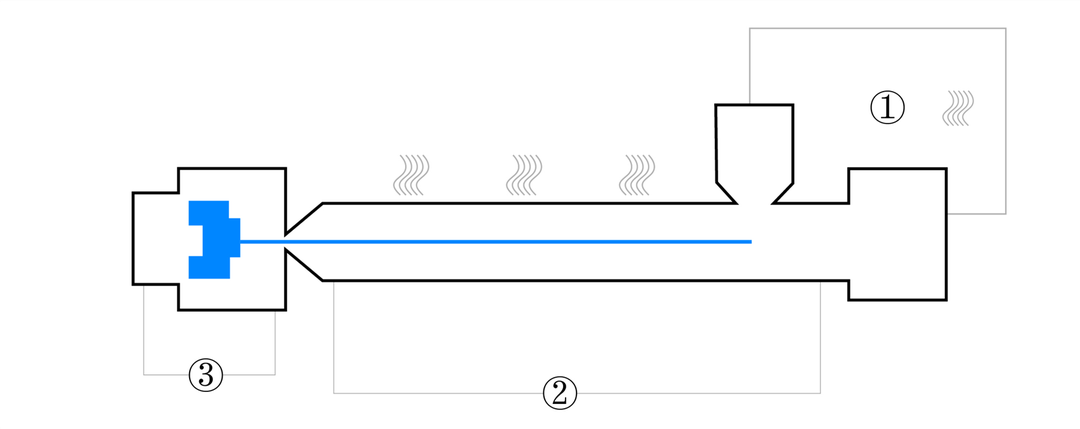
Melt Temperature (Nozzle ③) 230 - 270 °C
Mold Temperature (Zone ②) 50 - 80 °C
Back Pressure Very Low (preserve fibers)

Injection molding Process info


Case Study: Panoramic Sunroof Frame

Large car sunroof frame made of LFT Homo-PP Carbon

A 1.5-meter long structural frame. Must not warp under sun heat (100°C) to prevent glass binding.

Deflection Control Analysis

Aluminum 6061:
Heavy (2.5 kg). High manufacturing cost (extrusion + bending + welding).
Standard PP LGF40 (Copo):
Too flexible. Deflected 5mm under load, causing mechanism jam.
The Solution (LFT-G® HPP-LCF40B):
  • Rigidity: 18 GPa modulus reduced deflection to <1mm (within spec).
  • Weight: 1.1 kg (55% lighter than Aluminum).
  • Cost: One-shot molding reduced production cost by 40%.

Precision Structure Applications

🤖

Cobot Joints

Collaborative robot arms. Homo-PP Carbon provides the stiffness for payload accuracy while being light enough for safety.

🦵

Medical Exoskeletons

Structural frame. Carbon fiber reduces wearer fatigue (lightweight) and supports body weight (high rigidity).

🧵

Textile Heald Frames

High-speed weaving parts. Replaces carbon/epoxy tubes. Injection molding allows complex geometries with similar stiffness.

People Also Ask (Google PAA)

1. Can PP Carbon Fiber replace aluminum?

A: Yes, especially in stiffness-critical applications. LFT-G® HPP-LCF40 offers a flexural modulus of >18 GPa. While lower than Aluminum (70 GPa), its specific stiffness (stiffness-to-weight) is actually higher because it is 60% lighter. Through smart design (ribbing), it can match the structural performance of aluminum parts at a lower cost.

2. Is 40% Carbon Fiber PP electrically conductive?

A: Highly conductive. At 40% loading, the carbon fiber network is very dense. Surface resistivity drops to the range of 102 - 10³ Ω/sq, providing excellent electromagnetic interference (EMI) shielding effectiveness, often eliminating the need for conductive paints or metal plating in electronic housings.

3. Why use Homo-PP instead of Copo-PP for Carbon Fiber?

A: Choose Homo-PP (Homopolymer) when maximum stiffness and heat resistance are required. Homo-PP is more crystalline and harder than Copo-PP. For parts like sunroof frames or robotic arms that must hold precise dimensions under load, Homo-PP (like our HPP-LCF40B) is superior to the tougher but softer Copo-PP.

Ready to Design Lighter & Stiffer?

Switch to the ultimate magnesium replacement: LFT-G® HPP-LCF40B. Contact our material specialists today to discuss your project or request a sample.


Hot Tags: hpp-lcf40b | ultra-rigid pp cf40: the magnesium alternative, China, manufacturers, suppliers, factory, buy, customized
Send Inquiry
Contact us if have any question

You can either contact us via phone, email or online form below. Our specialist will contact you back shortly.

Contact now!