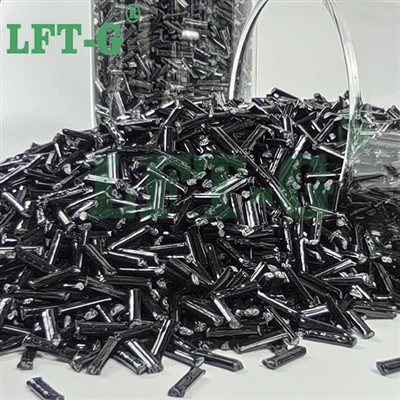

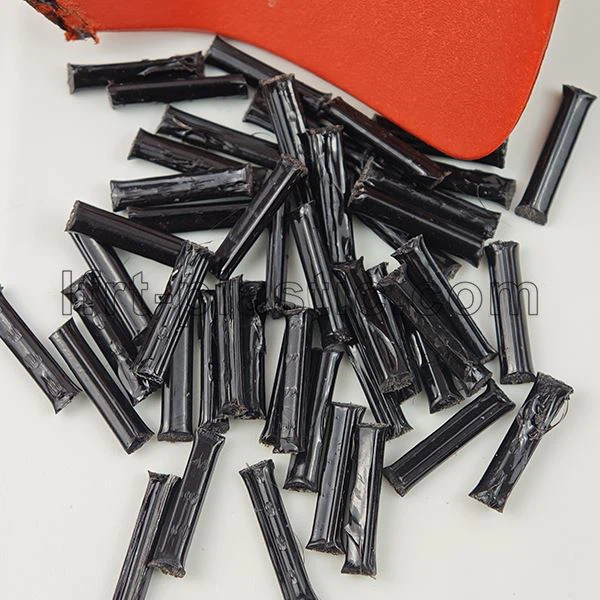
LFT-G® HPP-LCF30B | The High-Modulus Rigid PP CF30 (Homo-PP)
LFT-G® 30% Long Carbon Fiber PP (Homo Grade)
 While Copolymer PP is known for toughness, Homopolymer PP (Homo-PP) is the king of stiffness and heat resistance. LFT-G® HPP-LCF30B leverages this rigid matrix reinforced with 30% Long Carbon Fiber to create a material that offers maximum structural stability.
This "High Modulus" grade utilizes cost-effective Domestic Carbon Fiber to deliver exceptional performance without the high price tag. With a flexural modulus exceeding 16,000 MPa, it resists creep (deformation under load) significantly better than Copo-PP or Glass Fiber grades, making it ideal for high-speed rotating parts and precision frames that must hold tight tolerances under heat.
- √ Maximum Static Stiffness: The Homo-PP matrix provides higher crystallinity, resulting in a harder surface and greater resistance to bending under sustained loads.
- √ Ultra-Lightweight (1.12 g/cm³): Replaces aluminum and zinc die-castings, reducing part weight by 50% while offering sufficient rigidity for non-impact structural parts.
- √ Electrical Conductivity: The 30% carbon network provides excellent EMI shielding and static dissipation (ESD), protecting sensitive electronics.
Typical Material Properties (HPP-LCF30B)
The following values are typical data for LFT-G® HPP-LCF30B (National Carbon / Homopolymer) and are for reference only. Data is for Dry-As-Molded (DAM) state. Please contact us for the official Technical Data Sheet (TDS).
Mechanical Properties
| Property | Test Method | Value (DAM) |
|---|---|---|
| Tensile Modulus | ISO 527 | 18,000 MPa |
| Tensile Strength | ISO 527 | 125 MPa |
| Tensile Strain at Break | ISO 527 | 1.4 % |
| Flexural Modulus | ISO 178 | 13,500 MPa |
| Notched Izod Impact (23°C) | ISO 180/A | 44 kJ/m² |
| Surface Resistivity | ASTM D257 | 103 - 10⁴ Ω/sq (EMI Shielding) |
Thermal & Physical Properties
| Property | Test Method | Value |
|---|---|---|
| Density | ISO 1183 | 1.02 g/cm³ |
| HDT/A (1.8 MPa) | ISO 75 | 160 °C |
| HDT/C (8.0 MPa) | ISO 75 | 115 °C |
| Melting Temperature | ISO 11357 | ~168 °C |
| Mold Shrinkage (Flow) | ISO 294-4 | 0.1 - 0.2 % |
Processing Information
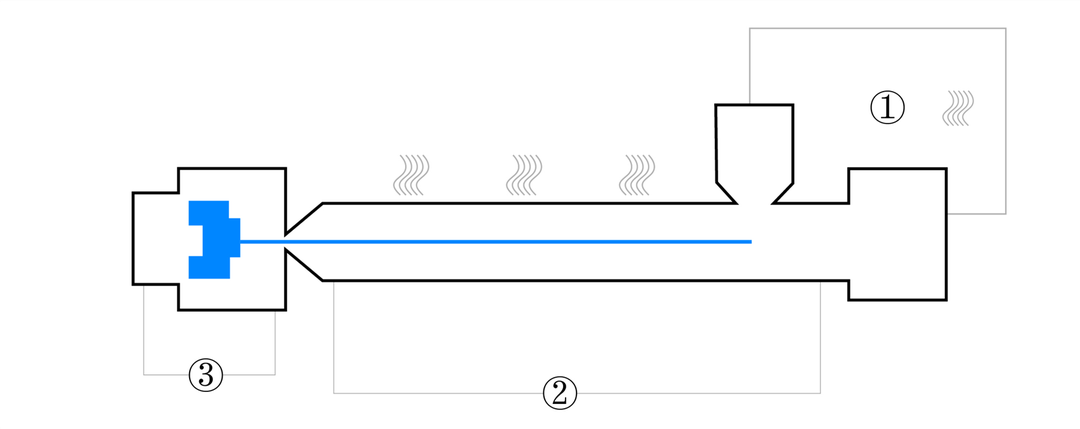
The following values are recommendations. We recommend desiccant / dry air dryers (moisture content below 0.1%).
Homo-PP is more heat resistant; slight increases in mold temperature improve surface finish.
| Parameter | Recommendation |
|---|---|
| Drying Temperature | 80 - 100 °C |
| Drying Time | 2 - 3 hours |
| Melt Temperature (Nozzle ③) | 230 - 260 °C |
| Mold Temperature (Zone ②) | 50 - 80 °C |
| Back Pressure | Low (to minimize fiber damage) |

Hot Tags: hpp-lcf30b | the high-modulus rigid pp cf30, China, manufacturers, suppliers, factory, buy, customized