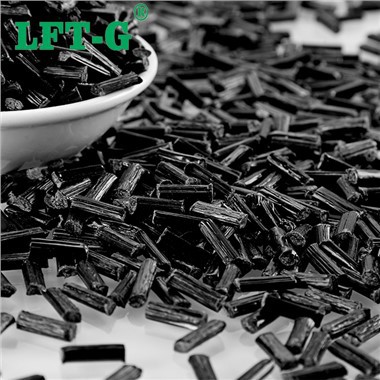


LFT-G® CPP-LCF30 (BC03B) | The Cost-Effective Ultra-Lightweight PP CF30
LFT-G® 30% Long Carbon Fiber PP (Copo Grade)
 Historically, PP CF30 was reserved for niche racing or aerospace parts due to cost. LFT-G® CPP-LCF30 (Model: CPP-BC03B) changes the game. By utilizing high-quality Domestic (National) Carbon Fiber, we bring the extreme performance of carbon composites to mass-market industrial and automotive applications.
This grade reinforces a tough Copolymer Polypropylene (Copo-PP) matrix with 30% Long Carbon Fibers. Unlike standard glass-filled PP (density ~1.35 g/cm³), this carbon grade offers an ultra-low density (approx. 0.98 g/cm³), reducing part weight by an additional 20% while doubling the stiffness. It is the ultimate solution for "Lightweighting" strategies where every gram counts, offering electromagnetic shielding (EMI) properties as a bonus.
- √ Ultra-Lightweight: With a density significantly lower than glass-filled nylon or PBT, it offers the highest specific strength (strength-to-weight ratio) in our portfolio.
- √ Cost-Effective Performance: Utilizing domestic carbon fiber supply chains allows for a competitive price point, making metal replacement viable for high-volume parts.
- √ High Impact Copo-Matrix: The Copolymer base resin provides superior impact toughness compared to Homo-PP, preventing brittle failure in cold environments.
Typical Material Properties (BC03B)
The following values are typical data for LFT-G® CPP-LCF30 (National Carbon Grade) and are for reference only. Data is for Dry-As-Molded (DAM) state. Please contact us for the official Technical Data Sheet (TDS).
Mechanical Properties
| Property | Test Method | Value (DAM) |
|---|---|---|
| Tensile Modulus | ISO 527 | 14,500 MPa |
| Tensile Strength | ISO 527 | 105 MPa |
| Tensile Strain at Break | ISO 527 | 1.5 % |
| Flexural Modulus | ISO 178 | 11,000 MPa |
| Notched Izod Impact (23°C) | ISO 180/A | 46 kJ/m² |
| Surface Resistivity | ASTM D257 | 10² - 10⁴ Ω/sq (Conductive) |
Thermal & Physical Properties
| Property | Test Method | Value |
|---|---|---|
| Density | ISO 1183 | 0.98 g/cm³ |
| HDT/A (1.8 MPa) | ISO 75 | 158 °C |
| HDT/C (8.0 MPa) | ISO 75 | 110 °C |
| Melting Temperature | ISO 11357 | ~165 °C |
| Mold Shrinkage (Flow) | ISO 294-4 | 0.1 - 0.3 % |
Processing Information
The following values are recommendations. We recommend desiccant / dry air dryers (moisture content below 0.1%).
To minimize fiber breakage and preserve carbon fiber length, a low-compression screw is highly recommended.
| Parameter | Recommendation |
|---|---|
| Drying Temperature | 80 - 100 °C |
| Drying Time | 2 - 4 hours |
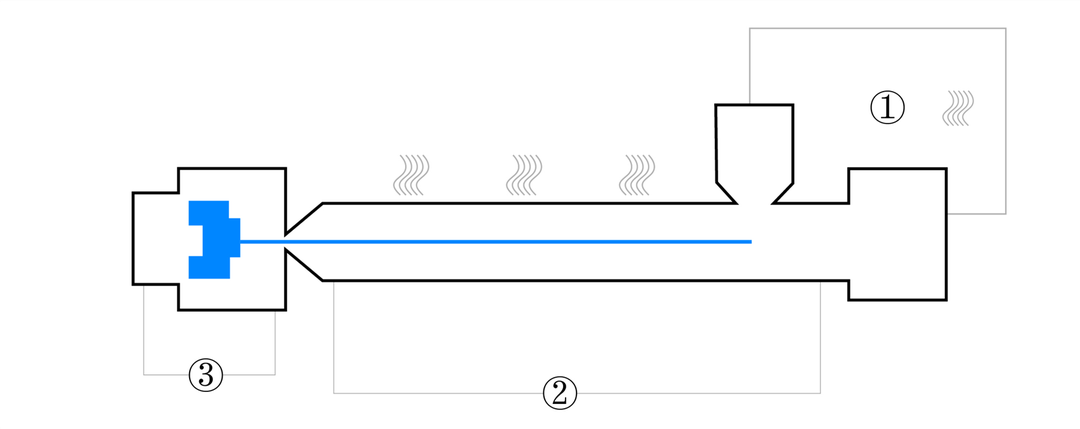
| Melt Temperature (Nozzle ③) | 220 - 250 °C |
| Mold Temperature (Zone ②) | 40 - 70 °C |
| Back Pressure | Low (to minimize fiber damage) |

Hot Tags: 30%carbon fiber pp cf30 lightweight, China, manufacturers, suppliers, factory, buy, customized