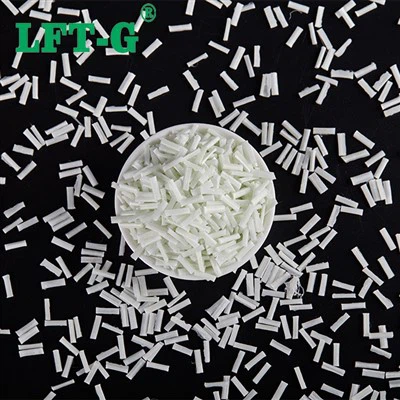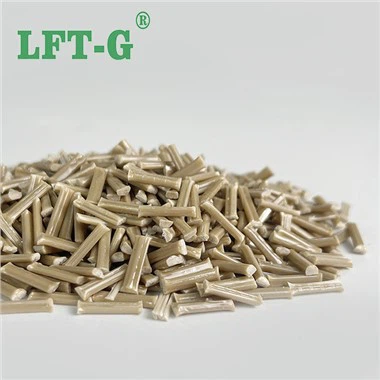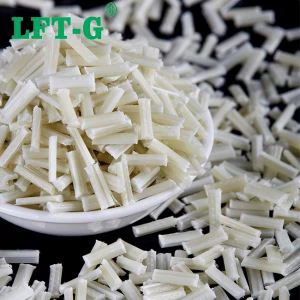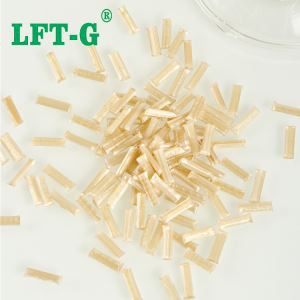

What is GF PPA Composite?
In the vast field of materials science, polymer composite materials, with their outstanding performance and lightweight advantages, have become an indispensable part of modern industry. Among them, glass fiber reinforced polyphthalamide (GF PPA) composite materials, with their unique performance combination, are rapidly emerging as a brilliant new star in the field of high-performance engineering plastics. This article will deeply explore the industry knowledge, technical characteristics, main application fields, and future development trends of GF PPA composite materials, presenting a comprehensive and professional industry picture to readers.
GF PPA, which stands for Glass Fiber Reinforced Polyphthalamide, is not a single material but is composed of the following two parts:

Matrix resin: Polyphthalamide (PPA)
PPA is a semi-aromatic polyamide, with its molecular chain containing an aromatic ring structure. This endows it with many superior characteristics compared to traditional nylon (such as PA6, PA66). PPA exhibits outstanding thermal resistance, dimensional stability, chemical corrosion resistance, and mechanical strength. It can maintain its performance for a long time at high temperatures, and its water absorption rate is much lower than PA66, effectively preventing dimensional changes and performance degradation caused by water absorption.
Enhancing material: Glass Fiber (GF)
Glass Fiber is one of the most commonly used reinforcing materials in composite materials. Its main function is to significantly enhance the mechanical properties of the matrix resin, including tensile strength, bending strength, elastic modulus and hardness. By controlling the content and length of glass fibers, the performance of the final composite material can be precisely regulated.
What is GF PPA Composite Good For?
Mechanical Properties: Strength and Stiffness
The most significant impact of glass fiber reinforcement is the dramatic improvement in mechanical properties.
High Strength and Stiffness: GF PPA composites exhibit exceptional tensile and flexural strength, as well as a high modulus of elasticity. This means they can withstand significant loads without deforming or breaking.
Excellent Creep Resistance: Under sustained load, especially at elevated temperatures, materials can exhibit creep – a slow, continuous deformation. GF PPA composites demonstrate outstanding creep resistance, maintaining their dimensional integrity over long service periods.
Good Fatigue Resistance: In applications subjected to cyclic loading, fatigue resistance is paramount. The glass fibers in the PPA matrix help to arrest crack propagation, giving the composite splendid durability under repetitive stress.
Thermal Properties: Withstanding the Heat
PPA's inherent high-temperature resistance is further amplified by the inclusion of glass fibers.
High Heat Deflection Temperature (HDT): GF PPA composites can maintain their structural integrity and stiffness at very high temperatures. This makes them ideal for components operating in proximity to engines, exhaust systems, and high-power electronics.
Low Coefficient of Thermal Expansion (CLTE): The presence of glass fibers significantly reduces the CLTE of the composite, meaning it expands and contracts less with temperature fluctuations.
Chemical and Environmental Resistance
Excellent Chemical Resistance: The semi-crystalline and aromatic nature of PPA provides a high degree of resistance to a wide range of chemicals.
Low Moisture Absorption: Compared to standard polyamides, PPA absorbs significantly less moisture. The low moisture absorption of GF PPA ensures consistent performance in humid environments.
What is Glass Fiber PPA Material Used For?
Industrial equipment and machinery
Pumps, valves, and fluid control components: Pump bodies, valves, impellers, etc., need to be resistant to fluid corrosion.
Bearings and cage, gears: Under certain working conditions, they can replace metals to achieve self-lubrication and light weighting.
Compressors, pneumatic tools: cylinders, pistons, etc., require high strength and wear resistance.


Automobile industry
Engine peripheral components: throttle body, engine bracket, intake manifold, cylinder head cover.
Cooling system: thermostat housing, water pump housing, radiator water chamber, etc., need to be resistant to high temperatures and corrosion.
Transmission components: oil pump piston, valve body, etc., need high strength, wear resistance and oil resistance.
Electrical/electronic components: automotive connectors, sensor housing, switch socket, etc., require good dimensional stability and electrical insulation. Structural components: dashboard bracket, pedal assembly, etc., can achieve lightweight substitution.
Electrical appliances and consumer electronics
Connectors and plugs: They need to be able to withstand the high-temperature reflow soldering process. The high-temperature resistance of GF PPA compound resin makes it an ideal choice.
Motors and household appliance components: Such as the fan blades of vacuum cleaners, the internal structural parts of coffee machines, the handles of microwave ovens, etc., need to be resistant to high temperatures and have high strength. Lighting equipment: LED lamp heat sink, taking advantage of its excellent heat conductivity and heat resistance.
The Future of GF PPA Composites
The demand for high-performance, lightweight materials is only set to increase, driven by trends such as vehicle electrification, the miniaturization of electronics, and the need for greater energy efficiency across all industries. GF PPA composites are well-positioned to meet these challenges. Ongoing research and development are focused on new PPA formulations with even higher performance, improved processing characteristics, and the use of recycled content to enhance sustainability. As manufacturing technologies continue to evolve, we can expect to see GF PPA material pushing the boundaries of what is possible in engineering design, solidifying their role as a key enabling material for the innovations of tomorrow.