
Difference: TPU Pellet And LGF TPU Composite
TPU (thermoplastic polyurethane) and LGF TPU (long glass fiber reinforced thermoplastic polyurethane) are two different materials. The main difference between them lies in whether long glass fibers are added. In simple terms, LGF TPU is TPU with long glass fibers added, which significantly improves its performance.
TPU (Thermoplastic Polyurethane)
TPU pellet is a common polymer material, renowned for its excellent elasticity, wear resistance, oil resistance, and low-temperature resistance. Its molecular structure gives it rubber-like flexibility while also possessing the processing characteristics of plastics. However, it also has drawbacks. The drawback of TPU pellet is its insufficient rigidity, which may not meet the requirements in certain structural components that need high strength and rigidity.
LGF TPU (Long Glass Fiber Reinforced Thermoplastic Polyurethane)
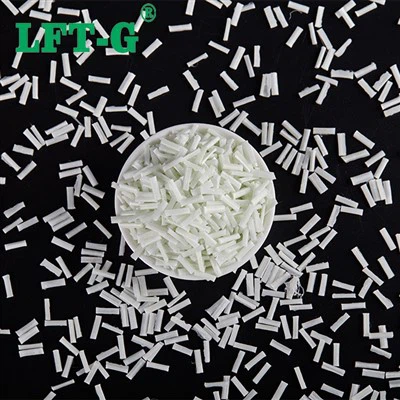
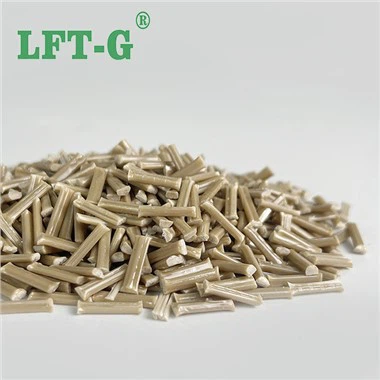
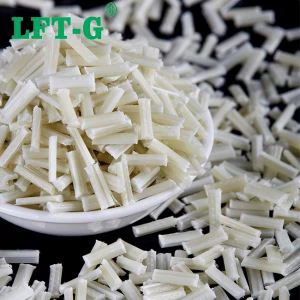
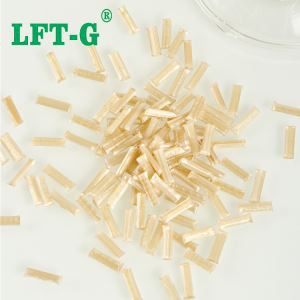
LGF TPU is a composite material formed by adding long glass fibers (with a length typically greater than 5mm) to the TPU base material through a special process. These long fibers create a three-dimensional network structure within the material, significantly enhancing its performance.
Compared with TPU polymer, the main advantages of LGF TPU composite lie in:
Higher strength and rigidity: The addition of long glass fibers has significantly enhanced the tensile strength, bending strength and modulus of the material, enabling it to replace some metals or traditional engineering plastics.
Better dimensional stability: The long glass fibers reduce the thermal expansion and contraction of the material, making the manufactured parts more stable in terms of size at different temperatures and less prone to deformation.
Higher heat resistance: The reinforced material can withstand higher operating temperatures.
Better anti-rust property: Under long-term stress, the material undergoes less deformation.

Application Range of TPU and LGF TPU Material
The applications of TPU pellet are very extensive, for example:
Footwear materials: Air cushions, outsoles, shoe surface decorations, etc.
Film and tubing: Mobile phone protective film, infusion tubes, pneumatic tubes, etc.
Electronic products: Phone cases, cable protectors, etc.
Automobile components: mudguards, interior decorative parts, etc.
LGF TPU plastic pellet is typically used in applications that require withstanding significant loads and high strength, such as:
Automobile structural components: dashboard bracket, bumper frame, door module, etc.
Industrial equipment: transmission gears, bearings, tool housings, etc.
Sports goods: Bicycle pedals, ski board parts, etc.

TPU (thermoplastic polyurethane) and LGF TPU (long glass fiber reinforced thermoplastic polyurethane) are two distinctive polyurethane-based materials in the field of polymer materials. The long fibers in the LGF TPU material form a high strength and high rigidity three-dimensional network framework within the material, significantly enhancing the material's tensile strength, bending modulus, and dimensional stability. Therefore, in structural applications that require lightweight, high load-bearing capacity, and certain toughness, such as automotive parts and industrial equipment housings, LGF TPU composite becomes an ideal alternative to traditional metals or glass fiber reinforced nylon. In summary, TPU focuses on functional flexibility, while LGF TPU emphasizes structural rigidity. The choice between the two depends on the core requirements for the mechanical properties of the final product.
Injection Molding:
Due to the presence of long glass fibers, the injection molding of LGF TPU polyester requires special consideration to maintain the length of the fibers, thereby ensuring the performance of the final product.
Screw design: It is recommended to use a screw with low shear force to prevent excessive shearing during the plasticization process, which could cause the glass fibers to break.
Mold temperature: Maintaining a relatively high mold temperature can enhance the material's fluidity, reduce the variation in fiber orientation, and thereby minimize the anisotropy of the product.
Injection speed: It is recommended to use medium to low injection speed to avoid excessive shear force.
Gate design: It is recommended to use large-sized and low-shear gate types, such as fan-shaped or sheet-shaped gates, to facilitate the smooth filling of fibers.