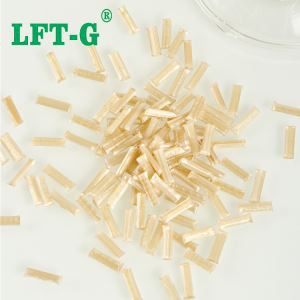

 Replacing Stainless Steel:
How LFT-PPS Composites Cut Pump Costs by 40%
In the demanding world of chemical processing, stainless steel has long been the default material for components like industrial pump housings. Its reputation for durability is well-earned, but it comes at a significant price. What if you could achieve superior chemical and thermal resistance in a lighter, more cost-effective, and rapidly manufacturable format? This article explores how modern Long Fiber Thermoplastic (LFT) composites are not just challenging, but decisively outperforming metal in the most extreme environments.
The Stainless Steel Dilemma: Performance at a Price
 Engineers specify stainless steel for its perceived reliability, but this choice forces significant compromises throughout the product lifecycle:
- Prohibitive Weight: Metal's high density leads to heavy components that are difficult to handle, install, and ship, increasing logistical costs and physical strain on supporting structures.
- Expensive & Slow Machining: Crafting complex geometries from a block of stainless steel is a time-consuming and costly CNC machining process, generating significant material waste.
- Long Lead Times: The multi-stage process of casting, forging, and machining metal components often results in lead times stretching for weeks or months, delaying projects and hindering agile production.
- Limited Design Freedom: The constraints of machining can limit the integration of complex features, often requiring multi-part assemblies where a single, optimized polymer part would suffice.

while the long fiber network delivers robust mechanical strength.
The Solution: High-Performance Polymers, Perfected with LFT
To overcome these challenges, engineers are turning to a class of ultra-high-performance polymers. Among them, **Polyphenylene Sulfide (PPS)** stands out for its exceptional capabilities. PPS is a semi-crystalline thermoplastic renowned for:
- √ Extreme Chemical Resistance: PPS is virtually insoluble in any solvent below 200°C and is unattacked by steam, strong acids, bases, and fuels. Its chemical resistance is second only to PTFE.
- √ High-Temperature Stability: With a continuous service temperature of up to 220°C (428°F), PPS maintains its mechanical integrity in environments where most other plastics would fail.
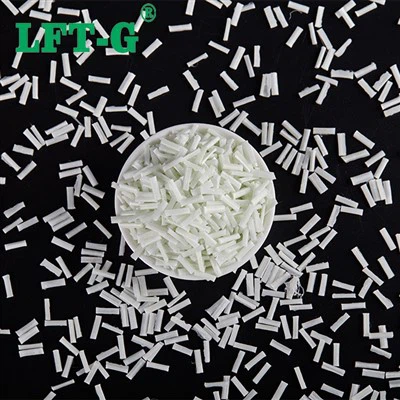
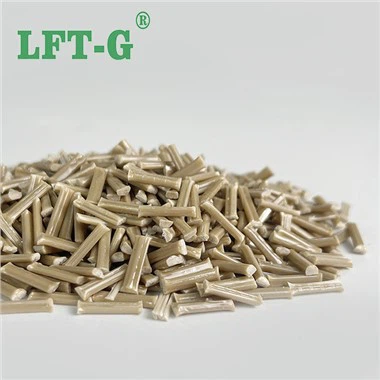
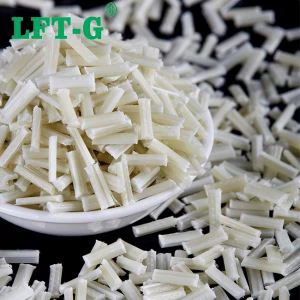
By reinforcing this remarkable PPS matrix with **40% Long Glass Fibers (LGF40)**, we create a composite material that elevates these properties to a new level, adding the immense strength, stiffness, and creep resistance necessary for demanding structural applications like pump housings.
Case Study: Industrial Chemical Pump Housing
The Challenge
A manufacturer of industrial pumps for the chemical processing industry needed to replace a stainless steel pump housing. While durable, the metal housing was extremely heavy, expensive to machine, and had long lead times. They required a thermoplastic that could withstand a continuous flow of aggressive solvents and acids at temperatures exceeding 150°C, without swelling, cracking, or degrading over a long service life.
The Solution: LFT-PPS-LGF40-NG04
Our PPS long-fiber composite was the only material that met the extreme chemical and thermal requirements. The PPS matrix provided near-universal chemical immunity, while the 40% long glass fiber core delivered the mechanical strength and creep resistance to handle high internal pressures. We provided extensive compatibility data and worked with their team to ensure the mold design accounted for the unique processing characteristics of PPS.
Key Achievements & Quantified Results
70%
Weight Reduction
40%
Production Cost Savings
60%
Faster Manufacturing Time
The LFT-PPS pump housing successfully passed all chemical immersion and pressure cycle tests, validating it as a superior alternative to stainless steel.
►
Visit More LFT-PPS LGF Material
Beyond Pumps: Other Applications for LFT-PPS
The same properties that make LFT-PPS ideal for pump housings enable its use in a wide range of other components that require elite chemical, thermal, and mechanical performance:

- ● Industrial Valves & Fittings
- ● Downhole Oil & Gas Components
- ● High-Temperature Electrical Connectors
- ● Semiconductor & Wafer Handling Parts
- ● Fuel System Components
- ● Medical Equipment (requiring sterilization)
Is Your Metal Component Ready for an Upgrade?
Don't let the limitations of metal dictate your design, budget, or timeline. LFT-PPS composites offer a proven path to lighter, more cost-effective, and chemically resistant components. Contact our engineering team to discuss your metal replacement project.
Request a Free Compatibility Analysis