

What is LFT and Why Does It Matter?
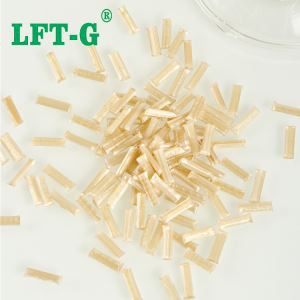
Long Fiber Thermoplastics (LFT) represent a quantum leap in composite materials engineering. At their core, LFTs are advanced polymer composites where continuous reinforcing fibers-typically ranging from 10mm to 25mm in length-are pultruded and fully impregnated with a thermoplastic resin. Unlike standard short fiber reinforced plastics (SFRP) where fibers are chopped into microscopic lengths (usually under 1mm), the elongated fibers in LFT form an internal 3D skeletal network within the final injection-molded part.
The Core Engineering Takeaway: This interconnected structural framework allows LFT materials to deliver up to 300% higher notched impact strength, exceptional dimensional stability, and superior high-temperature creep resistance compared to short fiber equivalents. For engineers seeking to reduce weight, consolidate parts, and maintain structural integrity under extreme dynamic loads, LFT provides the definitive bridge between the manufacturability of plastics and the mechanical performance of metals.
As industries such as automotive, aerospace, and industrial manufacturing face increasing pressure to innovate, the demand for lightweight yet robust materials has never been higher. Standard plastics often fail under continuous stress or sub-zero temperatures, while traditional metals like die-cast aluminum carry significant weight penalties and require expensive secondary machining. LFT completely disrupts this paradigm, offering a "best of both worlds" solution.
The Science of Long Fiber Thermoplastics: The 3D Skeletal Network
To truly understand the superiority of LFT, we must examine its microstructural morphology and the mechanics of stress transfer.
In short fiber reinforced plastics (SFRP), the chopped fibers are essentially "floating" independently within the polymer matrix. When mechanical stress is applied to the component, the stress must be transferred from the relatively weak polymer matrix to the stronger fibers. Because the fibers are so short, the interfacial bonding area is limited. Before the fiber can reach its maximum tensile capacity, the matrix often yields or the fiber simply pulls out of the resin. This leads to premature failure, especially under sudden impact.
In stark contrast, during the injection molding process of LFT pellets, the long fibers intertwine, overlap, and entangle. This creates a highly cohesive, continuous physical skeleton throughout the entire molded part. When impact or heavy load forces hit the component, this entangled network acts like structural rebar in concrete. It rapidly dissipates the kinetic energy across a much larger surface area. This mechanism fundamentally prevents crack propagation and is the scientific reason behind LFT's unparalleled toughness, even at sub-zero temperatures (-40°C) where standard plastics become dangerously brittle.

Figure 1: The intertwined 3D fiber network in LFT vs. isolated fibers in SFRP.
Manufacturing Process: Why Pultrusion is Critical for LFT
The secret to producing high-quality LFT lies in the manufacturing process. Short fiber plastics are typically produced using a standard extrusion process where continuous fibers are chopped into tiny pieces and mixed violently with molten resin, causing severe fiber degradation.
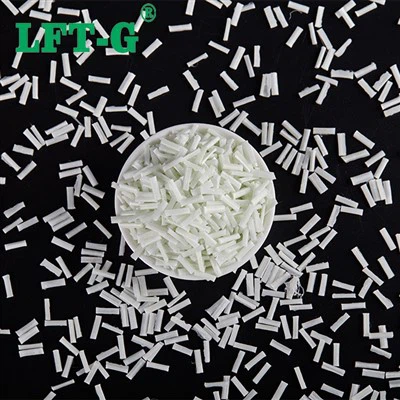
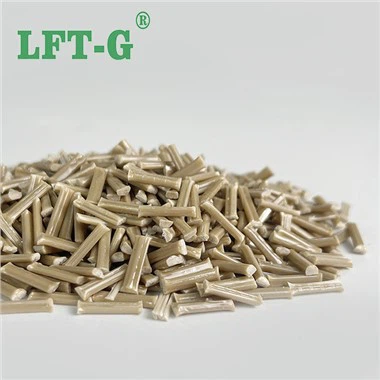
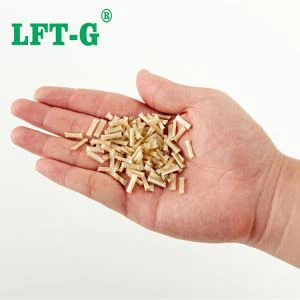
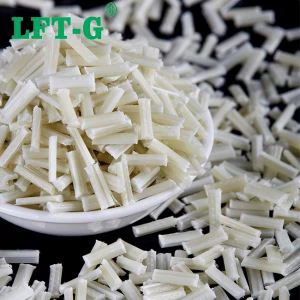
LFT, however, is manufactured using a specialized pultrusion process. Continuous fiber rovings (spools of thousands of individual filaments) are pulled through a specialized impregnation die. Inside this die, the molten thermoplastic resin is injected under high pressure to completely wet out and coat every single filament. This ensures a perfect interfacial bond between the fiber and the matrix without breaking the fibers. The continuous pultruded strand is then cooled and cut into pellets that are exactly the same length as the fibers inside them-typically 10mm to 12mm for standard injection molding applications.
Key Types of LFT: Glass vs. Carbon Fiber (LGF & LCF)
One of the greatest advantages of LFT technology is its versatility. It can be customized using various base resins (such as Polypropylene (PP), Polyamide (PA6/PA66), Thermoplastic Polyurethane (TPU), and high-heat resins like PPS or PEEK) combined with different types of long fibers. The two most prominent categories dominating the structural plastics market are:
-
Long Glass Fiber (LGF) Composites:
- Materials like LGF-PP and LGF-PA66 offer the absolute best balance of cost and performance. They provide excellent impact resistance, high stiffness, good chemical resistance, and low warpage. LGF is the primary choice for automotive under-the-hood components, front-end modules, and heavy-duty industrial housings.
-
Long Carbon Fiber (LCF) Composites:
- Materials like LCF-PA66 and LCF-PP represent the pinnacle of lightweight engineering. Carbon fibers are inherently lighter and significantly stiffer than glass fibers. They bring extreme tensile strength, high modulus, and inherent electrical conductivity (useful for EMI shielding). LCF is the premium choice for aerospace applications, EV battery trays, drone frames, and high-end sports equipment where maximizing the strength-to-weight ratio is the ultimate goal.
Performance Comparison: LFT vs. Short Fiber vs. Metal
To objectively evaluate LFT, we must look at standardized testing metrics (such as ISO 179 for impact and ISO 527 for tensile properties). The following data illustrates how LFT effectively bridges the performance gap between traditional plastics and heavy metals like die-cast aluminum or steel.
| Engineering Property | Short Fiber Plastics (SFRP) | LFT Composites (LGF/LCF) | Die-Cast Aluminum |
|---|---|---|---|
| Notched Impact Strength (ISO 179) | 10 - 15 kJ/m² (Brittle) | 30 - 55+ kJ/m² (Highly Ductile) | High |
| Density / Specific Gravity | 1.1 - 1.4 g/cm³ | 1.1 - 1.5 g/cm³ (Lightweight) | ~2.7 g/cm³ (Heavy) |
| High-Temp Creep Resistance | Poor (Deforms under load) | Excellent (Maintains shape) | Excellent |
| Design Freedom & Integration | High |
High (Allows Parts Consolidation |
Low (Requires Secondary Machining) |
Core Engineering Advantages of LFT Materials
 Beyond basic tensile strength and impact resistance, LFT solves specific failure modes that plague traditional thermoplastic designs. Here is why engineers specify LFT for critical applications:
-
⑴ Fatigue Endurance in Dynamic Environments:
- In environments subjected to high-frequency vibrations (such as water pump housings, automotive engine mounts, or power tool casings), short fibers eventually pull out of the resin matrix, leading to microscopic fatigue cracks that eventually cause catastrophic failure. The continuous skeleton of LFT mechanically locks the matrix in place, exponentially increasing the material's fatigue life and ensuring long-term reliability.
-
⑵ Dimensional Stability & Low Warpage:
- Large structural parts (like car dashboard frames or sunroof rails) are highly prone to warpage due to anisotropic shrinkage during the cooling phase of injection molding. Because long fibers restrict the movement of the polymer chains as they cool, LFT significantly reduces thermal expansion coefficients (CLTE) and minimizes anisotropic behavior. This ensures extremely tight tolerances for complex, multi-part assemblies.
-
⑶ Superior Creep Resistance:
- Creep is the tendency of a solid material to move slowly or deform permanently under the influence of persistent mechanical stresses. This is especially problematic for plastics in high-temperature environments. The intertwined long fibers bear the majority of the continuous load, virtually eliminating the plastic deformation (creep) typically seen in unfilled or short-fiber reinforced resins.
Injection Molding Guidelines for LFT
While LFT materials provide exceptional performance, they require specific processing parameters to ensure that the fiber length is preserved during the injection molding process. If processed incorrectly, the long fibers will break, reducing the material to the performance level of a standard short fiber plastic.
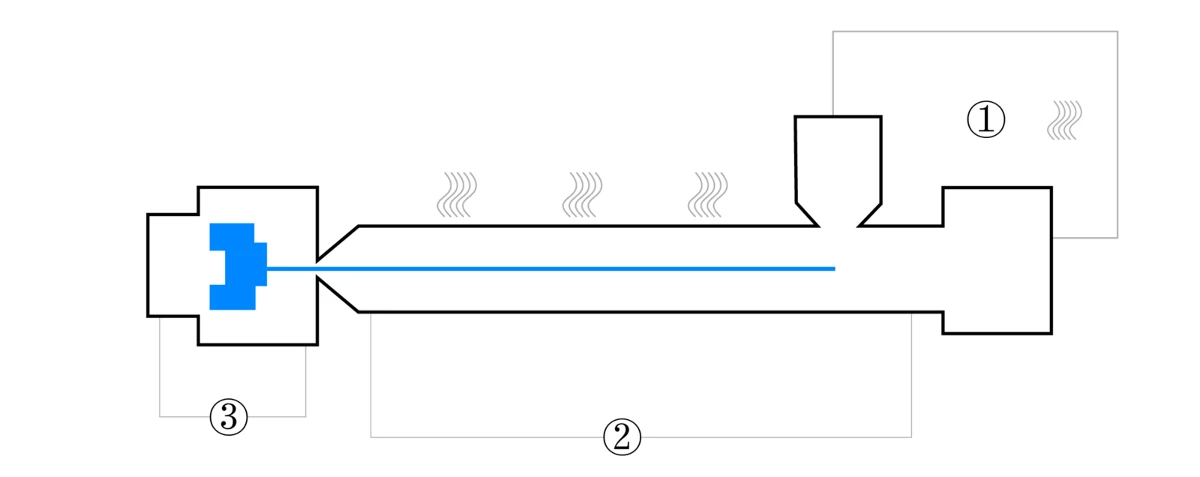
- Screw Design: A low-compression ratio screw with deeper flights is highly recommended. High-shear screws will break the fibers.
- Gate and Runner Sizes: Use larger gate sizes (sprue gates or large edge gates are preferred) to allow the long fibers to flow easily into the mold cavity without experiencing excessive shear stress or bottlenecking.
- Back Pressure and Screw Speed: Keep back pressure as low as possible and use a slow to moderate screw rotation speed to gently melt the resin without masticating the fiber network.
Application Examples: Where LFT Excels
Due to its unique performance profile and cost-effectiveness compared to metal machining, LFT is rapidly replacing metal and engineering plastics across various demanding industries:
-
⑴ Automotive Industry:
- Used extensively in front-end modules, instrument panel carriers, door modules, shift levers, and EV battery trays. For example, replacing a steel bumper reinforced beam with LGF-PP can reduce part weight by 30-40% while still meeting all stringent crash and safety test requirements.
-
⑵ Industrial Equipment:
- Applied in high-pressure pump housings, cooling fan blades, water meter casings, and power tool housings where vibration fatigue resistance, chemical resistance, and stiffness are absolutely critical.
-
⑶ Aerospace & Consumer Goods:
- LCF (Long Carbon Fiber) composites are increasingly used in drone skeletal frames, high-end bicycle components, and winter sports equipment (like snowboard bindings) where maximum stiffness-to-weight ratios dictate performance.

Figure 2: Lightweight automotive EV battery tray injection molded using LFT composites.