
The Paradigm Shift from Metal to Polymer
The transition from traditional metals to advanced polymers is no longer just an experimental concept-it is a mandatory engineering strategy for industries demanding high performance and extreme efficiency. Long Fiber Reinforced Thermoplastics (LFRT), which utilize continuous pultruded fibers forming an internal 3D network, are at the absolute forefront of this revolution.
The Core Engineering Takeaway: By replacing die-cast aluminum or steel with LFRT composites like LGF-PP (Long Glass Fiber Polypropylene) or LCF-PA66 (Long Carbon Fiber Polyamide), manufacturers can achieve up to a 50% reduction in part weight while maintaining equivalent tensile strength and impact resistance. Furthermore, LFRT allows for massive parts consolidation, completely eliminating the need for expensive secondary machining, anti-corrosion coatings, and complex assembly processes, thereby reducing the total cost of ownership by 20% to 40%.
In an era where Electric Vehicles (EVs) require absolute lightweighting for extended battery range, and industrial equipment demands corrosion-proof durability, sticking to legacy metals is a massive competitive disadvantage. LFRT provides the definitive pathway to modern, efficient, and robust product design.
The Hidden Costs and Limitations of Die-Cast Metals
Before understanding why LFRT is superior, we must acknowledge the inherent engineering bottlenecks associated with traditional structural metals like steel, zinc, and die-cast aluminum. While metals offer undeniable absolute stiffness, they introduce a cascade of secondary problems in modern manufacturing workflows.
- The Weight Penalty: Steel has a specific gravity of approximately 7.8 g/cm³, and aluminum sits around 2.7 g/cm³. In applications with dynamic movement (like automotive suspensions, drones, or handheld power tools), this mass requires significantly more energy to accelerate, decelerate, or simply carry, directly translating to horrific energy inefficiency.
- Corrosion and Chemical Vulnerability: Most metals are highly susceptible to oxidation (rust) and galvanic corrosion when exposed to moisture, road salts, or industrial chemicals. Protecting these metals requires galvanizing, anodizing, or painting-adding massive costs, time delays, and environmental toxicity to the production cycle.
- Design Rigidity and Machining Costs: Die-casting metal has severe geometrical limitations. Complex internal geometries, integrated snap-fits, and varied wall thicknesses are nearly impossible to achieve in a single casting. Therefore, a "single" metal part usually requires extensive secondary CNC machining (drilling, tapping, milling) and multi-part welding or bolting, drastically increasing cycle times and labor costs.
How LFRT Works as a Structural Metal Substitute
Standard unreinforced plastics or even short fiber reinforced plastics (SFRP) cannot replace structural metals because they lack the necessary stiffness, tend to creep under continuous load, and become dangerously brittle at low temperatures. LFRT overcomes these fatal flaws through its unique microstructural engineering.
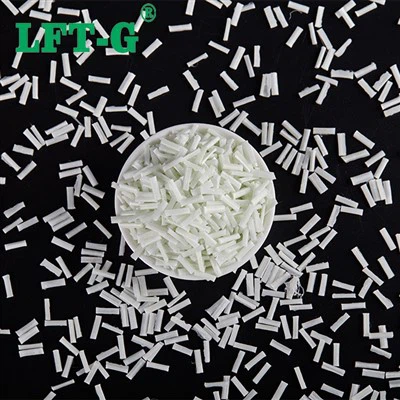
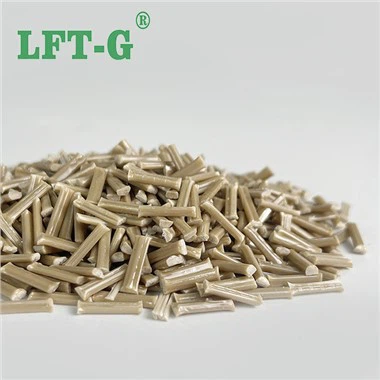
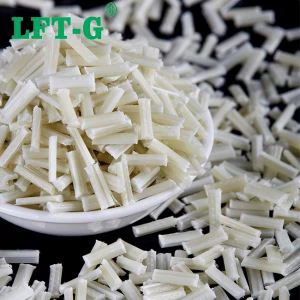
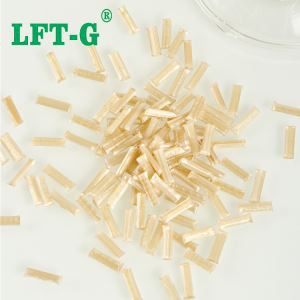
Manufactured via a specialized pultrusion process, LFRT pellets contain continuous fibers that are the exact length of the pellet itself (typically 10mm to 25mm). During the injection molding process, these elongated fibers intertwine to form a highly entangled, continuous 3D skeletal network throughout the finished part. This internal "rebar" allows stress to be transferred efficiently from the weaker polymer matrix directly into the high-strength glass or carbon fibers.
Consequently, LFRT exhibits mechanical behaviors very similar to metal-it resists deformation under persistent thermal loads (high creep resistance), absorbs massive kinetic energy before failure (ductile fracture rather than brittle shattering), and maintains dimensional stability across massive temperature fluctuations.

Figure 1: Specific strength and weight comparison between metals and LFRT composites.
Performance Comparison: LFRT vs. Aluminum and Steel
To validate the metal replacement capabilities of LFRT, we must examine the "Specific Strength" (Strength-to-Weight ratio). While steel may have a higher absolute tensile strength, its immense density makes it structurally inefficient.
| Engineering Property | Standard Steel | Die-Cast Aluminum | LFRT Composites (LGF/LCF) |
|---|---|---|---|
| Density (Weight Profile) | ~7.8 g/cm³ (Extremely Heavy) | ~2.7 g/cm³ (Heavy) | 1.1 - 1.5 g/cm³ (Ultra-Lightweight) |
| Specific Strength (Strength-to-Weight) | Moderate | Good | Exceptional (Outperforms Aluminum) |
| Corrosion & Chemical Resistance | Poor (Requires coating) | Moderate (Galvanic issues) | Excellent (Inherent resistance) |
| Parts Consolidation Potential | Low (Welding required) | Low (Machining required) | Extremely High (Net-shape molding) |
The Economic Advantage: Design Freedom and Part Consolidation
The most profound advantage of LFRT is not just weight reduction, but System Cost Reduction through net-shape injection molding.
In metal manufacturing, an automotive front-end module might consist of a stamped steel beam, multiple welded brackets for headlights and radiators, bolted fasteners, and anti-corrosion paint layers. Each of these steps adds cycle time, labor, supply chain complexity, and tolerance stacking errors.
By utilizing LFRT, engineers can redesign that entire multi-piece metal assembly into a single, highly complex injection-molded component. You can mold in structural ribs exactly where load paths require them, integrate snap-fits to eliminate metal screws, and achieve the final desired color without secondary painting. This "Parts Consolidation" slashes assembly time, eradicates secondary machining costs, and significantly streamlines the bill of materials (BOM), resulting in a massive boost to overall profitability.
Specific LFRT Material Selections for Metal Replacement
Choosing the right thermoplastic matrix and fiber type is critical for successfully substituting metal. Xiamen LFT Composite Plastic Co., Ltd, abbreviated as LFT-G®, formulates two primary categories that dominate structural engineering:
1. LGF-PP: The Standard for Cost-Effective Lightweighting
Polypropylene reinforced with Long Glass Fiber (LGF-PP, typically 30% to 50% fiber weight fraction) is the undisputed champion of metal replacement in high-volume industries. It offers a very low density (around 1.12 to 1.25 g/cm³), excellent moisture resistance, and phenomenal impact energy absorption. It is heavily utilized to replace steel in automotive bumper reinforcement beams, door modules, and battery trays.
2. LCF-PA66: The Ultimate Choice for Extreme Structural Integrity
When the engineering requirements demand absolute maximum stiffness, tensile modulus, and high-temperature performance (where even aluminum begins to struggle), Polyamide 66 reinforced with Long Carbon Fiber (LCF-PA66) is the solution. Carbon fibers are lighter and drastically stiffer than glass. This material is the premier substitute for CNC-machined aluminum and titanium in aerospace brackets, military drones, and extreme-sports equipment.
Proven Industrial Applications of Metal Replacement
The shift towards LFRT is evident across all major manufacturing sectors:
- Automotive Under-the-Hood: Engine mounts, oil pans, and radiator supports originally made of stamped steel are now injection molded using LGF-PA66. The polymer withstands the continuous heat and chemical exposure (oil, coolant) while dampening engine vibrations far better than rigid metal (excellent NVH properties).
- Industrial Pumps and Water Management: High-pressure water pump housings historically relied on cast iron or brass, which are prone to rust and cavitation damage. LGF-PP or LGF-PPS provides a completely rust-proof, fatigue-resistant alternative that drastically extends the lifespan of the equipment in harsh fluid environments.
- Consumer Power Tools: The internal structural frames holding the heavy motors and gears of power drills and saws were once exclusively die-cast magnesium or aluminum. Today, highly rigid LCF-PA or LGF-TPU absorbs the aggressive vibration and torque, reducing user fatigue by slashing the total tool weight.

Figure 2: Multi-part metal assemblies consolidated into a single LFRT injection-molded component.