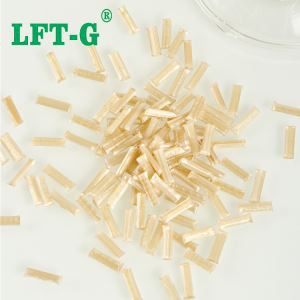

LFT Material Selection Guide: Choosing the Right Resin for Your Application
You've decided that long-fiber reinforced thermoplastics (LFT) are the right solution for your lightweighting or metal-replacement project. But with multiple resin options available - each with its own thermal, chemical, and mechanical profile - how do you choose the right one?
The answer isn't always obvious. PP is economical but temperature-limited. PA offers excellent impact resistance but absorbs moisture. PPS handles high heat and chemicals but costs more. PEEK delivers extreme performance at a premium price.
This guide walks you through a 4-dimensional decision framework - temperature, chemical exposure, mechanical load, and cost - to systematically narrow your options and select the optimal LFT grade for your specific application.

The 4-Step Decision Tree
Instead of starting with a material and trying to fit it to your application, work through these four filters in order. Each step eliminates candidates that don't meet your requirements, leaving you with a shortlist of viable options.

- Step 1 – Operating Temperature: < 80°C → PP / PA | < 120°C → PA / PPS | < 200°C → PPS / PEEK | > 200°C → PEEK
- Step 2 – Chemical Exposure: Water/glycol → PA | Acids/solvents → PPS / PEEK | Fuels/oils → PA / PPS | Strong oxidizers → PEEK
- Step 3 – Mechanical Load: Static/light → PP | Cyclic/fatigue → PA | High creep/strength → PPS / PEEK | Impact/toughness → PA (LGF)
- Step 4 – Cost Budget: Economy → PP | Balanced → PA | High-performance → PPS | Extreme conditions → PEEK
Material Comparison: PP vs. PA vs. PPS vs. PEEK
The table below compares typical properties for 30% long glass fiber (LGF) grades. Actual values vary by fiber content and additives, but this gives you a reliable starting point.
| Property | PP-LFT | PA-LFT | PPS-LFT | PEEK-LFT |
|---|---|---|---|---|
| Service Temp (continuous) | ≤ 80°C | ≤ 120°C | ≤ 200°C | ≤ 240°C |
| Chemical Resistance | Good vs. acids/bases; poor vs. hydrocarbons | Good vs. oils/fuels; poor vs. strong acids | Excellent vs. acids & solvents | Exceptional vs. nearly all chemicals |
| Tensile Strength (MPa) | ~80–110 | ~150–200 | ~180–230 | ~220–280 |
| Flexural Modulus (GPa) | ~5–7 | ~8–12 | ~12–16 | ~15–20 |
| Moisture Absorption | Very low | High (requires conditioning) | Very low | Very low |
| Best for | Low-cost, non-structural, water contact | Automotive structures, impact, fuel systems | High-temp + chemicals, E&E components | Extreme temp/corrosion, aerospace |
| Avoid for | High heat, strong organic solvents | Strong acids, long-term humid heat | Low-temperature impact, cost-sensitive | Non-extreme applications, tight budgets |
Fiber Content: 20% to 60% – What's the Right Loading?
Beyond resin selection, the glass fiber content is your second critical decision. Higher fiber loading increases stiffness, creep resistance, and heat deflection temperature, but reduces flowability and impact toughness.
|
20%
BalancedGood flow for thin walls, excellent toughness. Ideal for housings and interior trim. |
30–35%
WorkhorseSweet spot for overall properties. First choice for automotive and industrial structures. |
40–50%
High StiffnessMaximum creep resistance for metal replacement. Reduced flow; gate design critical. |
60%
ExtremeNear-metal rigidity and heat deflection. Reserve for specialty high-load brackets. |
Pro tip: Start with 30% for most structures. Target 40–50% for die-cast aluminum replacement. Drop to 20–30% for long flow paths. For high-load grades (>40%), consider Direct LFT (D-LFT) molding to preserve fiber length.
Application-Specific Recommendations
Use these real-world application mappings to validate your selection:
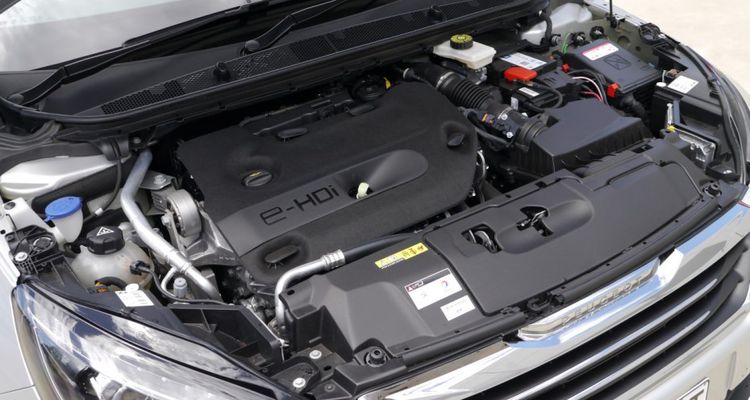
Automotive & EV
|
Aerospace & Defense
|
Industrial & E&E
|
Consumer & Robotics
|


Common Selection Mistakes
❌ Over-specifying for temperature
Choosing PEEK for a 100°C application when PA would do. You pay for performance you don't need. Match the material to your actual continuous operating temperature, not the peak.
❌ Ignoring the processing constraints
Some LFT grades require specialized screws, higher mold temperatures, or longer cycle times. Account for these costs and capabilities before finalizing your selection.
❌ Forgetting about moisture
PA absorbs moisture, which affects dimensional stability and mechanical properties. If your application is in a humid environment, factor this in or consider PPS/PEEK as alternatives.
How to Validate Your Selection
Once you've narrowed down your candidates, take these steps to confirm the choice:
- Request material samples: Get actual molded test bars from your LFT supplier, not just data sheets. Test under your specific conditions.
- Run mold flow simulation: Verify that the material will fill your cavity without excessive fiber breakage or weld line issues.
- Prototype early: If possible, produce prototype parts and measure mechanical properties against your requirements. Fiber length retention in the final part should be ≥70% of the original pellet length.
Need help? LFT-G® provides application engineering support including material recommendations, mold flow analysis, and on-site processing assistance. Contact us for a free consultation.
Get expert material selection advice
Xiamen LFT Composite Plastic Co., Ltd. is a global supplier of long-fiber-reinforced thermoplastics with 20+ years of innovation. We specialize in LFT‑PP, LFT‑PA, LFT‑PPS, and LFT‑Elastomers – offering high‑strength, lightweight alternatives to metal for automotive, aerospace, and industrial applications.