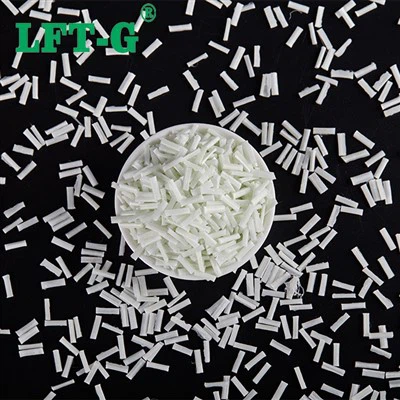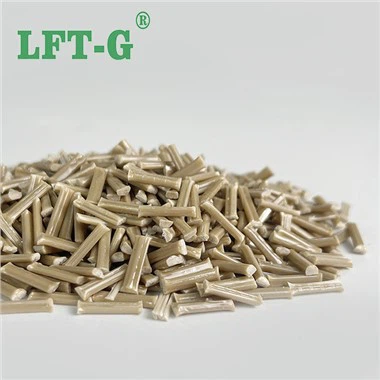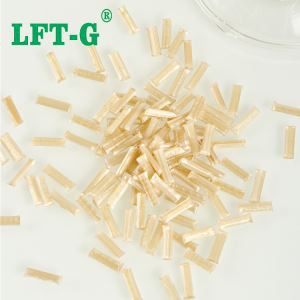

The Role of LCF PP in the Industry
In the long-term evolution of the manufacturing industry, the selection of structural materials has always been an important basis for engineering decisions. However, recently, the industry's focus has been changing: the performance of a single material is no longer the core, and whether the material can be integrated into the structural design system, manufacturing process, and cost and reliability models is becoming a more decisive factor.
In this shift in judgment logic, long-fiber reinforced thermoplastic materials represented by LCF PP (long-fiber reinforced polypropylene) plastic pellet do not emerge as "new materials" but rather as a material path that conforms to the changes in industrial demands, gradually being embedded into the mainstream manufacturing system.
Industry Background: The Shift in Material Selection Logic
From an industry perspective, the selection criteria for structural component materials are changing. In the past, there was a clear distinction between metals and engineering plastics; however, currently, the industry pays more attention to the overall performance of materials in system design.
The main changes are as follows:
From a single strength indicator to structural efficiency and overall load-bearing capacity
From component-level optimization to module and system-level design
From one-time cost considerations to assessment of full life cycle stability
Under this trend, the traditional PP system has gained the realistic possibility of entering the field of structural components through the LCF technology path.
The industry positioning of LCF PP: Expansion of capabilities:
-
In the industry, LCF PP is not a material that completely replaces metals or high-end engineering plastics. Instead, it is a technical approach that expands the application boundaries of polypropylene.
Its industry positioning is mainly reflected in the following aspects: -
By leveraging the mature PP industrial chain, it lowers the application threshold of structural composite materials.
-
Through the long-fiber reinforcement mechanism, it enables PP to possess stable load-bearing and impact resistance capabilities.
-
It provides a scalable solution that can balance cost, weight, and structural performance.
-
Therefore, LCF PP is more like an intermediate solution that bridges the gap between "costly materials" and "structural materials".

The Application Logic of LCF PP in Typical Industries

Automobile and electric vehicle industry
LCF PP is more often adopted as part of the modular structure solution. Its value lies in supporting weight reduction, component reduction, and simplification of assembly.
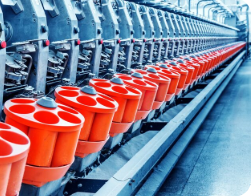
Industrial equipment and automation manufacturing
Focus on the stability of the material under long-term loading and vibration conditions. LCF PP aims to enhance consistency and adapt to automation.

Large-scale functional structure and outer shell system
In scenarios such as the exteriors of household appliances, LCF PP enhances the dimensional stability and overall rigidity, enabling the PP system to take on greater responsibilities.
Compared with short-fiber reinforced PP, the industry value of LCF PP lies not only in the improvement of performance but also in the fact that it has changed the way engineers use PP.
This is specifically manifested as follows:
The structural design has shifted from local reinforcement to overall force path planning.
The reliance on metal inserts and multi-piece assembly has decreased.
The structural reliability can be more easily predicted through simulation and testing.
This enabled LCF PP to be included in the discussions of structural component schemes that have clear requirements for reliability.
LCF PP Industry Value

From an industry practice perspective, LCF PP is not a solution that can fully realize its value simply by "material substitution". Its structural performance and cost advantages are highly dependent on the maturity of the manufacturing system.
At the level of structural design, LCF PP is more suitable to be incorporated into the early stage of the structural planning rather than being used as a substitute for decision-making in the later stage.
From an industrial perspective, enterprises with a mature manufacturing system are more inclined to view LCF PP as "an extension of the system capability". They can achieve experience reuse and cost reduction across multiple structural components and product lines.
From the current development trend of the industry, LCF PP plastic pellets are gradually moving from exploratory applications to a more rational and systematic development stage. Its focus has shifted from merely "whether it can be used" to "how to use it stably and reproducibly".
From an industry perspective, the value of LCF PP compound resin lies not in disrupting the material system but in providing a practical path for polypropylene, a mature material, towards structural applications. As the manufacturing industry continuously raises its requirements for efficiency and reliability, the role of LCF PP in the structural material system will become increasingly clear.