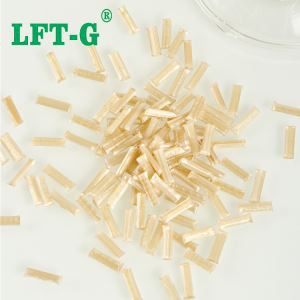

LCF PP - The Modern "Material Aristocrats"
Driven by the dual forces of the "dual carbon" strategy and the range anxiety of new energy vehicles, the light weighting competition in the manufacturing industry has entered a deep-water zone. When traditional long glass fiber (LGF) has reached its performance ceiling and continuous carbon fiber composites are difficult to be widely adopted due to high costs, long carbon fiber reinforced polypropylene (LCF PP) is emerging as a key bridge between general engineering plastics and high-end composites, thanks to its unique balance of performance and cost.
Why LCF PP?
For a long time, the material selection for automobiles and industrial components has been constrained by an "impossible triangle": high strength, low density, and low cost.
Metal materials: Have sufficient strength, but have high density and require secondary processing after forming.
Short carbon fiber / short glass fiber PP: Easy to be injection molded, but has poor impact resistance and weak creep resistance, and is difficult to be used for structural components.
The precise positioning of LCF PP composite emerged under this circumstance. It retains the efficient injection molding process advantages of thermoplastic plastics (PP), while achieving mechanical properties close to those of metals by maintaining a relatively long length of carbon fibers (typically > 5 mm).
Microstructure Determines Macroscopic Properties
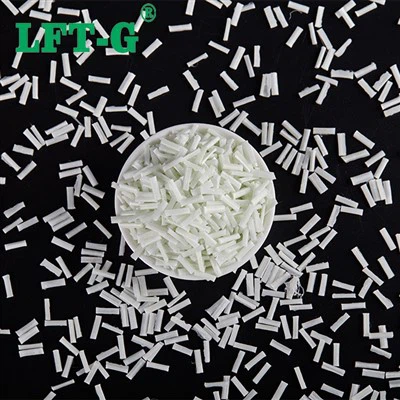
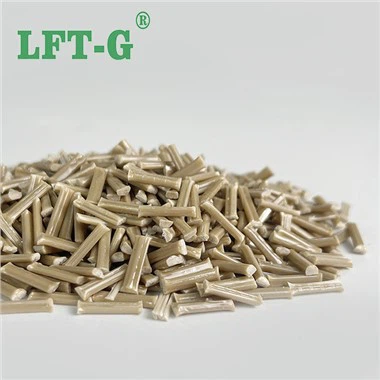
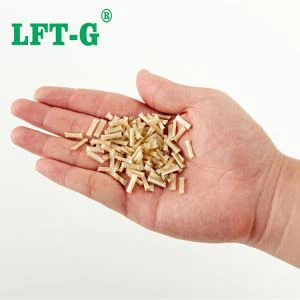
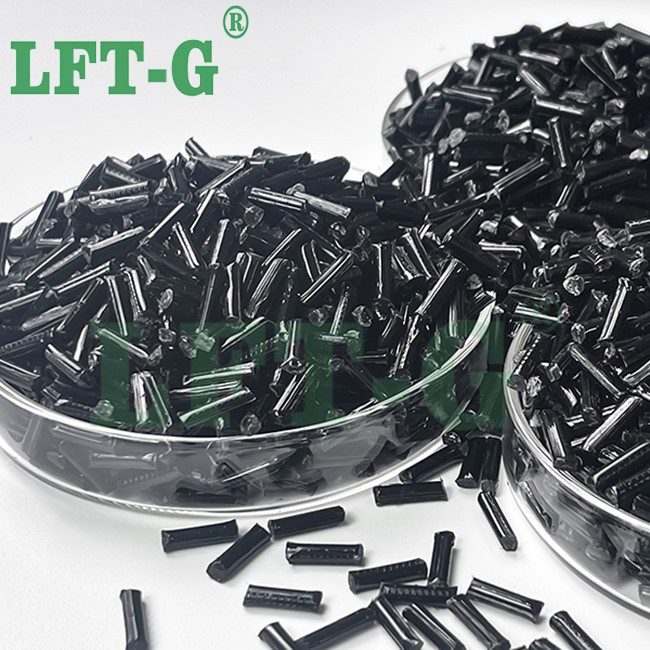
The core of LCF PP lies in "length". Unlike short carbon fibers (SCF), LCF has a length in the granular form that is usually equal to the length of the granules (5 mm - 25 mm), and it can maintain a relatively long retained length in the final product.
1. 3D Skeleton Network
Inside the mold cavity, the intertwined long carbon fibers form a three-dimensional skeleton network. This structure not only significantly enhances the specific strength and specific modulus of the material, but more importantly, it greatly improves the material's impact toughness and creep resistance. This means that LCF PP parts are less likely to undergo dimensional deformation under long-term stress.
2. Natural EMI shielding performance
With the development of automotive intelligence, the high-voltage system and numerous sensors have brought about serious electromagnetic interference problems. Carbon fiber itself has excellent conductivity. LCF PP does not require the addition of conductive fillers or surface coating treatment to achieve efficient electromagnetic shielding (EMI Shielding), which is crucial for components such as the battery housing of electric vehicles and the ECU housing.
3. Low warpage and dimensional stability
The crystallization speed of PP base material is fast, which makes it prone to warpage. However, the high modulus and low thermal expansion coefficient (CLTE) of long carbon fibers effectively inhibit the shrinkage of PP, enabling LCF PP to be used for manufacturing large thin-walled components without easy deformation.
Core Application Scenarios
Currently, LCF PP plastic pellet is moving from "proof of concept" to "mass production explosion", mainly focusing on the following areas:
New energy vehicles - The main battlefield for weight reduction
Front-end module frame (Front-end Module): Utilizes high-strength materials to support headlights and radiators, while integrating components and reducing assembly processes.
Battery pack tray and guard plate: Uses flame-retardant LCF PP polymer instead of metal, taking into account impact resistance, light weighting, and EMI shielding.
Seat frame and rear door inner panel: Replaces traditional stamping steel plates, significantly reducing the weight of the vehicle body.
Industrial Drones and Robots
Drone blades and arms: The high modulus of LCF PP material reduces the deformation and vibration of the blades at high rotational speeds, improving flight efficiency and endurance, and is less costly than pure carbon fiber composites.
Logistics robot shells: Excellent impact resistance, resistant to bumps.
High-end Civilian and Shoe Materials
Safety shoe toe caps: Replace steel caps with a lighter and more insulating design. Ski boot fastener: Maintains excellent toughness even in low-temperature conditions.
What Should We Pay Attention To?
Although the prospects of LCF PP are promising, the industry still faces a battle between technology and cost:
Process control of fiber retention rate: During the injection molding process, the high shear force of the screw can easily break the carbon fibers. How to optimize the screw combination, flow channel design, and impregnation process to ensure the fiber length in the product is the core competitiveness of processing enterprises.
Circular Economy: Compared to thermosetting composites, LCF PP compound resin, as a thermoplastic material, has a significant advantage in terms of recyclability.
LCF PP plastic material is not a panacea, but in the trade-off between "light weighting" and "low cost", it is currently one of the best balance points. With the release of domestic carbon fiber production capacity and the maturity of modification technologies, LCF PP is reshaping the industrial material landscape. Those who can first master the design and molding capabilities of LCF PP will have the opportunity to gain the upper hand in the second half of the light weighting competition.