
 PP-LGF30 vs. PP-GF30: The Ultimate Engineering Guide to 30% Glass-Filled PP
Selecting the right material is paramount for product success. When it comes to 30% glass-filled polypropylene, the choice between Long Glass Fiber (LGF30) and Short Glass Fiber (GF30) isn't just a nuance-it dictates mechanical performance, dimensional stability, aesthetics, and ultimately, part longevity and cost-effectiveness. This comprehensive guide provides engineers, designers, and material specifiers with a data-backed comparison to inform optimal material selection.
What is the Fundamental Difference Between PP-LGF30 and PP-GF30?
The core distinction lies in the average fiber length within the final molded part. While both contain 30% glass fiber by weight, the way these fibers are integrated into the polypropylene matrix profoundly impacts their properties.
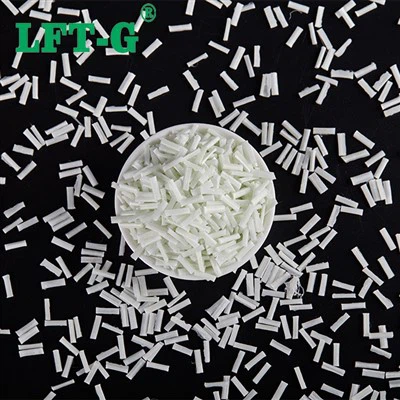
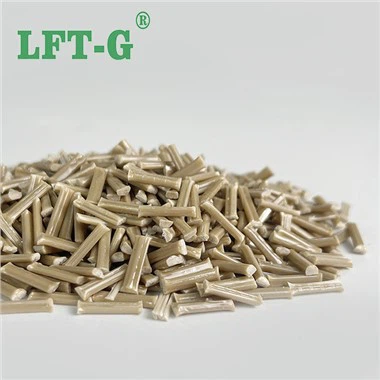
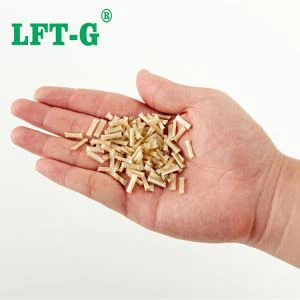
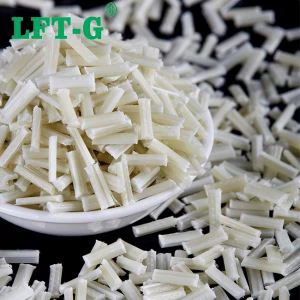
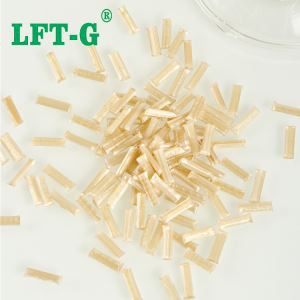
- √ PP-LGF30 (Long Glass Fiber Polypropylene): Typically starts with glass fibers 10-25mm in length in the pellet. During the injection molding process, these fibers are significantly reduced but maintain an average length of >3mm (often 6-25mm) in the final part. These long, entangled fibers form a robust, three-dimensional internal skeletal network.
- √ PP-GF30 (Short Glass Fiber Polypropylene): Begins with fibers less than 5mm in the pellet. Post-molding, their average length in the part is typically <1mm. These shorter fibers primarily act as discontinuous fillers, providing localized reinforcement but lacking the interconnected network of LGF.
This fundamental difference in fiber morphology is the root cause of the dramatic performance discrepancies we'll explore.
The Quick Verdict: LGF30 vs. GF30 at a Glance
| Criterion | Winner | Reason |
|---|---|---|
|
Impact Strength & Toughness |
PP-LGF30 | Long, entangled fibers form an internal skeleton, effectively absorbing and distributing stress. |
|
Creep Resistance Long-Term Load Bearing |
PP-LGF30 | The continuous fiber network significantly reduces material deformation under constant stress, especially at elevated temperatures. |
| Warpage & Dimensional Stability | PP-LGF30 | More isotropic (uniform) shrinkage due to the 3D entangled fiber network, leading to less distortion. |
| Surface Finish & Aesthetics | PP-GF30 | Shorter fibers are less likely to show on the surface ("floating fiber"), allowing for a smoother, glossier finish. |
| Initial Material Cost | PP-GF30 | Simpler manufacturing process and less specialized compounding leads to lower raw material price. |
|
Ease of Processing (Complex Geometries) |
PP-GF30 | Lower melt viscosity and less fiber breakage make it easier to fill thin sections and complex molds without special considerations. |
It Starts on the Inside: The Fiber Network
 The dramatic performance difference isn't magic-it's fundamental mechanics. In the final molded part, the average fiber length dictates the material's internal architecture.
- PP-LGF30: Fibers (often 5-10mm in the part) interlink and intertwine, forming a robust, stress-distributing internal skeleton. This network maintains structural integrity even if the polymer matrix cracks, akin to rebar in concrete.
- PP-GF30: Fibers (typically <1mm in the part) are dispersed and act more like simple, disconnected fillers. While they stiffen the matrix, they cannot form the continuous load-bearing paths that long fibers do.
This inherent structural difference at the microscopic level is the primary driver for almost all macroscopic performance distinctions between LGF and SGF composites.
Technical Data Sheet: PP-LGF30 vs. PP-GF30
| Property | Test Method |
PP-GF30 (Typical Value) |
|
|---|---|---|---|
| Physical Properties | |||
| Specific Gravity (Density) | ISO 1183 | 1.05 g/cm³ | 1.11 g/cm³ |
| Mold Shrinkage, Flow | ISO 294-4 | 0.2 - 0.4 % | 0.2 - 0.4 % |
| Mold Shrinkage, Transverse | ISO 294-4 | 0.6 - 0.9 % | 0.3 - 0.5 % |
| Mechanical Properties | |||
| Tensile Strength, Yield | ISO 527 | 85 MPa | 110 MPa |
| Tensile Modulus | ISO 527 | 5,200 MPa | 7,300 MPa |
| Tensile Elongation @ Break | ISO 527 | 1.9 % | 2.8 % |
| Flexural Strength | ISO 178 | 125 MPa | 160 MPa |
| Flexural Modulus | ISO 178 | 4,200 MPa | 5,500 MPa |
| Izod Notched Impact Strength @ 23°C | ISO 180/1A | 10 kJ/m² | 38 kJ/m² |
| Izod Unnotched Impact Strength @ 23°C | ISO 180/1U | 35 kJ/m² | 55 kJ/m² |
| Thermal Properties | |||
| Heat Deflection Temp. (HDT) @ 1.8 MPa | ISO 75-2/A | 110 °C | 125 °C |
| Heat Deflection Temp. (HDT) @ 0.45 MPa | ISO 75-2/B | 140 °C | 155 °C |
| CLTE, Flow (-30 to 30°C) | ISO 11359 | 3.5 x 10⁻⁵ /°C | 2.5 x 10⁻⁵ /°C |
| CLTE, Transverse (-30 to 30°C) | ISO 11359 | 7.0 x 10⁻⁵ /°C | 4.0 x 10⁻⁵ /°C |
Visit To More PP LGF Grades Material
Disclaimer: The data provided are typical values and should not be used for specification purposes. Actual properties may vary depending on processing conditions.
Head-to-Head Performance Metrics: A Deeper Dive
Metric 1: Izod Notched Impact Strength & Toughness
This measures a material's ability to resist fracture from a sudden, sharp blow. It is arguably the most significant advantage of LGF materials, crucial for applications requiring high energy absorption and durability.
WINNER: PP-LGF30. The long, entangled fiber network is incredibly effective at absorbing and dissipating impact energy, preventing crack propagation. This results in parts that are dramatically tougher and more durable in real-world use, often exhibiting a "ductile failure" (bending) rather than a brittle fracture.
Metric 2: Tensile Strength, Flexural Modulus & Creep Resistance
These properties define a material's structural integrity under various loads: tensile strength (resistance to pulling apart), flexural modulus (stiffness), and creep resistance (ability to withstand deformation under long-term constant load, especially at elevated temperatures).
| Property | Test Method |
PP-GF30 (Typical) |
PP-LGF30 (Typical) |
|---|---|---|---|
| Tensile Strength @ Yield, 23°C | ISO 527 | 85 MPa | 110 MPa |
| Flexural Modulus, 23°C (Stiffness) |
ISO 178 | 6,000 MPa | 8,000 MPa |
| Specific Gravity (Density) |
ISO 1183 | 1.15 g/cm³ | 1.19 g/cm³ |
| Flexural Creep Modulus (1000h @ 100°C, 5MPa) |
ISO 899-2 | 1,500 MPa | 2,800 MPa |
Download Complete LFT PP LGF30 Data Sheet PDF
WINNER: PP-LGF30. The long fiber network provides superior load transfer and entanglement, leading to significantly higher initial tensile strength and stiffness. Crucially, its exceptional creep resistance (nearly double SGF at elevated temperatures) makes it indispensable for structural components under sustained loads where dimensional stability is critical over time.
Metric 3: Thermal Properties - HDT & CLTE
High heat applications demand materials with excellent thermal stability. Heat Deflection Temperature (HDT) indicates the temperature at which a material deforms under a specific load, while Coefficient of Linear Thermal Expansion (CLTE) describes how much a material expands or contracts with temperature changes.
| Property | Test Method |
PP-GF30 (Typical) |
PP-LGF30 (Typical) |
|---|---|---|---|
| HDT @ 0.45 MPa | ISO 75 | 140 °C | 155 °C |
| CLTE, Parallel Flow (Thermal Expansion) |
ISO 11359 | 5.0 E-5 / °C | 3.0 E-5 / °C |
| CLTE, Transverse Flow | ISO 11359 | 10.0 E-5 / °C | 4.5 E-5 / °C |
WINNER: PP-LGF30. LGF provides a significantly higher HDT, allowing for use in hotter environments. More importantly, the entangled network dramatically reduces the Coefficient of Linear Thermal Expansion (CLTE) in both parallel and transverse directions, leading to much better dimensional stability and less warpage when subjected to temperature fluctuations.
Metric 4: Fatigue Strength & Long-Term Reliability
Fatigue strength measures a material's resistance to failure under repeated stress cycles, which is critical for parts subjected to constant vibration or cyclic loading (e.g., automotive under-the-hood components, pump housings).
WINNER: PP-LGF30. Due to its robust, load-distributing fiber network, PP-LGF30 exhibits significantly superior fatigue resistance compared to PP-GF30. The long fibers effectively arrest crack growth, extending the service life of components under dynamic stress. While specific fatigue limits vary, LGF can often double or triple the fatigue life in real-world conditions.
Processing Considerations: Where SGF Holds an Edge
While LGF offers superior mechanical and thermal performance, it does come with specific processing considerations, especially during injection molding.
- PP-GF30: Generally easier to process, especially for parts with thin walls or intricate geometries. Its lower melt viscosity and shorter fibers allow for easier flow and less fiber breakage. Surface finish is typically smoother, with less "floating fiber" visible.
- PP-LGF30: Requires careful attention to injection molding parameters to preserve fiber length and optimize part performance. Lower shear rates, larger gate sizes, and optimized screw designs are often necessary. While surface finish can be a challenge (potential for "floating fiber"), advancements in molding techniques can mitigate this.

Processing Information
To unlock the maximum potential of LFT-G® PP LGF30, expert management of the injection molding process is critical. The extreme 30% glass fiber content requires specialized processing conditions and equipment to ensure the long fibers are preserved, which is the key to achieving the material's class-leading mechanical properties.
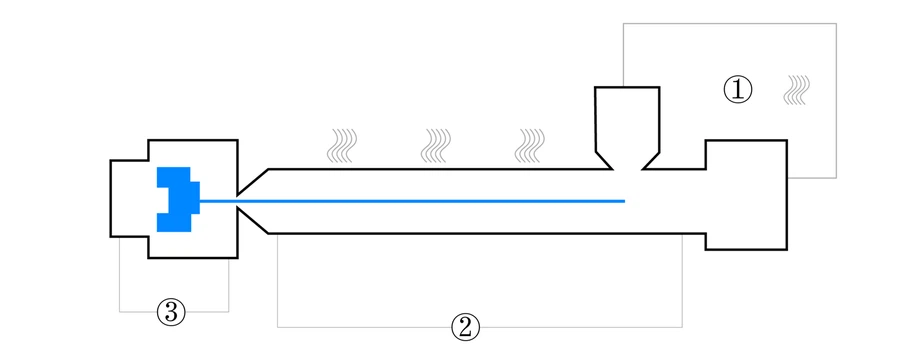
| ①Drying Time | 2-4 hours |
|
Drying Temperature |
80-100°C |
| ② Temperature Zone (Melt) | 220-240°C |
| ③Mold Temperature | 40-80°C |
Application Selector: Which One Is Right For You?
Choose PP-LGF30 If Your Application Demands:
- Maximum Toughness & Impact Resistance
(e.g., Automotive bumpers, front-end modules, battery housings, power tool casings) - Long-Term Structural Performance & Creep Resistance
(e.g., Automotive seat structures, instrument panel carriers, appliance inner drums, furniture frames, industrial pump housings) - Minimal Warpage & Superior Dimensional Stability (large, flat parts)
(e.g., Large automotive underbody shields, HVAC components, large fan blades) - Enhanced Fatigue Life under Dynamic Loads
(e.g., Brackets, levers, pedal boxes, components in vibrating environments) - High Heat Deflection (HDT) in Structural Applications
(e.g., Under-the-hood automotive parts, high-temperature fluid reservoirs)
Choose PP-GF30 If Your Application Prioritizes:
- Excellent Surface Aesthetics & Paintability
(e.g., Visible appliance covers, decorative automotive trim, interior panels) - Lower Material Cost & Good General-Purpose Stiffness
(e.g., Non-structural brackets, fan shrouds, small electronic housings, general industrial components) - Ease of Processing for Complex, Thin-Walled Geometries
(e.g., Small, intricate electrical connectors, thin-ribbed components where flow is critical) - Lower Tooling Wear
(Due to less abrasive nature of shorter fibers)