

 Under-hood automotive environments demand materials that can withstand high mechanical stress, constant vibration, and elevated operating temperatures. Historically, short glass fiber reinforced polyamide (PA6-GF30 or Nylon 6 GF30) has been the default specification for radiator cooling fans and shrouds. However, polyamide is highly hydrophilic due to the polar amide groups in its polymer backbone. When exposed to high ambient humidity-a common occurrence during summers in regions like the Middle East-polyamide parts absorb moisture, leading to a catastrophic 40% reduction in tensile modulus and significant dimensional swelling.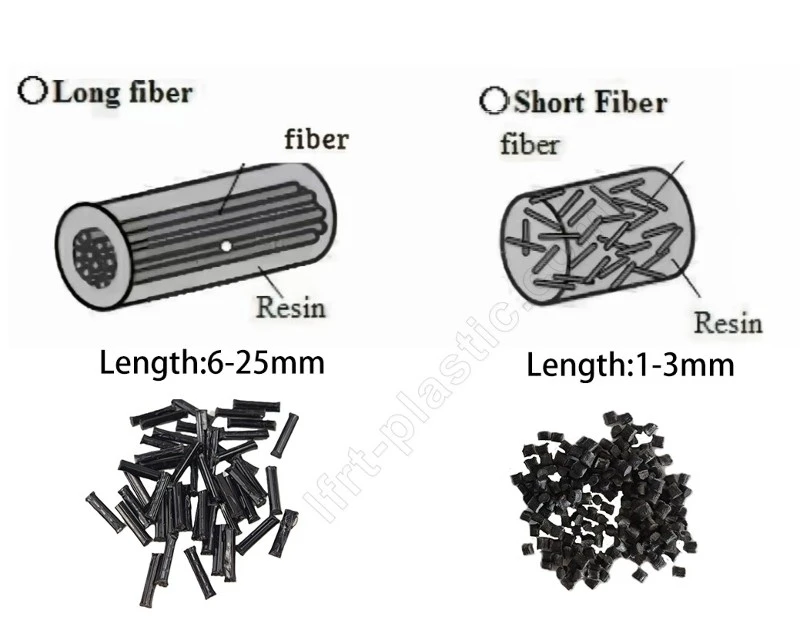
The Structural Secret: 12mm Continuous Glass Skeleton
Standard short-fiber compounds (like PP GF30 or PA6 GF30) utilize broken glass fragments typically under 1mm in length. During injection molding, these short shards orient in the flow direction, creating severe anisotropic shrinking (warpage) and weak mechanical boundaries.
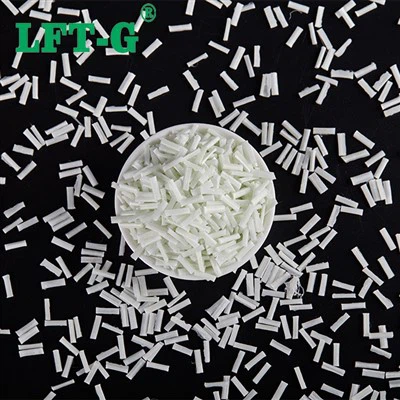
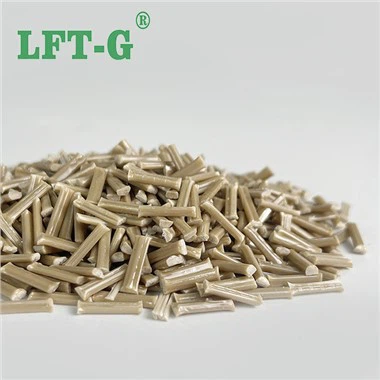
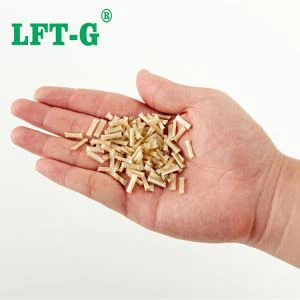
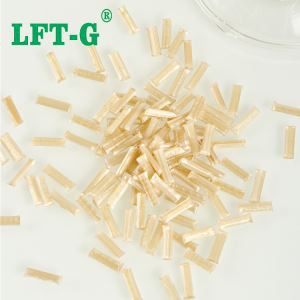
In contrast, LFT-G® pellets are cut to a uniform length of 12mm. The glass filaments run continuously throughout the entire length of the pellet. Once molded, these long fibers form an interlocking 3D reinforcing skeleton inside the part, distributing mechanical loads evenly and preventing crack propagation.
Material Data Verification: PP LGF30 vs. Traditional Compounds
The following technical data profile compares LFT-G® PP-LGF30-NG03 against standard short-fiber polyamide (PA6-GF30) under dry and wet (conditioned) states, highlighting the structural stability of long-fiber polypropylene.
| Mechanical Properties (Typical) | Test Standard | PP LGF30 (Dry / Wet) | PA6 GF30 (Dry State) | PA6 GF30 (Wet / Conditioned) |
|---|---|---|---|---|
| Density (g/cm³) | ISO 1183 | 1.15 (Constant) | 1.36 | 1.36 |
| Water Absorption (%) | ISO 62 | < 0.01% | 1.8% | 6.5% - 8.5% (Max Saturation) |
| Tensile Strength (MPa) | ISO 527 | 115 | 175 | 100 (43% Drop) |
| Tensile Modulus (MPa) | ISO 527 | 7,200 (Constant) | 9,500 | 5,500 (42% Drop) |
| Notched Izod Impact (kJ/m²) | ISO 180 | 35.0 | 11.0 | 13.0 |
| Mold Shrinkage Range (%) | ISO 294-4 | 0.15% - 0.30% (Isotropic) | 0.35% - 0.85% | 0.45% - 1.20% (Anisotropic Warp) |
Field Proven Case Study: Middle East Automotive Cooling Shroud Upgrade
The Challenge
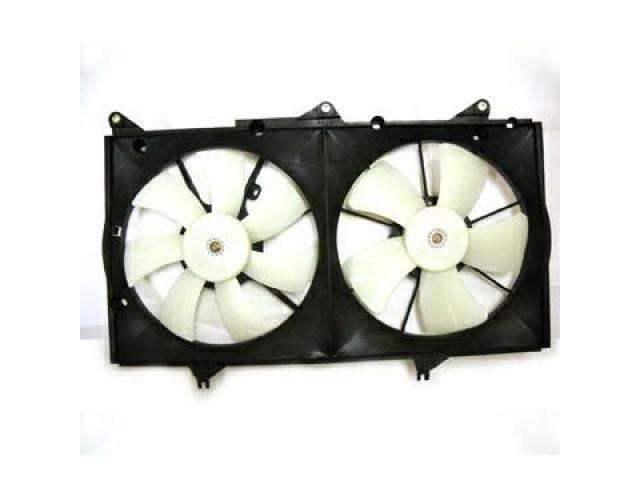
A tier-1 automotive component supplier in the Middle East encountered chronic structural failures with radiator cooling fan shrouds. The original components, molded using standard short-fiber polyamide (PA6-GF30), absorbed ambient moisture under extremely humid summer conditions. This moisture absorption reduced the material's rigidity by over 40%, causing the shroud to warp and sag. Consequently, the fan blades interfered with the shroud housing, leading to catastrophic motor lockups, coolant leaks, and costly warranty claims.
The Solution
The engineering team selected LFT-G® PP-LGF30-NG03 (a 30% long glass fiber reinforced polypropylene compound) as a drop-in replacement. Because PP is a hydrophobic polyolefin, its moisture absorption index is near-zero (<0.05%). The long glass fiber skeleton formed an internal interlocking structural matrix, preserving high rigidity, structural shape, and torsional stiffness under high thermal loads up to 120°C without any warping.
The Results
- Zero Warpage & Swelling: Component moisture absorption dropped below 0.05%, maintaining dimensional clearance.
- 15% Weight Reduction: PP's lower density (1.15 g/cm³ vs PA6's 1.36 g/cm³) contributed to vehicle lightweighting.
- 25% Cost Reduction: Shorter cycle times and the elimination of energy-intensive pre-drying required for nylon compounds cut production costs.
- Proven Reliability: Zero field failures recorded over 24 months of service in extreme Middle East desert climates.
Injection Molding Guidelines for LFT-G® PP LGF30
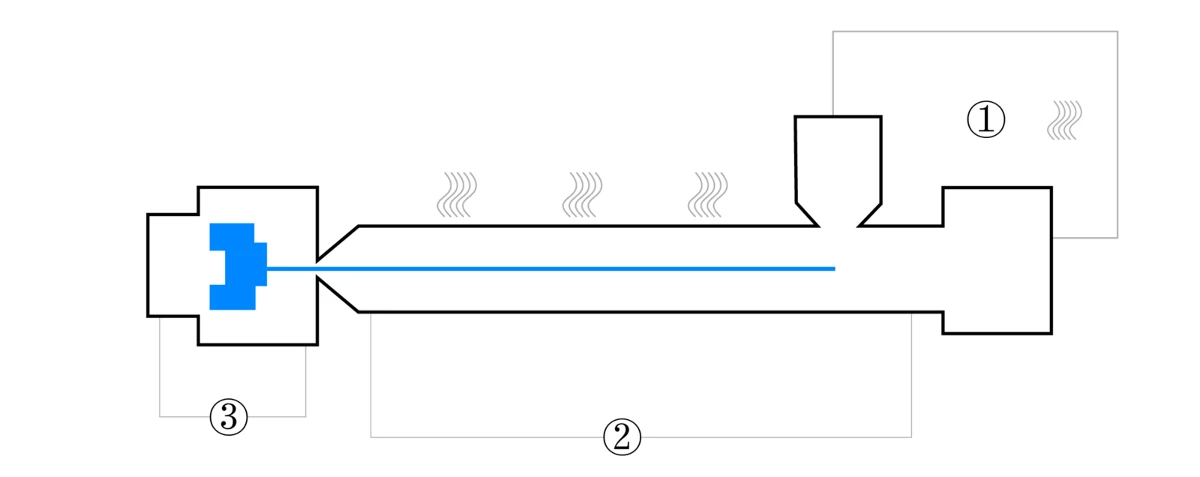
Processing long fiber thermoplastics requires specific machine configurations to avoid fiber degradation. High shear forces must be avoided to protect the internal 3D fiber network. Follow these three core processing rules for optimal part performance:
Screw Selection
Use a low-compression injection screw (L/D ratio 18:1 to 22:1) with a minimum depth flight. Avoid high-shear check rings to preserve continuous fiber length.
Melt & Mold Temp
Maintain melt temperature between 200°C and 230°C. Mold temperatures should be kept between 40°C and 70°C to ensure optimal surface finish and low internal stress.
Low Back Pressure
Keep back pressure low (0.5 to 1.5 MPa) and injection speed moderate. Excessive back pressure crushes the fibers, turning your LFT compound into short fiber compound.