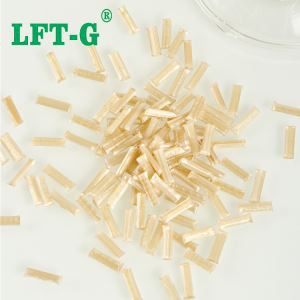

When Metal Brackets Fail – LFT-G® PEEK LCF40 Case Study
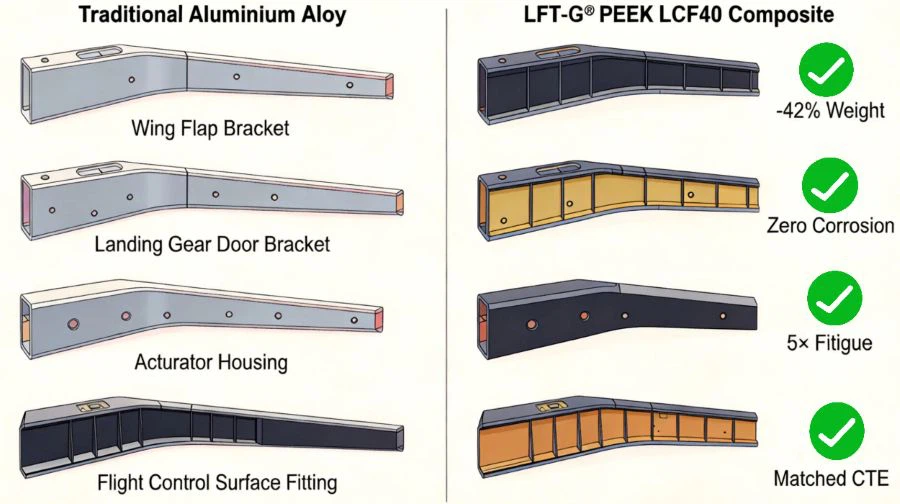
The Challenge: Thermal, Chemical & Mechanical Conflicts
In modern aircraft and high‑performance vehicles, movable surfaces such as wing flaps, ailerons, or stabilizers rely on brackets that connect actuation rods to the composite wing structure. These brackets operate in a demanding environment: temperatures ranging from −50°C during high‑altitude cruise to over +120°C during de‑icing or braking heat soak, combined with continuous exposure to hydraulic fluids (e.g., Skydrol, MIL‑PRF‑83282), moisture, and high‑frequency vibration from aerodynamic loads.
When traditional aluminium alloys (e.g., 7075‑T6 or 2024‑T3) are used for such brackets, two well‑documented issues arise:
- Galvanic corrosion at the interface with steel or titanium fasteners is accelerated by moisture ingress. The electrical potential difference between aluminium and common fastener materials leads to pitting and eventual loss of clamp load.
- Coefficient of thermal expansion (CTE) mismatch - aluminium's CTE is approximately 23 ppm/°C, whereas modern carbon-fiber-reinforced polymer (CFRP) wing skins have a CTE of 2–6 ppm/°C (longitudinal). Under repeated thermal cycles, this mismatch induces cyclic shear stresses at bolted joints, often resulting in micro‑cracking around fastener holes and progressive joint loosening.
Additionally, weight reduction remains a constant priority: every kilogram saved on movable surfaces directly improves fuel efficiency and payload capacity. A material solution must therefore concurrently address corrosion, thermal compatibility, high specific stiffness, and long‑term creep resistance at elevated temperatures (up to 150 °C in service).
|
⚠️ Original design (Al 7075)
|
🔧 LFT-G® PEEK LCF40 solution
|
Material selection rationale
Unlike short-fiber compounds, LFT-G® PEEK LCF40 maintained 87% of its stiffness at 150°C, ensuring bolt load retention under thermal cycling.
Engineering Validation: From Prototyping to Aerospace-Grade Qualification
To address the stringent service requirements of aircraft movable surface brackets, the inherent limitations of traditional aluminium alloy solutions, and the core performance criteria for aerospace structural components, we completed a full engineering validation and performance qualification process for LFT-G® PEEK LCF40 material. This end-to-end workflow covers design simulation, prototype manufacturing, environmental tolerance assessment, and full-service fatigue verification, ensuring the material's performance fully aligns with the in-service standards for aerospace structural parts.
|
STEP 1
Mold Flow & Fiber Optimization |
STEP 2
Prototype Molding & Mechanical Testing |
STEP 3
Aerospace Environmental Qualification |
STEP 4
Full-Scale Fatigue & Load Validation |
Results: Quantified Performance Leap
|
-42%
Weight reduction per bracket
|
5×
Fatigue life improvement
|
0
Corrosion incidents
|
-62%
Production lead time
|
Beyond these core performance benefits, LFT-G® PEEK LCF40 delivers direct operational and maintenance value for aerospace applications. Its coefficient of thermal expansion (CTE) is closely matched to CFRP wing structures, and paired with excellent creep resistance at 150°C service temperatures, it maintains consistent clamp load at bolted joints through extreme thermal cycles.
This eliminates the anti-seize coatings and routine torque rechecks required for aluminium brackets, cutting unscheduled maintenance costs and extending component service life. The material's significant weight reduction also drives sustained improvements in aircraft fuel efficiency and payload capacity over the full airframe lifecycle.
Why PEEK LCF40 Outperformed Alternative Materials

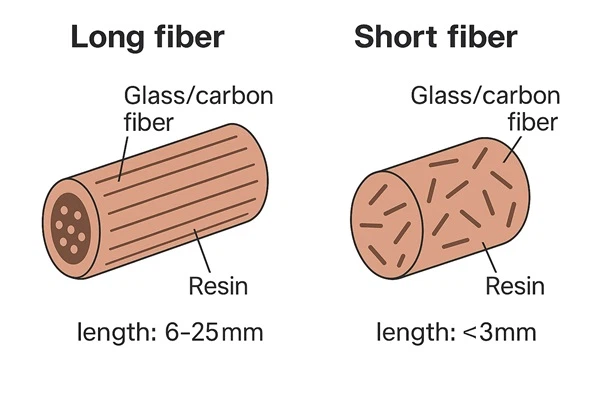
For the stringent performance requirements of aerospace structural bracket applications, we conducted targeted material validation comparing LFT-G® PEEK LCF40 (40% long carbon fiber reinforced PEEK) against two common alternatives: short carbon fiber reinforced PEEK (CF30) with the same PEEK base resin, and the industry legacy 7075-T6 aerospace aluminum alloy.
The long carbon fiber reinforcement architecture delivers the decisive performance edge for this application: it maintains exceptional creep resistance under cyclic loads at 120°C service temperatures, delivers significantly higher weld line strength for complex ribbed geometries, and retains consistent mechanical properties through extreme thermal cycles.
In standardized material testing, short carbon fiber PEEK (CF30) exhibits notably lower impact strength, reduced long-term fatigue resistance, and higher wear rates in fretting vibration scenarios, making it unable to meet the durability requirements of long-cycle aerospace structural service.
Conclusion: a proven pathway for metal replacement
LFT-G® PEEK LCF40 is far more than a direct drop-in replacement for traditional aerospace aluminium alloys - it is a purpose-built performance enabler for advanced structural applications. Leveraging the unique advantages of long carbon fiber reinforcement within a premium PEEK matrix, engineering teams can simultaneously achieve metal-equivalent stiffness, weight savings of over 40%, complete immunity to galvanic corrosion, and unmatched thermal stability with a continuous service temperature up to 260°C. Its closely matched coefficient of thermal expansion (CTE) to CFRP airframe structures also eliminates the joint loosening and micro-cracking risks common with legacy metal components. This high-performance composite has been widely adopted across a growing range of aerospace structural applications, including landing gear door brackets, actuation system housings, and flight control surface components.
For design and engineering teams facing the core challenges of modern aerospace and high-performance vehicle engineering - extreme thermal cycling, long-term exposure to aerospace hydraulic fluids, strict weight reduction targets, and demanding cyclic fatigue requirements - LFT-G® PEEK LCF40 delivers a fully validated, production-ready material solution. Full material characterization reports, aerospace-grade test data, and custom processing guidelines are available upon request via the LFT-G global engineering support team
|
Premium Composites for Aerospace High-performance solutions for aerospace engineering.
|