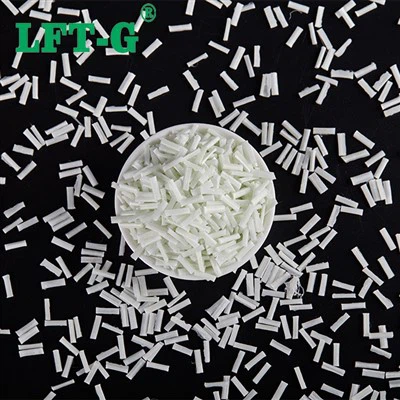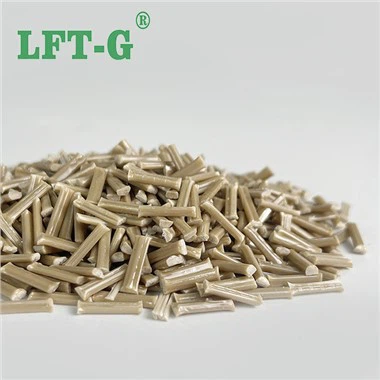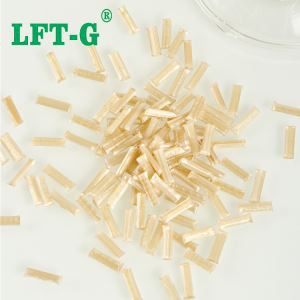

LCF PEEK: The Microscopic Battle Beyond Metal
In the design of high-performance components, engineers often encounter a harsh trade-off: striving for ultimate light weighting often means sacrificing strength or durability. For a long time, aluminum alloys have dominated this field. However, at temperatures above 200 degrees and under fatigue cycles of millions of times, metals begin to show signs of fatigue.
At the pinnacle of specialized engineering plastics, polyether ether ketone (PEEK) has become the undisputed champion. However, the demands of industry are insatiable: we desire the rigidity of metals but reject their weight; we seek the molding efficiency of thermoplastics but require them to be as strong as thermosetting composites in impact. LCF PEEK (long carbon fiber reinforced polyether ether ketone) compound resin is precisely the product that can perfectly meet these requirements.
CF PEEK: Microscopic Reconstruction
There are significant performance differences among many LCF PEEK products, not due to the carbon fiber itself, but in the invisible "interface". This is not just a physical mixture; it is a chemical alliance.
It's also carbon fiber, but why do the performances differ?
Short-cut fibers (SCF) usually only require simple mechanical anchoring. But for long fibers, if the PEEK melt cannot perfectly wrap each individual filament, voids will form inside the fiber bundle. Deep hidden danger: These voids are breeding grounds for stress concentration. Under alternating loads, cracks will emerge from here, causing the material to fail at stresses far below the theoretical strength.
How does LCF PEEK Fail?
Since we are discussing the ultimate materials, we must confront their failure. The difference between LCF PEEK plastic pellet and metals lies in their energy absorption mechanism.
1. Metal vs. Composite Materials
Metal: It undergoes plastic deformation through lattice slip to absorb energy (bending, wrinkling).
LCF PEEK: Its energy absorption mechanism is more complex and efficient - progressive crushing.
2. The King of Specific Energy Absorption
In aircraft crashes or car crash tests, we need materials to "absorb" as much kinetic energy as possible when sacrificing themselves. The long fiber matrix of LCF PEEK, when subjected to axial impact, will experience fiber fracture, micro buckling, interlayer cracking, and frictional heating. This multi-modal composite failure is superior to many thermosetting carbon fiber tubes. Application insight: This makes LCF PEEK an ideal material for helicopter seat supports and car bumper impact beams - it is not only lightweight, but also can save lives in disasters.

LCF PEEK: The Cost-Effectiveness of Expensive Materials
The unit price of LCF PEEK composite is high, but why has its application in the aviation and automotive sectors been increasing year by year? The answer lies in the total cost of ownership (TCO) of the system.
Compound effect of weight reduction: In the aviation sector, every 1KG reduction in structural weight means saving tens of thousands of dollars in fuel throughout the entire lifecycle. LCF PEEK polymer is lighter than aluminum and even lighter than titanium.
Elimination of secondary processing: Metal casting parts often require deburring, CNC finishing, and anodizing for corrosion protection. LCF PEEK plastic pellet is injection molded and is naturally corrosion-resistant, eliminating the entire post-processing supply chain.
Function integration: By taking advantage of the high degree of freedom of injection molding, fasteners, clasps, and gear features can be integrated into one piece. Combining 5-6 metal parts into one LCF PEEK part significantly reduces assembly costs.
LCF PEEK compound resin is not a universal panacea. It requires engineers to possess a higher-dimensional design mindset - they need to utilize its comparable-to-metal strength-to-weight ratio while also controlling its anisotropy through mold design, much like taming a wild beast. When we need a material that can bear weight, be wear-resistant, and be as light as a feather at temperatures above 200 degrees, LCF PEEK is not only an alternative solution but also the optimal choice for a coping strategy.