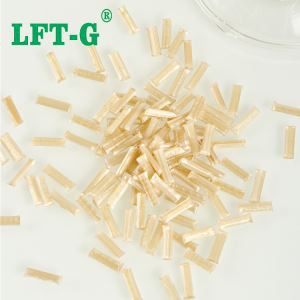

How can LCF PPS Break Through?
In the arena of specialty engineering plastics, if PEEK is the crown jewel, then LCF PPS (long carbon fiber reinforced polyphenylene sulfide) is the heavily armored combat guard. Its significance lies in addressing one of the most intractable contradictions in today's high-end manufacturing: how to achieve both "extreme lightweight" and "high structural rigidity" in extremely high-temperature and corrosive environments.
Why do we need "long" carbon fibers?
When engineers are designing the thermal management module of a new energy vehicle or the fuselage frame of an unmanned aerial vehicle, they often encounter a dilemma in material selection: metals are too heavy and have poor corrosion resistance, while ordinary short-fiber plastics are lightweight but prone to fatigue fractures under high-frequency vibrations and have extremely poor impact resistance.
The emergence of LCF PPS is not merely a combination of performance; rather, it represents a fundamental transformation in the operating mode.
In the mechanical qualitative change from "pulling out" to "breaking" At the microscopic force level, short carbon fibers (SCF) are like gravel in concrete. When subjected to excessive force, the fibers tend to be pulled out of the matrix, resulting in brittle fracture. While LCF (long carbon fibers) retain a length of over 5mm within the component, they are no longer independent entities, but instead interlock with each other to form a framework network.
Anti-rheological "time-stopping technique" Metals fatigue, plastics creep. But under long-term loads above 120°C, LCF PPS plastic granules demonstrates astonishing dimensional stability. The long carbon fibers are like countless tiny "tendons", firmly holding onto the PPS molecular chains and inhibiting their plastic deformation over time.
The "point-to-point" in manufacturing process
Infiltration Art: Pultrusion Process
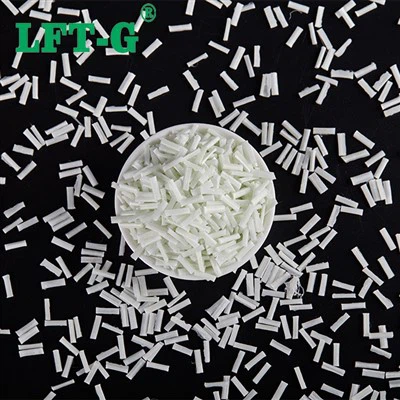
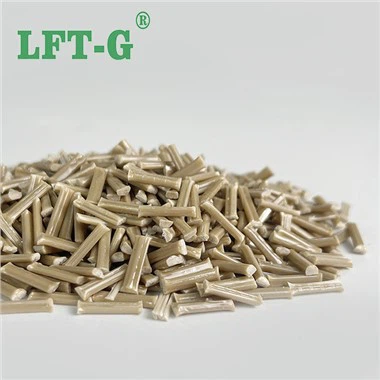
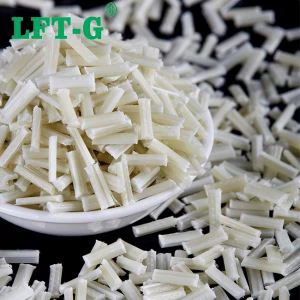
Unlike the "double screw mixing" of ordinary modified plastics, LCF PPS plastic pellet must adopt the melt infiltration pultrusion technology.
Challenges: The melt fluidity of PPS is extremely sensitive to temperature, and the carbon fiber bundle (Tow) is composed of thousands of individual filaments, which is very dense.
Technical Core: Special infiltration nozzles need to be designed. Within a very short period of time, the high-viscosity PPS must be forcibly pressed into each individual filament to achieve single-filament coating. If the infiltration is incomplete, there will be gaps between the fibers, and after molding, the interlayer shear strength will significantly decrease.

The compromise of injection molding: The battle to preserve length
Good pellets are only semifinished products, and the final performance depends on the injection molding process. This was an extraordinary and high-quality operation:
Screw selection: The conventional high-shear screws must be abandoned and special screws with low compression ratio and deep grooves should be selected. The melt should be pushed forward in a "gentle" manner.
Flow channel design: Any right-angle bends or needle-point sprues are "breaking machines" for long fibers. The mold design must follow the principle of "large sprue, full cross-sectional flow", minimizing mechanical shearing of the fibers to the greatest extent.
LCF PPS: Application in the Battlefield
The application logic of LCF PPS is very clear: it only appears in areas where ordinary engineering plastics "can't survive".
Scene 1: The "dead zone" of chemical corrosion
Typical case: The electronic pump impeller and housing in the automotive thermal management system.
Logic: Modern coolant has extremely strong permeability at high temperatures. Nylon (PA) absorbs water, causing dimensional expansion and the impeller to get stuck; metals require expensive anti-corrosion coatings. PPS is inherently resistant to hydrolysis and acid-base, combined with the high rigidity of LCF, has become the absolute leader in this field.
Scene 2: The "Invisible Shield" Against Electromagnetic Interference
Typical Case: Millimeter-wave radar brackets, IGBT module casings.
Logic: Carbon fiber is inherently a good conductor. LCF PPS, while providing structural support, naturally forms a conductive network, effectively shielding electromagnetic interference (EMI). Compared to "plastic + conductive coating" or "metal stamping parts", it achieves a combination of structure and function, significantly reducing system costs.
When we examine LCF PPS compound resin, we should not merely view it as "stronger plastic". It represents a step forward in the field of materials science towards bionics - mimicking the synergy of bones (long fibers) and muscles (resin).
For the manufacturing industry, the value of LCF PPS plastic granules does not lie in the price per kilogram of the particles, but in the systematic cost reduction capabilities it provides to designers, such as "replacing steel with plastic, integrating components, and eliminating secondary processing". With the maturity of recycled carbon fiber technology, in the future, LCF PPS composite will build a new industrial framework in a broader range of fields, from consumer electronics to low-altitude industries.