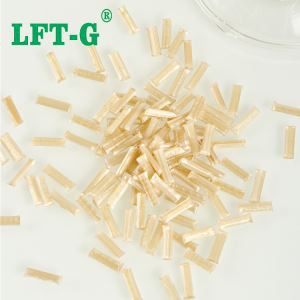

What are the cons of nylon fiber?
To make an informed engineering decision, it's crucial to understand a material's limitations. Unreinforced nylon (polyamide), while versatile, does have some well-known cons. The most significant is its hygroscopic nature-it readily absorbs moisture from the atmosphere. This absorption can cause dimensional changes and a reduction in mechanical properties like stiffness and strength. Other considerations include a lower strength compared to metals and a susceptibility to degradation from prolonged UV exposure.
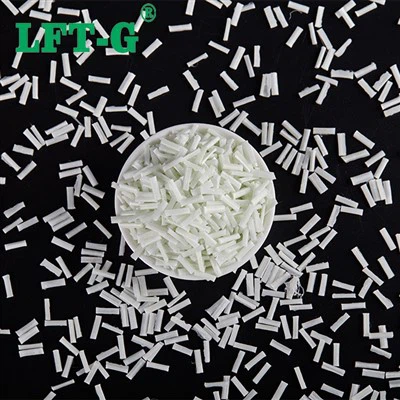
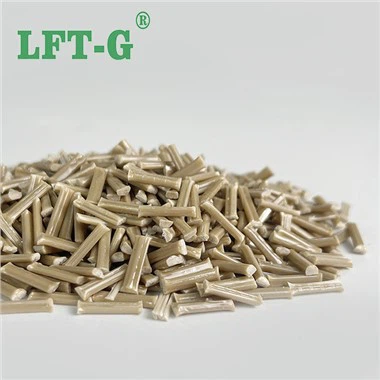
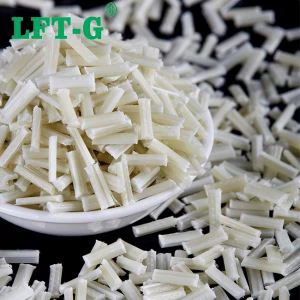
However, these "cons" are precisely what advanced composites are designed to overcome. By reinforcing a high-performance nylon matrix, like PA66, with long carbon fiber, we create a new material-LFT-G® PA66 CF-that systematically solves these issues. The carbon fiber reinforcement dramatically increases strength and stiffness, far beyond the original polymer. It also significantly reduces moisture-related dimensional changes and, with proper additives, enhances UV stability, transforming a good polymer into an exceptional, high-performance engineering composite.
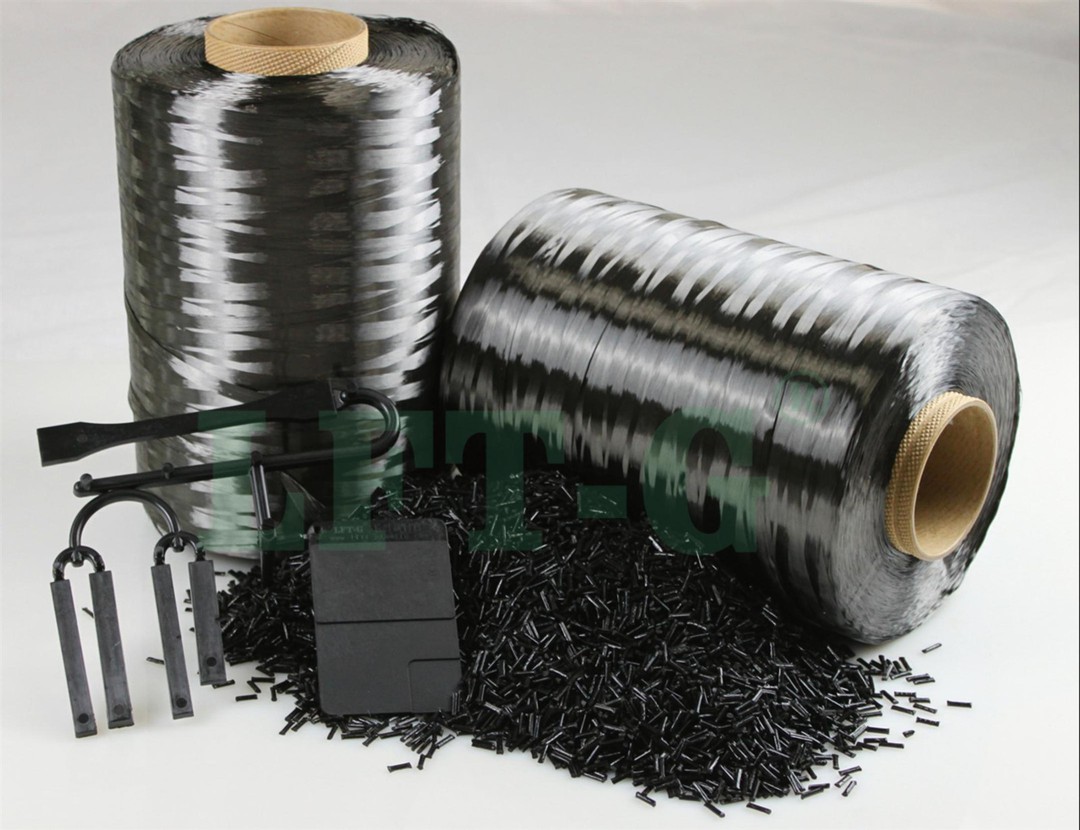
What are the benefits of carbon fiber nylon?
The addition of carbon fiber to a nylon matrix elevates the material's performance, providing a host of benefits for demanding engineering applications.
- Exceptional Strength & Stiffness-to-Weight Ratio
- High Heat Deflection Temperature
- Superior Fatigue, Creep, and Wear Resistance
- High Impact Strength (Optimized by LCF Structure)
- Excellent Chemical Resistance to Oils and Solvents
- Very Low Coefficient of Thermal Expansion (CTE)
- Improved Dimensional Stability Over Unreinforced Nylon
- Tunable Electrical Conductivity for ESD/EMI Shielding
- Design Freedom for Complex Injection Molded Parts

LFT-G® Carbon fiber Nylon
For Automotive Part
The automotive industry requires materials that can withstand extreme temperatures, constant vibration, and high mechanical stress. This is where LFT-G® PA66 CF truly excels. The PA66 matrix provides a higher melting point and better thermal stability than other nylons, while the long carbon fiber reinforcement ensures metal-like strength and stiffness. This powerful combination enables the replacement of heavy die-cast metal parts, leading to significant vehicle weight reduction. Specific applications include:
• Under-the-Hood Components: Engine covers, air intake manifolds, and radiator end tanks that are exposed to high operating temperatures.
• Structural Parts: Front-end modules, A-pillars, and cross-car beams that require high stiffness and crash performance.
• Brake & Pedal Systems: Brake pedal arms and housings where stiffness and fatigue resistance under high load are critical for safety.
• Powertrain Components: Transmission thrust washers, gear actuators, and clutch components that need excellent wear resistance and thermal stability.
Is carbon fiber nylon stronger than PLA+?
There is no comparison in terms of engineering performance. PLA+ (Polylactic Acid) is a popular material in the hobbyist 3D printing market, prized for its ease of printing and low cost. However, it is fundamentally a low-performance material. LFT-G® carbon fiber nylon, particularly our PA66 grade, is a professional engineering composite designed for the most demanding industrial applications.
Compared to PLA+, LFT-G® PA66 CF is in a completely different league. It offers dramatically higher tensile strength, stiffness, and a far superior heat deflection temperature-it can withstand operating environments where PLA+ would soften and fail completely. While PLA+ is suitable for prototyping and non-functional models, any application requiring real-world strength, durability, and temperature resistance necessitates a true engineering material like long carbon fiber nylon.
|
Property (Typical Values) |
PLA+
|
Unreinforced Nylon 66 (PA66)
|
LFT-G® PA66-LCF40 |
|---|---|---|---|
| Tensile Strength (MPa) | ~55 | ~85 | ~285 |
|
Flexural Modulus (GPa) |
~3.5 | ~3.0 | ~24.0 |
|
Notched Izod Impact (kJ/m²) |
~5 | ~6 | ~25 |
| Heat Deflection Temp @ 1.8MPa (°C) | ~52 | ~90 | ~255 |
|
Water Absorption @ Saturation (%) |
~0.5 |
~8.5 |
~4.5 |
Note: Data represents typical values for general comparison. The data clearly shows that LFT-G® PA66-LCF40 is an elite engineering material, vastly outperforming hobbyist-grade plastics like PLA+ in every key mechanical and thermal property. The carbon fiber reinforcement also reduces the overall moisture absorption compared to unreinforced PA66. Always consult official datasheets for design specifications.
Download LFT-G® PA66 CF Data sheet Info