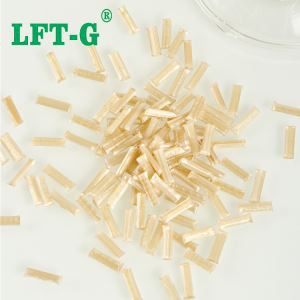

Is carbon fiber nylon stronger than ABS?
The answer is an emphatic yes. In the world of engineering thermoplastics, both Acrylonitrile Butadiene Styrene (ABS) and carbon fiber nylon are highly valued, but they operate in different performance tiers. ABS is a versatile, cost-effective material known for its good impact resistance and ease of processing, making it a staple for everyday consumer products. However, when applications require high strength, stiffness, and thermal stability, nylon composites, particularly those reinforced with carbon fiber, are vastly superior.
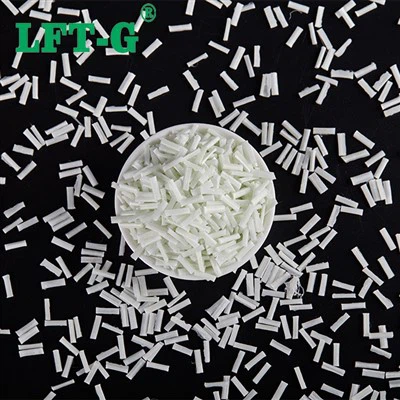
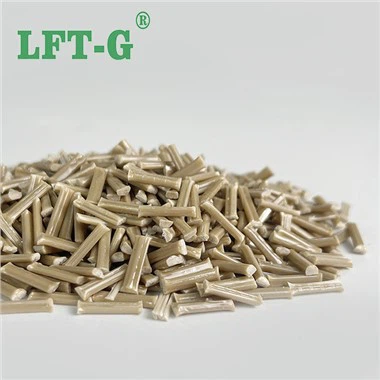
The key to this superior performance lies in the reinforcement. While standard ABS lacks the mechanical properties for structural roles, even carbon-filled ABS has limitations. The true performance leap comes from advanced composites like our LFT-G® PA66 CF. This material utilizes a high-performance Polyamide 66 (nylon) matrix, renowned for its thermal and mechanical resilience, and reinforces it with long carbon fiber (LCF). Unlike short fibers, these long fibers create an internal skeletal network within the molded part. This structure is exceptionally efficient at distributing stress, resulting in a material that is not just stronger, but significantly tougher and more durable than any grade of ABS.
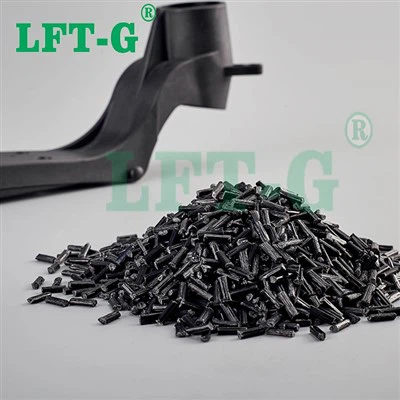
what are the benefits of long carbon fiber nylon?
- Exceptional Specific Strength (Strength-to-Weight Ratio)
- Extreme Stiffness and High Flexural Modulus
- Significant Lightweighting for Metal Replacement
- Superior Fatigue Endurance & Long-Term Durability
- Excellent Creep Resistance Under Sustained Load
- Very Low Coefficient of Thermal Expansion (CTE)
- Outstanding Dimensional Stability and Precision
- Tunable Electrical Conductivity for ESD/EMI Shielding
- High Impact Strength (Optimized by LCF Structure)
Contact LFT-G® Material Expert

LFT-G® Carbon fiber Nylon
for Automotive Part
In the automotive sector, replacing metal and lower-grade polymers like ABS is crucial for lightweighting and improving performance. LFT-G® carbon fiber nylon is the premier material for this task. The PA66 matrix offers superior heat resistance for under-the-hood applications where ABS would fail. The long carbon fiber reinforcement provides the strength and impact resistance needed for safety-critical components. Specific examples include:
• Structural Components: Front-end carriers, cross-car beams, seat structures, and battery pack enclosures for electric vehicles (EVs) that require high strength and crash protection.
• Powertrain Parts: Air intake manifolds, engine covers, and transmission brackets that must withstand constant vibration and high temperatures.
• Chassis and Suspension: Control arms, suspension knuckles, and stabilizer bar links where stiffness and fatigue resistance are non-negotiable.
• Interior Modules: Instrument panel carriers and door modules where the high stiffness of LFT-G® PA66 CF prevents squeaks and rattles while reducing overall weight compared to ABS or talc-filled plastics.
What is the strongest form of carbon fiber?
When evaluating the "strongest" form of carbon fiber for molded parts, it's crucial to look beyond the properties of the fiber itself and consider its form within the composite. The true measure of strength comes from the final performance of the component. This is where Long Fiber Technology (LFT) demonstrates its clear superiority.
The strongest, most effective form for thermoplastic composites is the continuous, interlocked 3D fiber skeleton created by long carbon fiber. In an LFT-G® PA66 CF part, the fibers are not small, isolated fragments. Instead, they are long strands that are intricately woven throughout the nylon matrix. This network provides a continuous path for load transfer, dramatically enhancing impact resistance, creep, and fatigue life. While a material with short carbon fibers (SCF) is stronger than unreinforced resin, it cannot match the robust, structural integrity provided by the long fiber skeleton. Therefore, for demanding applications, the "strongest" and most reliable form is undoubtedly LFT.
|
Property (Units, Test Method) |
ABS (Unreinforced)
|
ABS + 30% CF (Short Fiber)
|
LFT-G® PA66 CF30 (Long Fiber)
|
|---|---|---|---|
| Density (g/cm³, ISO 1183) | ~1.05 | ~1.15 | ~1.22 |
|
Tensile Strength (MPa, ISO 527) |
~45 | ~110 | ~230 |
|
Flexural Modulus (GPa, ISO 178) |
~2.3 | ~12.5 | ~22.0 |
| Impact Strength Notched Izod (kJ/m², ISO 180) | ~20 | ~5 | ~30 |
|
Heat Deflection Temp. @ 1.8 MPa (°C, ISO 75) |
~88 | ~102 | ~250 |
Note: Data represents typical values for comparison and can vary based on specific grades and processing conditions. Carbon fiber reinforcement makes plastics like ABS more brittle (lower impact strength), while LFT technology significantly enhances the impact strength of nylon. Always consult official datasheets for design specifications.
Download LFT-G® PA66 LCF Data sheet Info