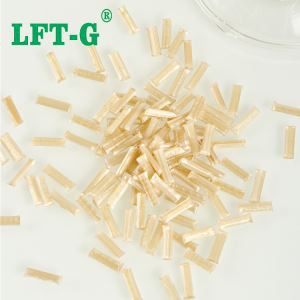

Is carbon fiber nylon stronger than aluminum?
This question is central to modern material science, and the answer is nuanced yet powerful: on a strength-to-weight basis, yes, carbon fiber nylon is significantly stronger than common aluminum alloys like 6061. While aluminum might have a higher ultimate tensile strength in absolute terms, it is also more than twice as dense. For applications where weight is a critical penalty-in aerospace, automotive, and high-performance sports-the metric that truly matters is specific strength (strength divided by density). It is in this crucial domain that advanced composites excel.
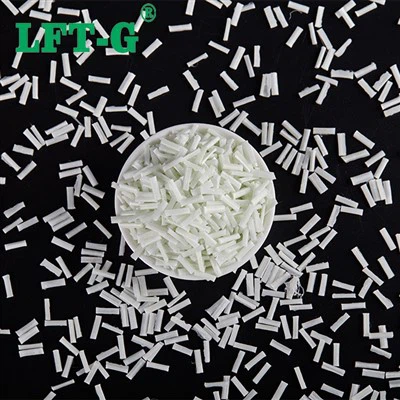
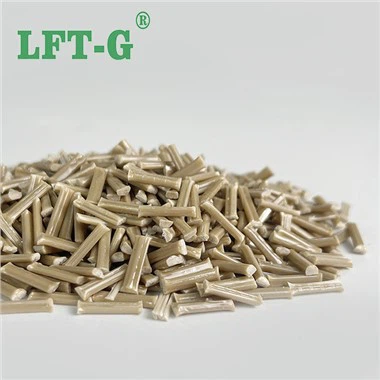
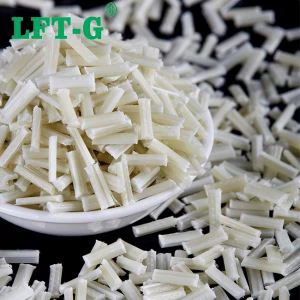
Our LFT-G® PA6 CF materials are engineered precisely for this purpose. We utilize a durable and tough Polyamide 6 (nylon) matrix, which offers an excellent balance of mechanical performance and processability. By reinforcing this polymer with long carbon fiber (LCF), we create a composite that provides a direct, high-performance replacement for die-cast aluminum parts. The integral 3D skeletal network of long fibers within the part delivers exceptional stiffness and impact resistance, offering the strength of metal at a fraction of the weight, along with design freedoms that are impossible to achieve with metal forming processes.
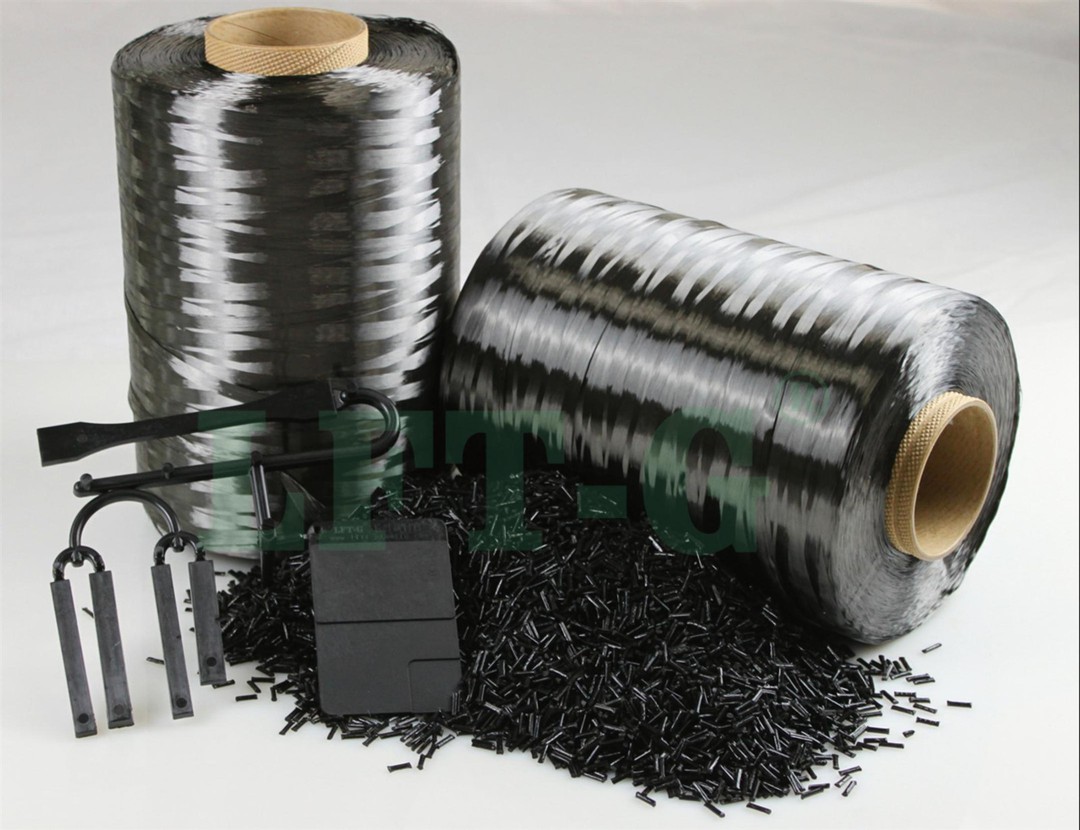
What are the benefits of carbon fiber nylon?
When compared to traditional metals like aluminum, LFT-G® carbon fiber nylon offers a compelling set of advantages that drive innovation in engineering design.
- Exceptional Specific Strength: Delivers metal-like strength at a significantly lower weight, improving efficiency and performance.
- Extreme Stiffness and Modulus: Provides a rigid structure that resists bending and vibration, crucial for precision components.
- Complex Part Consolidation: Enables the molding of complex, integrated geometries in a single step, reducing assembly time and cost compared to fabricating and welding metal.
- Superior Fatigue Endurance: Withstands repeated load cycles better than aluminum, leading to a longer service life in dynamic applications.
- Excellent Creep Resistance: Maintains dimensional stability under constant load over time, a critical factor for structural parts.
- Low Coefficient of Thermal Expansion (CTE): Offers dimensional stability similar to aluminum, ensuring precision across a range of operating temperatures.
- Inherent Corrosion Resistance: Unlike aluminum, nylon composites are immune to rust and galvanic corrosion, making them ideal for harsh environments.
- Vibration and Noise Damping: The composite nature of the material naturally absorbs vibrations, leading to quieter operation compared to resonant metals.

LFT-G® Carbon fiber Nylon
For Carbon Bicycle
The competitive cycling industry is driven by the pursuit of lower weight and higher stiffness, making it a perfect application for replacing aluminum with LFT-G® PA6 CF. The material's superior vibration damping reduces rider fatigue, while its high specific strength allows for aggressive, aerodynamic designs that are both strong and feather-light. Injection molding with long carbon fiber nylon allows for the creation of complex shapes and integrated features that are difficult or expensive to produce with aluminum. Specific components include:
• Bicycle Frames and Forks: Creating monolithic structures that are stiff for power transfer but compliant for comfort.
• Seat Posts and Saddles: Offering lightweight, strong, and micro-adjustable designs that can absorb road vibrations.
• Handlebars and Stems: Providing a rigid steering platform with excellent vibration damping properties, reducing stress on the rider's hands and arms.
• Cranksets and Pedals: Leveraging high stiffness to ensure maximum power transfer from the rider to the drivetrain.
• Brake Levers and Shifter Bodies: Enabling complex, ergonomic shapes that are durable and lightweight.
Does carbon fiber nylon need an enclosure?
This question often arises from the world of 3D printing, where managing ambient temperature with an enclosure is critical for printing engineering-grade materials like nylon to prevent warping. However, for industrial manufacturing using LFT-G® PA6 CF, the context is entirely different. Our materials are processed via high-pressure injection molding, not 3D printing.
In injection molding, the entire process is inherently enclosed and controlled. The material is melted within a sealed barrel, injected into a temperature-controlled steel mold, and cooled under high pressure. This professional manufacturing process ensures that variables like temperature and humidity (as PA6 is hygroscopic, it is pre-dried before molding) are precisely managed. Therefore, when producing parts with LFT-G® long carbon fiber nylon, the "enclosure" is the industrial molding machine and mold itself, guaranteeing consistent, high-quality, and warp-free components.
|
Property (Units) |
Aluminum (6061-T6)
|
LFT-G® PA6 CF40 (Long Fiber Nylon)
|
Advantage
|
|---|---|---|---|
| Density (g/cm³) | ~2.70 | ~1.17 | LFT-G® is >55% Lighter |
|
Tensile Strength (MPa) |
~310 | ~210 | Aluminum is higher |
|
Flexural Modulus (GPa) |
~69 | ~20 | Aluminum is stiffer |
| Specific Strength (kNm/kg) | ~115 | ~179 | LFT-G® is ~55% Stronger for its Weight |
|
Design Freedom |
Limited (Machining, Stamping, Casting) |
High (Complex shapes, part consolidation) |
LFT-G® |
Note: Data represents typical values for comparison and can vary based on specific grades and processing conditions. The key takeaway is the superior specific strength of LFT-G® PA6 CF, which enables significant lightweighting without compromising performance in properly designed components. Always consult official datasheets for design specifications.
Download LFT-G® PA6 CF Data sheet Info