
Understand LDPE, HDPE and LLDPE Plastics
Have you ever encountered such a situation: going to the supermarket to buy a plastic wrap, only to find that the label says "LDPE material"; buying a storage box, and the label prints "HDPE material"; buying a garbage bag, and it says "LLDPE material"?
Looking at these similar-sounding English abbreviations, do you also feel confused? What are the differences between them? Today, let's learn about them.
Polyethylene (PE) is a thermoplastic resin produced by the polymerization of ethylene monomers. It features a long-chain molecular structure, offering excellent chemical stability, low-temperature resistance, and durability. PE is non-toxic, odorless, and can maintain reliable performance in extreme cold environments down to -100°C.
The main difference between them lies in the difference of molecular structure and density.

LDPE (Low-Density Polyethylene): Soft and Flexible
Low-density polyethylene (LDPE), commonly known as "high-pressure polyethylene", is formed through a high-pressure polymerization process. Its density ranges from 0.91 to 0.94 g/cm³, making it the lightest member of the polyethylene family.
-
The molecular backbone of LDPE contains numerous short and long chain branches. Approximately 20–30 ethyl, butyl, or longer branches exist per 1,000 carbon atoms, which disrupt the regular arrangement of polymer chains. As a result, LDPE has a relatively low crystallinity of around 50–55%, contributing to its excellent flexibility, softness, and ductility.

Due to its loosely packed molecular structure, LDPE exhibits excellent softness, transparency, and elongation. It has a relatively low softening point of 90–100°C and a maximum continuous service temperature of approximately 80–90°C, making it the least heat-resistant among the three PE types. However, LDPE provides outstanding low-temperature flexibility and can remain soft and ductile even at temperatures as low as -70°C.
Where can LDPE be used?
The largest application market for LDPE is film production, accounting for approximately 77% of its total consumption.
Common products such as food packaging bags and stretch films are mainly manufactured from LDPE due to its excellent flexibility and transparency. It is also widely used in agricultural films, including greenhouse films and mulch films. In addition, LDPE is commonly applied as a coating material for milk cartons and as an insulating layer for wires and cables.
HDPE (High-Density Polyethylene): Strong and Durable
High-Density Polyethylene (HDPE), also known as low-pressure polyethylene, is produced through the polymerization of ethylene using Ziegler catalysts under low-pressure conditions. It has a density range of 0.940–0.976 g/cm³, making it the highest-density grade among the three major polyethylene types.
The molecular structure of HDPE is predominantly linear, with very few branches-typically only a few branches per 1,000 carbon atoms. This highly regular structure allows polymer chains to pack tightly, resulting in a high crystallinity of 85–95%, the highest among the three major PE types.
The high crystallinity gives HDPE excellent strength, stiffness, hardness, and heat resistance. It has a softening point of approximately 125–135°C and a maximum service temperature of around 100°C, allowing it to withstand boiling water sterilization. Compared with LDPE, HDPE provides superior hardness, tensile strength, creep resistance, and wear resistance. It also offers outstanding chemical stability, being resistant to most organic solvents at room temperature and showing excellent resistance to acids, alkalis, salts, and strong oxidizing agents.

With its excellent mechanical properties and chemical stability, HDPE has become a widely used engineering thermoplastic in applications requiring durability and structural reliability. However, for components demanding higher stiffness, strength retention, and dimensional stability under load, conventional HDPE may not be sufficient.
-
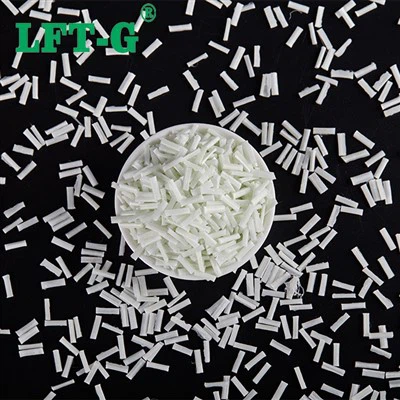
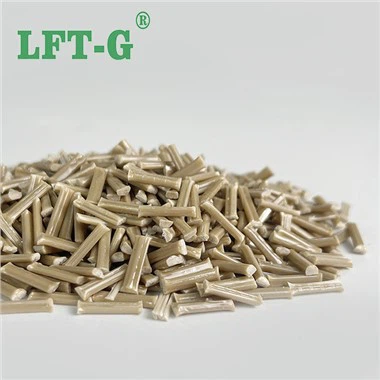
By incorporating Long Glass Fiber (LGF) reinforcement, LGF HDPE further enhances the performance of the HDPE matrix. The continuous long-fiber network significantly improves tensile strength, flexural modulus, creep resistance, impact performance, and dimensional stability, making it suitable for replacing traditional metal or short-fiber reinforced materials in structural applications. LGF HDPE provides an ideal balance of lightweight design, high rigidity, and long-term durability for demanding industrial components.

Where is HDPE used?
The largest application fields for HDPE are bottles, containers, and tanks. Many everyday products, such as shampoo bottles, detergent containers, and milk bottles, are produced through HDPE blow molding.
In addition, HDPE is widely used in pipes, packaging crates, pallets, and wire & cable applications. Its excellent stiffness, impact resistance, chemical stability, and durability make it a reliable material for a wide range of industrial and consumer products.
So, where can the advanced version of LGF HDPE be used?
By incorporating long glass fiber reinforcement, LGF HDPE achieves higher load-bearing capacity and more stable long-term performance compared with conventional HDPE. It is widely used in automotive components, industrial equipment and mechanical parts, piping and infrastructure, as well as electrical and energy applications.
LLDPE (Linear Low-Density Polyethylene): Versatile Performer
Linear Low-Density Polyethylene (LLDPE) is a copolymer produced by the polymerization of ethylene with a small amount of α-olefin comonomers (such as 1-butene, 1-hexene, and 1-octene) in the presence of catalysts. It has a density range of 0.915–0.940 g/cm³.
The molecular structure of LLDPE is characterized by a linear backbone with no long-chain branches but a small number of short-chain branches. The absence of long-chain branching results in higher crystallinity than LDPE, giving LLDPE properties between HDPE and LDPE while combining the advantages of both.
In simple terms, LLDPE combines the flexibility of LDPE with the strength of HDPE. It offers excellent tear resistance, puncture resistance, and environmental stress crack resistance.

Compared with LDPE, LLDPE provides higher strength, better toughness, greater stiffness, and improved heat and cold resistance. Compared with HDPE, it maintains better flexibility. Due to its well-balanced overall performance, LLDPE can cover many application areas traditionally served by both LDPE and HDPE.
Where can LLDPE be used?
The largest application field for LLDPE is also film production, especially in areas requiring high strength, such as stretch wrapping films and heavy-duty packaging films, where it demonstrates excellent performance.
In addition, LLDPE is widely used in injection molded products, wire and cable applications, and pipe systems due to its balanced mechanical properties and processing performance.
These three materials each perform their own functions in daily life, and the components made from them have brought us varying degrees of convenience.