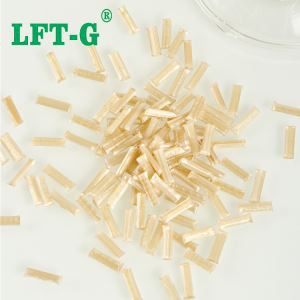

Top 6 Automotive Parts Dominated by LFT-PP:
The Engineer's Guide to Lightweighting
Automotive Material Trends
Lightweighting is no longer an option; it's a mandate. Discover why Long Fiber Polypropylene has become the de facto standard for these six critical vehicle components.

What 80% of Engineers Ignore About LFT-PP
Most procurement teams focus solely on the "price per kg" of LFT compared to aluminum. However, they ignore the "System Cost Reduction." LFT-PP doesn't just replace metal; it allows for parts integration. A single molded LFT Front End Module (FEM) can integrate the radiator support, headlight mountings, hood latch, and air ducts into one shot, eliminating dozens of metal brackets, screws, and welding steps. The material cost might be higher than standard plastic, but the assembly cost drops by up to 30%.
TOP 6: The Highest Volume Applications for LFT-PP
1. Front End Modules (FEM)

The King of LFT Applications. The carrier that holds the radiator, headlights, and hood latch.
Why LFT-PP? It requires high stiffness to prevent headlights from vibrating and high impact resistance for minor crashes. LFT-PP (typically 30-40% Glass Fiber) reduces weight by ~30% compared to steel hybrid structures.
2. Instrument Panel (IP) Carriers

The Structural Backbone. The hidden skeleton behind your dashboard.
Why LFT-PP? Dimensional stability is non-negotiable here. A warped IP carrier leads to squeaks, rattles, and poor gaps. LFT's fiber skeleton prevents warping even under the intense heat of the sun (solar load) through the windshield.
3. Door Module Carriers

Integration Masterclass. The panel that holds window regulators, motors, a
nd speakers.
Why LFT-PP? It replaces steel plates. LFT-PP is impervious to moisture (unlike some metals) and allows for the integration of speaker housings and cable guides directly into the mold, slashing assembly time.
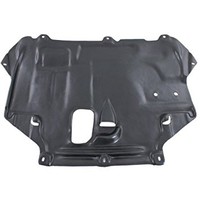
4. Underbody Aerodynamic Shields

Protection meets Efficiency. Panels covering the chassis bottom to reduce drag.
Why LFT-PP? Standard PP cracks when hit by stones at highway speeds. LFT-PP offers superior impact strength and toughness even at low temperatures, protecting critical components like the engine and fuel tank.
5. EV Battery Trays & Covers
The New Growth Frontier. Housing for heavy electric vehicle battery packs.
Why LFT-PP? Fire-retardant LFT-PP is replacing metal. It is non-conductive (safer), lighter (extends range), and chemically resistant to leaking battery electrolytes.
6. Tailgates / Liftgates

The Rear Structure. The inner structure of the trunk door.
Why LFT-PP? Reducing weight at the rear helps balance the car. LFT provides the stiffness needed to support the rear glass and wiper mechanisms without the weight of a steel frame.

Why Switch? LFT-PP vs. Short Glass Fiber PP vs. Steel
| Property | Standard PP-GF30 (Short Fiber) | LFT-PP-LGF30/40 | Steel / Aluminum |
|---|---|---|---|
| Impact Strength | Low | High (3x Short Fiber) | Very High |
| Weight | Light | Light | Heavy |
| Creep Resistance | Poor | Excellent | Excellent |
| Warpage | High (Anisotropic) | Low (Isotropic) | None |

Frequently Asked Questions (FAQ)
Q1: Can LFT-PP completely replace metal in car chassis?
Not entirely, but it dominates semi-structural applications. While the main safety cage (Body-in-White) remains high-strength steel or aluminum, LFT-PP has successfully replaced metal in bolt-on parts like front-end carriers, door modules, and dashboard supports due to its high strength-to-weight ratio.
Q2: Is LFT-PP recyclable at the end of the vehicle's life?
Yes, absolutely. Unlike thermoset composites (like carbon fiber epoxy) which are hard to recycle, LFT-PP is a thermoplastic. It can be melted down and re-molded. In fact, many automotive specifications now require "End-of-Life Vehicle" (ELV) compliance, and LFT-PP is a preferred material for this reason.
Q3: How does LFT-PP perform in EV (Electric Vehicle) applications?
It is critical for EVs. Range anxiety drives the need for lighter parts to offset heavy battery packs. Furthermore, LFT-PP is electrically insulating and resistant to battery acids, making it ideal for battery trays, covers, and cable management systems.
Weight Reduction Starts with Material Selection
Don't let outdated materials weigh down your next automotive project. Our LFT-PP grades are engineered to meet global automotive standards (ISO, SAE).
Request Automotive Grade Data Sheet