
What If Your Scooter Deck Weighed Half as Much?
Inside the LFT-G® PA66 LCF40 material that makes it possible
Pick up a scooter with an aluminum deck. Now imagine the same deck, same strength, same stiffness - but half the weight. That's the promise of long carbon fiber composites. But can a thermoplastic really match metal where it matters?
For a leading scooter manufacturer, the answer was yes. Their switch to LFT-G® PA66 LCF40 - a 40% long carbon fiber-reinforced polyamide 66 - didn't just reduce weight. It changed how the scooter felt to ride, how it held up to abuse, and how quickly it could be produced.

Figure 1. What If Your Scooter Deck Weighed Half as Much?
Why Scooter Decks Are Harder to Design Than They Look
A scooter deck is a deceptively demanding component. It's a structural platform that carries the rider's full weight, absorbs impacts from curbs and potholes, and must remain rigid enough for confident control at speed - all while staying light enough to carry onto a train or up a flight of stairs.
Aluminum handles the structural demands well. But it's heavy, it requires surface treatment to resist corrosion, and it's expensive to machine into complex shapes. Wood is lighter and absorbs vibration, but it flexes, degrades in wet conditions, and lacks the stiffness that experienced riders demand.
So the industry has been stuck with a compromise. Until now.

The core conflict: Stiffness demands material. Lightweight demands less of it. Corrosion resistance demands coatings that add cost, weight, and process steps. Something has to give - unless the material itself is fundamentally different.
A Different Kind of Reinforcement
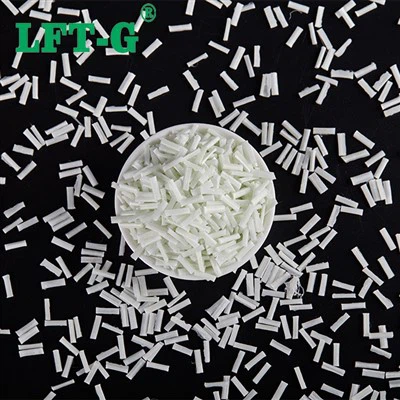
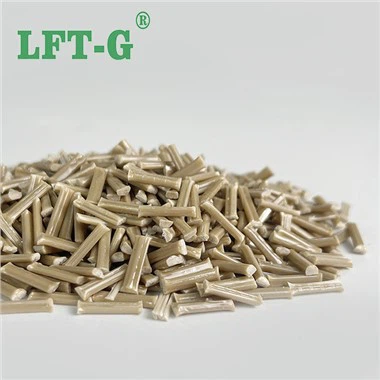
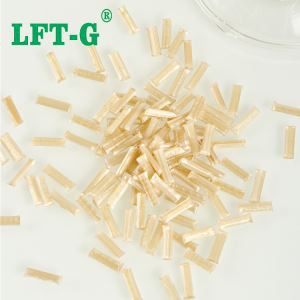
LFT-G® PA66 LCF40 isn't just plastic with fibers. The difference is the fiber length. Short-fiber compounds use fibers under 1mm - they're essentially fillers, adding some stiffness but unable to bridge stress across the part. PA66 LCF40 uses fibers that remain 6–12mm long after molding, forming a continuous three-dimensional network that carries load throughout the entire deck.
Think of the difference between sand and rebar. Sand fills space. Rebar creates a structural skeleton. That's what the long fiber network does inside the deck - it turns a polymer into a load-bearing structure.
The practical result is a material that delivers 50% weight reduction compared to aluminum, with a flexural modulus and stiffness-to-weight ratio that aluminum cannot match. And because the fibers are fully encapsulated in the PA66 matrix, the deck surface is smooth and uniform. No exposed fibers. No coating needed.

In short: 50% lighter than aluminum · Flexural modulus 20,000+ MPa · Zero corrosion · Smooth surface, no coating · Built for repetitive impact loads.
What Changed on the Street
When the manufacturer put the PA66 LCF40 deck through its paces, the differences showed up immediately. The weight reduction was obvious - 50% lighter than aluminum meant the scooter was easier to carry and quicker to accelerate. Riders noticed the deck felt more responsive, transferring energy more directly with each push.
Impact testing confirmed what the material data predicted: the PA66 LCF40 deck absorbed shock loads that would dent or crack aluminum, with no permanent deformation. Fatigue testing - thousands of load cycles simulating daily commuting - showed no signs of weakening or failure.
And in wet-weather testing, the deck showed no corrosion, no swelling, no degradation. No coating required. No maintenance needed. Just consistent performance, ride after ride.
How It Compares
| Property | Aluminum (6061) | Short-Fiber PA66 CF40 | LFT-G® PA66 LCF40 |
|---|---|---|---|
| Density (g/cm³) | 2.70 | ~1.45 | 1.35–1.40 |
| Flexural Modulus (MPa) | 69,000 | ~15,000 | 20,000+ |
| Impact Resistance | Moderate | Baseline | Superior |
| Fatigue Performance | Good | Moderate | Excellent |
| Vibration Damping | Poor | Moderate | Superior |
| Corrosion Resistance | Poor | Excellent | Excellent |
More Than a Material Swap
What makes LFT-G® PA66 LCF40 interesting isn't just what it replaces - it's what it enables. Because it's injection molded, the deck can incorporate complex features that would be expensive or impossible to machine from aluminum. Reinforcing ribs, mounting bosses, integrated grip surfaces - all formed in a single cycle.
That means fewer parts, fewer assembly steps, and faster production. It also means design changes are easier and cheaper to implement - a critical advantage in a market where product cycles are short, and customization is increasingly expected.
The scooter industry isn't alone in discovering this. The same combination of lightweight, stiff, impact-resistant, and corrosion-free has made LFT composites attractive in everything from bicycle components to power tool housings to automotive structural parts. The common thread: applications where metal is too heavy, short-fiber plastics are too weak, and carbon fiber laminates are too expensive.

LFT team: ready to solve your lightweighting challenges
Xiamen LFT Composite Plastic Co., Ltd. is a global supplier of long-fiber-reinforced thermoplastics with 20+ years of innovation. We specialize in LFT‑PP, LFT‑PA, LFT‑PPS, and LFT‑Elastomers – offering high‑strength, lightweight alternatives to metal for automotive, aerospace, industrial, and mobility applications. Our engineering team provides material selection, mold design review, and on-site technical support for customers worldwide - from concept to production. Reach out for a free consultation.