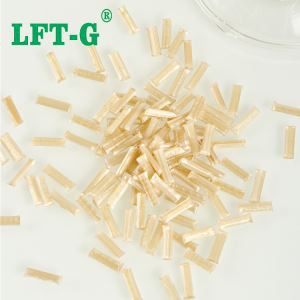

Detailed Explanation of the Industry Position of LGF PA6
The Value of LGF PA6 in Engineering Plastics
In the current advanced engineering materials market, "LGF PA6 (Long Glass Fiber Reinforced Polyamide 6)" is gaining increasing attention from design and manufacturing engineers due to its unique composite structure and outstanding performance. Whether in automotive lightweighting, high-performance industrial component manufacturing, or in the fields of high-end consumer electronics and mechanical equipment, LGF PA6 has become a cost-effective solution beyond metals and traditional plastics.
What is LGF PA6?
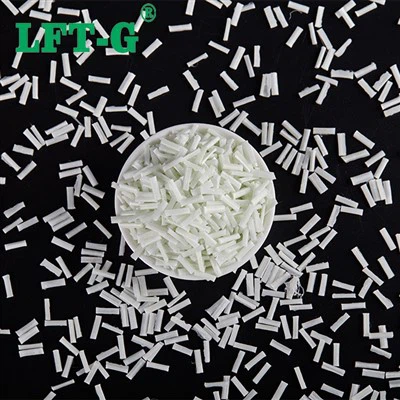
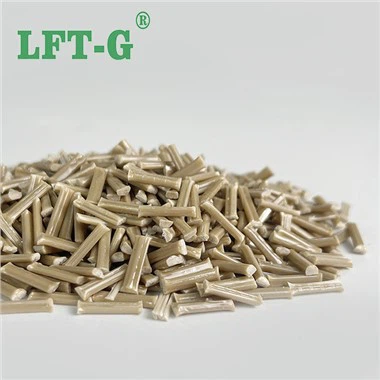
LGF PA6 is an enhanced thermoplastic composite material formed by adding long glass fibers (Long Glass Fiber) to the polyamide 6 (PA6) matrix. Compared with traditional short glass fiber reinforced materials, LGF PA6 retains the glass fibers with a longer length (usually > 5mm), forming a three-dimensional interlocked fiber network within the material, thereby significantly enhancing the key performance indicators such as strength, rigidity, and impact resistance of the material.
Compared with common plastic modified materials, LGF PA6 does not simply use glass fibers as fillers. Instead, it forms a composite structure that can bear loads and participates in the dispersion of structural strength at the microscopic level.Compared with common plastic modified materials, LGF PA6 does not simply use glass fibers as fillers. Instead, it forms a composite structure that can bear loads and participates in the dispersion of structural strength at the microscopic level. This makes it significantly outperform composite materials such as short glass fibers and short carbon fibers in terms of performance.
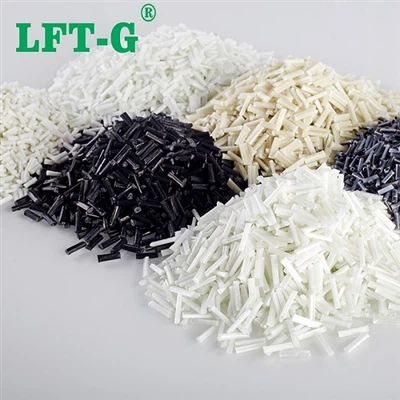
01
Base material
Polyamide 6 (nylon 6, PA6)
02
Reinforcing phase
Long glass fibers (LGF)
03
Composite form
Long fiber reinforced thermoplastic (Long Fiber Thermoplastic, LFT)
04
Glass fiber content range
20% - 60% (can be adjusted according to design requirements)
Introduction to PA6 Matrix
Before delving into the LGF PA6, it is necessary to first understand the basic properties of the PA6 matrix:
What is PA6 (polyamide 6)?
PA6, also known as nylon 6, belongs to the polyamide family and is a semi-crystalline thermoplastic engineering plastic. It has the following characteristics:
- High strength and high toughness
- Excellent wear resistance and fatigue resistance
- Good chemical resistance
- Wide operating temperature range
- Outstanding molding processing performance
PA6, as an important member of engineering plastics, possesses comprehensive mechanical properties and processing capabilities, enabling it to be widely applied in fields such as automobiles, machinery, electrical appliances, and consumer electronics.
The significance of glass fiber reinforcement
Glass fiber is an inorganic reinforcing material that inherently possesses extremely high strength and modulus. By incorporating glass fibers into the polymer matrix, the strength, rigidity, impact resistance, and heat deformation temperature of the material can be effectively enhanced.
Traditional short glass fiber reinforced materials (such as PA6 GF30) have improved certain properties, but the short glass fiber length and the difficulty in forming a continuous network structure limit the extent of performance enhancement. In contrast, long glass fibers (LGF) can form interlocked three-dimensional structures within the matrix, fundamentally enhancing the material's load-bearing capacity.
LGF PA6: Industrial Applications
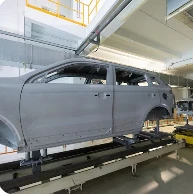


Automotive Industry
In the automotive manufacturing sector, LGF PA6's high strength, heat resistance, and low density make it an important choice for structural components:
Power system housing
Front module frame
Instrument panel bracket
Electric vehicle battery housing
Suspension structural components
These components not only require excellent mechanical load-bearing capacity, but also need to be lightweight and heat-resistant stable.
Aerospace and High-End Machinery
In the aerospace and precision machinery industries, LGF PA6's outstanding dimensional stability and fatigue resistance provide material support for the manufacturing of highly reliable structural components.
Industrial machinery and equipment parts
Pump bodies, valve components
Gears, bearing housings
Connectors and support structures
Such applications usually require wear resistance, corrosion resistance and high strength.
Consumer electronics and industrial product casings
For example, in the case of the enclosures of electric tools and the structural components of high-impact toys, LGF PA6 can simultaneously meet both the appearance and mechanical strength requirements.
What are the Advantages of LGF PA6?
Ultra-high mechanical properties
Due to the continuous load transmission path formed by the long glass fibers within the matrix, the mechanical properties of LGF PA6 are significantly superior to those of conventional reinforced plastics:
High tensile strength
High bending modulus
Excellent impact resistance
Excellent heat resistance and dimensional stability
The glass fiber reinforcement enables PA6 to maintain more stable rigidity and dimensions at high temperatures, thus performing exceptionally well in high-temperature applications. Additionally, due to its low shrinkage and low warpage, the forming accuracy of the components is higher.
Outstanding fatigue resistance
The fiber network structure can effectively alleviate fatigue damage caused by long-term loads, making LGF PA6 more reliable under dynamic load conditions.
Corrosion resistance, chemical resistance
Compared with metal materials, LGF PA6 exhibits excellent tolerance to most chemical media and is less prone to corrosion.

Industry trends and technological evolution
Evolution from short fibers to long fibers
The industry as a whole is upgrading from traditional short glass fiber reinforced materials to long glass fibers, long carbon fibers, and even hybrid fiber composite materials to meet higher performance requirements.
Lightweighting and Green Manufacturing
Under the global trend of carbon reduction, LGF PA6, as a lightweight and high-performance material, is well-suited to sustainable manufacturing strategies.
Intelligent Manufacturing and Digitalization of Materials Material development is increasingly leveraging technologies such as digital simulation and microstructure optimization to enhance the performance prediction capabilities of composite materials under various conditions.
LGF PA6, as an advanced engineering composite material that combines high strength, lightweight, heat resistance and structural stability, is becoming one of the mainstream choices in the field of plastic engineering. Whether it is in the automotive, aerospace, industrial equipment, or high-end consumer electronics and structural component manufacturing industries, LGF PA6 helps design and manufacturing teams achieve more efficient, reliable and competitive product designs by virtue of its outstanding comprehensive performance.