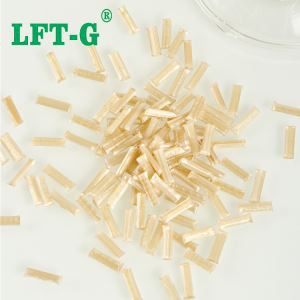

Why the Industry is Turning to LGF30 HDPE?
Over the past decade, the global materials industry has entered a new phase of development characterized by lightweight design, structural integration, and cost-performance optimization. In this transformation, traditional commodity polymers are no longer confined to low-load applications. Through reinforcement technologies and composite engineering, they are increasingly evolving into functional structural materials.
Among these developments, LGF30 HDPE (30% Long Glass Fiber Reinforced High-Density Polyethylene) has gradually emerged as a material attracting attention across multiple industrial sectors.
From the perspective of materials engineering, the significance of LGF30 HDPE lies not simply in the modification of polyethylene, but in the structural upgrading of a commodity polymer into a mid-tier engineering composite.
The Material Gap Between Raw Plastics and Engineering Polymers
For decades, industrial designers have faced a persistent material dilemma.
On one side are commodity plastics, such as polyethylene and polypropylene, which offer excellent processability, chemical resistance, and low cost but lack sufficient stiffness and structural performance.
On the other side are high-performance engineering plastics, including materials such as PA, PBT, and PPS, which deliver high strength and thermal resistance but come with significantly higher costs and sometimes more demanding processing conditions.
This performance gap has led engineers to constantly search for materials that can deliver balanced mechanical performance without excessive cost escalation.
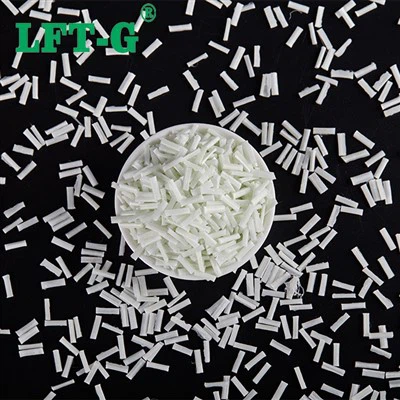
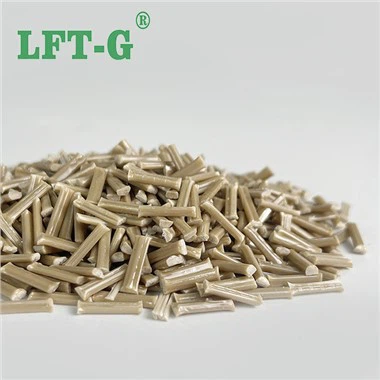
LGF30 HDPE composite has emerged as one of the materials capable of addressing this gap. By introducing long glass fiber reinforcement into the HDPE matrix, the material forms a three-dimensional fiber skeleton that significantly enhances stiffness, tensile strength, and dimensional stability compared with conventional polyethylene.
This transformation enables HDPE-based materials to move beyond traditional flexible applications into semi-structural and load-bearing roles.
Materials of Metric Roller Chain Sprocket
Across industries such as transportation, infrastructure, industrial equipment, and environmental engineering, manufacturers are increasingly shifting toward structural thermoplastics.
Several key factors are driving this transition.
Modern engineering systems-from mobility equipment to industrial machinery-are constantly seeking ways to reduce weight without sacrificing durability. Reinforced thermoplastics provide high strength-to-weight ratios while enabling complex geometry manufacturing through injection molding or compression molding.
Many industries are gradually replacing metal components with reinforced thermoplastics in order to eliminate corrosion issues and reduce maintenance costs. Polyethylene already possesses strong chemical resistance; when reinforced with long glass fibers, its structural capability improves significantly while maintaining this durability advantage.
Thermoplastic composites offer advantages in mass production environments. Compared with metal fabrication or thermoset composites, thermoplastic molding processes can integrate multiple design functions into a single component, reducing assembly complexity and improving manufacturing efficiency.
These industry trends are creating favorable conditions for materials such as LGF30 HDPE compound resin.
The Industry Recognition of GF30 HDPE
Within the broader family of long fiber reinforced thermoplastics (LFT), materials based on polypropylene have historically dominated the market, particularly in automotive structural components.
However, the introduction of HDPE-based long fiber composites has attracted attention in sectors where chemical stability and environmental durability are critical.
Industry feedback highlights several advantages that make LGF30 HDPE particularly attractive:
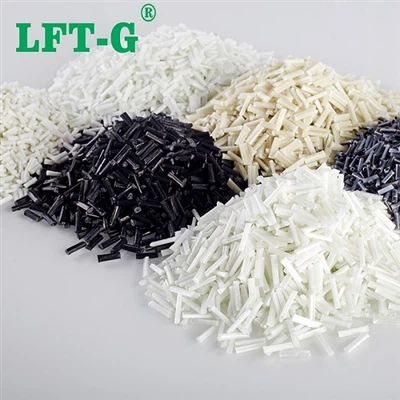
Durability in Aggressive Environments
HDPE's inherent resistance to chemicals, moisture, and environmental stress cracking allows LGF30 HDPE material to perform reliably in applications exposed to corrosive substances or outdoor conditions.
Structural Stability Compared with Conventional Polyethylene
The presence of long glass fibers significantly improves stiffness and load-bearing capacity, enabling the material to support structural functions that traditional HDPE cannot achieve.
Cost-Efficient Structural Performance
Compared with engineering plastic composites, HDPE-based long fiber materials typically offer lower raw material costs while still providing substantial mechanical reinforcement.
This cost-performance balance is a key reason why engineers are increasingly evaluating LGF30 HDPE compound resin as a design alternative in large-volume industrial applications.
Expanding Application Scenarios
As the understanding of long fiber reinforced polyethylene continues to evolve, its application scope is gradually expanding beyond traditional polymer uses.
Industries exploring LGF30 HDPE composite include:
Industrial piping and infrastructure systems
where impact resistance and long service life are essential
Heavy-duty containers and equipment housings
which require structural rigidity and durability
Environmental engineering components
including equipment exposed to chemicals or moisture
Transportation and logistics equipment
In these areas, LGF30 HDPE plastic pellet provides a combination of structural performance, corrosion resistance, and economic feasibility that is difficult to achieve with conventional materials.
The Future Role of LGF30 HDPE
As industries continue to prioritize lightweight design, corrosion resistance, and manufacturing efficiency, reinforced thermoplastics are expected to play an increasingly important role in materials selection.
Within this evolving landscape, LGF30 HDPE represents a promising pathway for extending the application boundaries of polyethylene.
Its ability to combine the durability of HDPE with the mechanical reinforcement of long glass fibers positions it as a practical solution for manufacturers seeking structural performance without the cost barriers associated with advanced engineering plastics.
For this reason, LGF30 HDPE is steadily gaining recognition not merely as a modified polyethylene, but as a strategic composite material supporting the next generation of industrial design.