
CFRT vs. LFT: Choosing the Right Thermoplastic Composite for Your Application
In the family of fiber-reinforced thermoplastics, Continuous Fiber Reinforced Thermoplastics (CFRT) and Long Fiber Reinforced Thermoplastics (LFT) represent two distinct material classes. Both deliver exceptional performance compared to short-fiber compounds, but their fiber morphology - continuous vs. discrete long fibers - defines their capabilities, processing methods, and ideal applications.

Fiber Length: The Defining Difference
The distinction between LFT and CFRT is fundamentally about fiber length - and fiber length dictates performance.
LFT - Long Fiber Thermoplastics
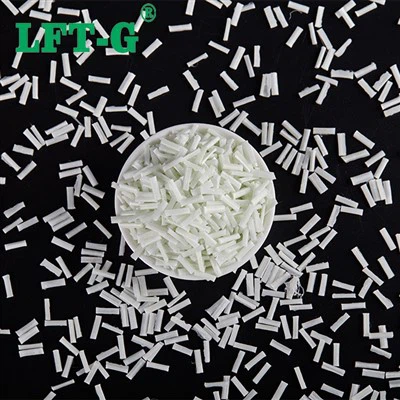
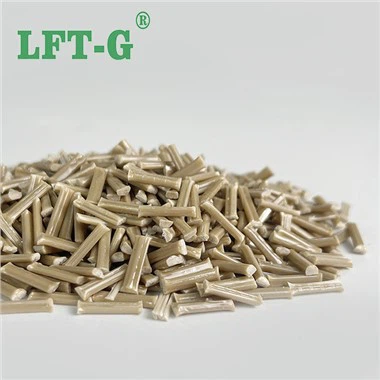
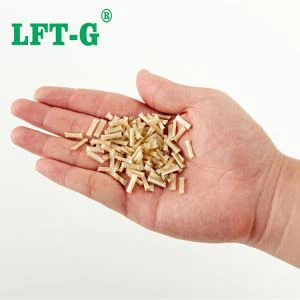
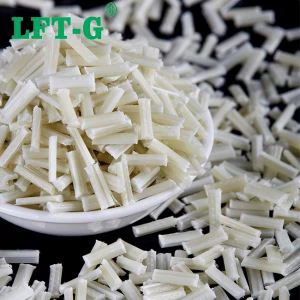
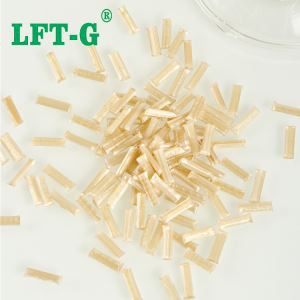
LFT pellets typically contain fibers ranging from 5mm to 25mm in length. LFT-G's process impregnates continuous fibers with molten resin, then the pellets are cut to 10–25mm. In the final molded part, retained fiber lengths range from 1mm to 25mm, forming a three-dimensional reinforcing network.
CFRT - Continuous Fiber Thermoplastics
CFRT contains true continuous fibers that run from one end of the material to the other. Fiber length equals the product dimension - the larger the part, the longer the fiber. There is no fiber breakage in the material itself, only in the final part geometry.
Key insight: Both short and long carbon fibers - no matter how well processed - cannot match the mechanical performance of continuous carbon fiber reinforced thermoplastics. The reinforcing effect of continuous fibers on thermoplastics is significantly superior to both short and long fibers, delivering exceptional mechanical properties and fatigue resistance.
Performance Comparison: Where Each Material Excels

| Property | LFT | CFRT |
|---|---|---|
| Strength & Stiffness | Good - far superior to short fiber | Exceptional - 200–300% of LFT |
| Toughness / Impact | Excellent - outstanding impact resistance | High - damage tolerant |
| Anisotropy | Random fiber orientation in 3D network | Highly anisotropic - strength in fiber direction |
| Design Flexibility | High - injection molding, complex 3D shapes | Moderate - lamination/compression, simple shapes |
| Maximum Performance Ceiling | Medium | Far higher - aerospace-grade |
Processing: Injection Molding vs. Lamination

-
LFT - Injection Molding
- Primary process: injection molding
- Also: compression molding
- High production efficiency - ideal for high volumes
- Complex 3D geometries possible
-
CFRT - Lamination & Compression
- Primary process: compression molding / autoclave
- Also: automated tape laying (ATL/AFP)
- Moderate to low production speed
- Primarily flat or simple curved shapes
LFT development has been driven by the automotive industry, while CFRT development has been driven by aerospace. This heritage explains their respective strengths - LFT for high-volume, complex parts; CFRT for ultra-high performance, low-volume applications.
The Hybrid Approach: Best of Both Worlds
LFT and CFRT are complementary, not competitive. They can be combined in the same part to leverage the strengths of both.
How it works: CFRT prepreg tape is laid up and compression molded to create a structural "skeleton." LFT material is then injection molded onto or around the CFRT skeleton, adding complex features, bosses, ribs, and localized reinforcement. The result: a part with aerospace-grade stiffness where it matters most, and 3D design freedom everywhere else.
How to Choose: Decision Framework
Why LFT-G® Excels in Long Fiber Thermoplastics
While CFRT delivers the highest possible performance, LFT-G® focuses on what LFT does best - and does it better than anyone else.
Superior Fiber Retention
LFT-G's advanced compounding process preserves fiber length better than standard LFT grades - delivering higher mechanical properties in the final part.
Broad Material Portfolio
LFT‑PP, LFT‑PA, LFT‑PPS, LFT‑PEEK, and LFT‑Elastomers - with fiber contents from 20% to 60% and both glass and carbon fiber options.
Application Engineering Support
From material selection to mold design and process optimization - LFT-G's engineering team helps you get it right the first time.
Key Takeaway
LFT and CFRT serve different purposes. CFRT delivers the highest possible strength and stiffness for applications where weight is critical and shapes are simple - think aerospace wing skins and Formula 1 chassis. LFT delivers excellent performance with unmatched design freedom and production efficiency - ideal for automotive structures, industrial components, and consumer products that demand both performance and complexity.
No matter which path you choose, LFT-G® has the material and the expertise to support your journey - from CFRT prepreg to LFT pellets, and everything in between.

LFT team: ready to help you choose the right solution
Xiamen LFT Composite Plastic Co., Ltd. is a global supplier of long-fiber-reinforced thermoplastics with 20+ years of innovation. We specialize in LFT‑PP, LFT‑PA, LFT‑PPS, and LFT‑Elastomers – offering high‑strength, lightweight alternatives to metal for automotive, aerospace, industrial, and consumer applications. Our engineering team provides material selection, CFRT/LFT hybrid design consultation, and on-site technical support for customers worldwide. Reach out for a free consultation.