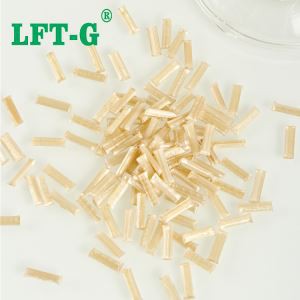

Understanding Fiber Length in Long Fiber Reinforced Thermoplastics: From Pellets to Molded Parts
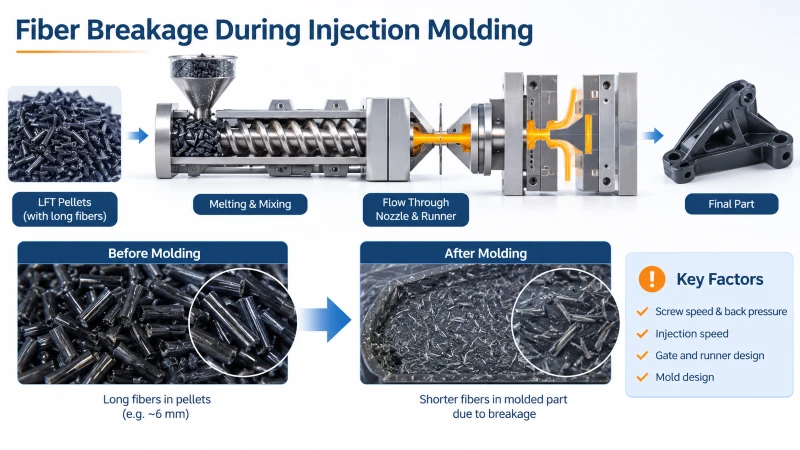
During the injection molding process, fibers inevitably break due to severe mechanical forces and complex material flow. Understanding how fiber length evolves throughout the manufacturing cycle is critical for engineers aiming to select the right materials and optimize processing conditions for structural applications.
1. What Defines Long Fiber Reinforced Thermoplastics (LFT)?
Long fiber reinforced thermoplastics (LFT) utilize reinforcing fibers-typically glass or carbon-to significantly elevate the mechanical properties of a thermoplastic matrix.
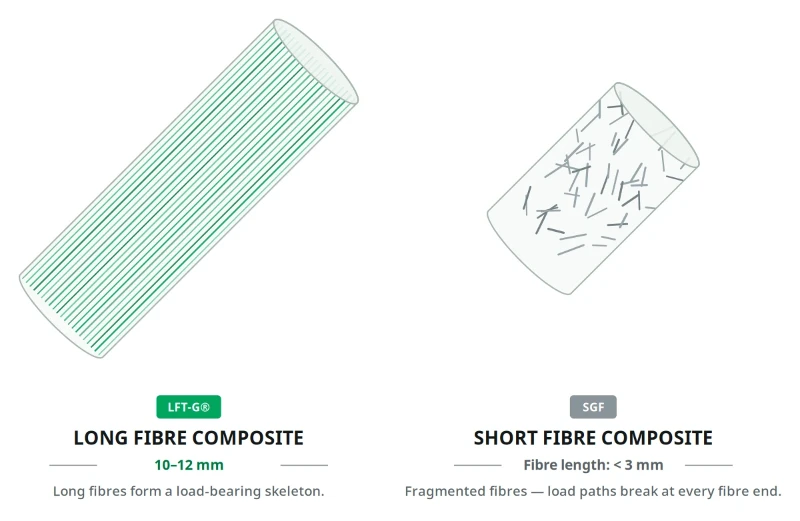
Compared with short-fiber-reinforced thermoplastics (SFT), LFT materials contain inherently longer reinforcing fibers. While short fibers (<1 mm) commonly improve basic stiffness and strength, longer fibers offer distinct advantages in impact resistance, load-transfer efficiency, and long-term creep performance.
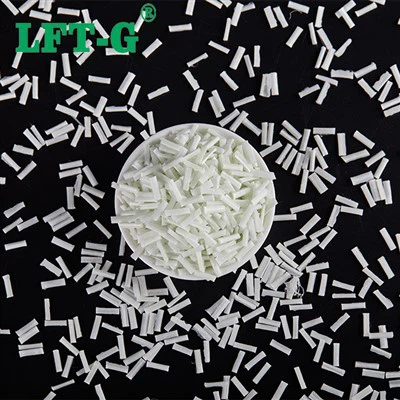
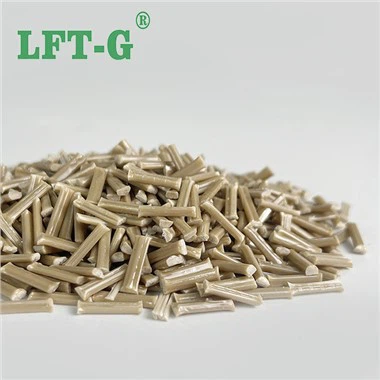
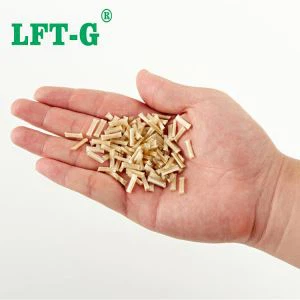
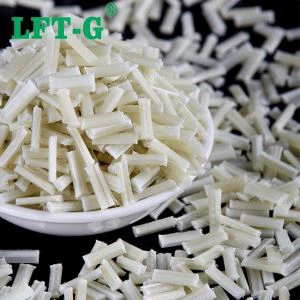
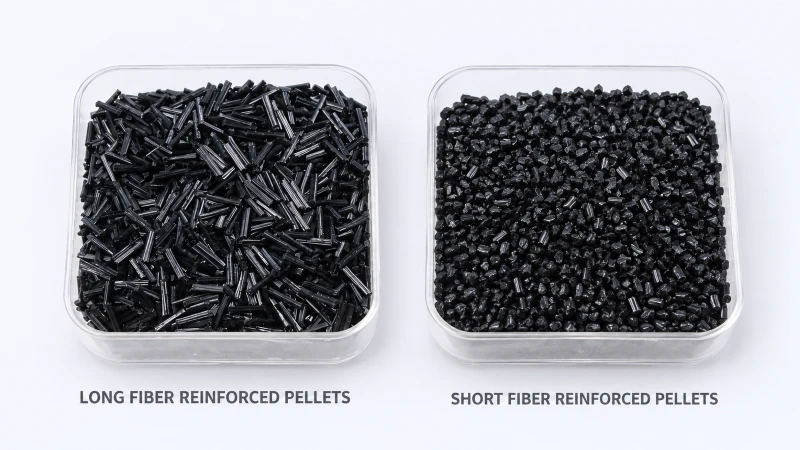
In pultruded LFT compounds, continuous fiber rovings are fully impregnated with molten polymer and then precisely cut into pellets. The initial fiber length generally equals the pellet length (e.g., 6–25 mm). This longer initial length provides a critical starting advantage for retaining robust reinforcement during subsequent processing.
2. How Are Long Fibers Incorporated into Thermoplastic Pellets?
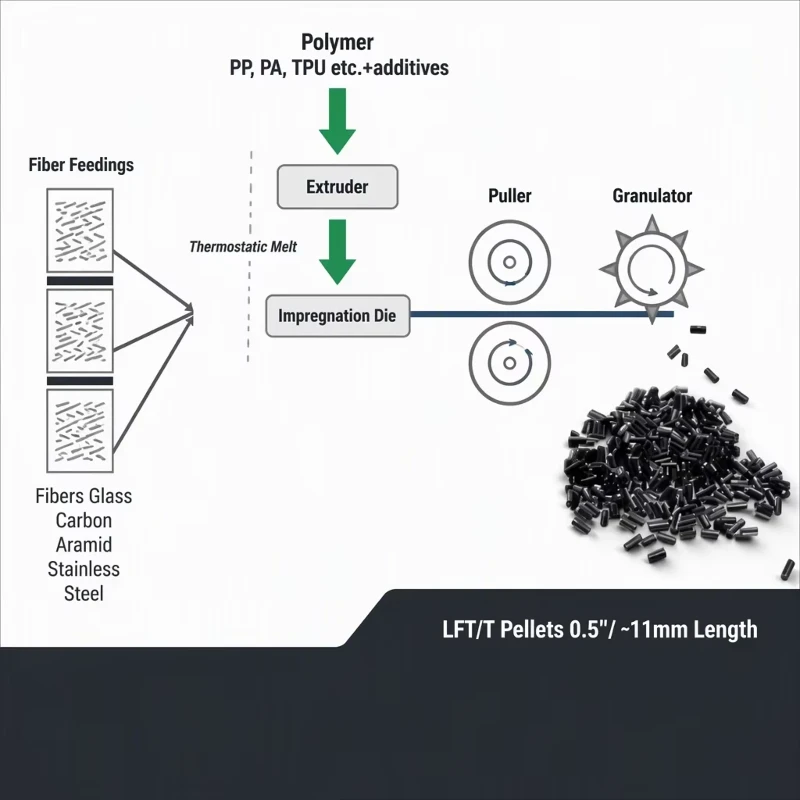
Unlike conventional short-fiber compounding, the pultrusion process is standard for manufacturing LFT compounds. It generally involves four precise steps:
- Continuous Fiber Feeding: Continuous glass or carbon fiber rovings are unwound and fed into the production line.
- Polymer Impregnation: The fiber bundles pass through a molten thermoplastic resin system, allowing the polymer to deeply penetrate and coat individual filaments.
- Pultrusion: The impregnated fiber bundles are pulled through a heated die to form continuous, consolidated reinforced strands.
- Pelletizing: The continuous strands are chopped into uniform pellets of a specified length.
Proper fiber impregnation is non-negotiable. Insufficient resin penetration creates dry spots, compromising fiber-matrix adhesion and the structural integrity of the final compound.
3. How Does Fiber Length Affect Mechanical Performance?
Fiber length plays a decisive role in how loads are transferred between the polymer matrix and reinforcing fibers. When an LFT component is subjected to external forces, the matrix transfers stress to the fibers via the interface. The effectiveness of this stress transfer depends on fiber length, diameter, interfacial adhesion, and orientation.
A fundamental concept here is Critical Fiber Length (Lc)-the minimum fiber length required for effective stress transfer.
- When fibers fall below this critical length, they cannot be loaded to their breaking point. Instead, they simply pull out of the matrix, failing to utilize their full reinforcing potential.
- When fibers exceed this critical length, they transfer loads efficiently enough to reach their breaking point. This provides superior impact resistance, higher stiffness, better creep resistance, and enhanced structural performance (e.g., crack bridging).
However, actual part performance also depends on fiber content, formulation, orientation, and processing. Fiber length alone is necessary, but not solely sufficient, to guarantee superior properties.
4. Why Is Retained Fiber Length Important in Injection Molding?
The initial fiber length in an LFT pellet does not survive the injection molding process unchanged. As the material navigates screw conveying, melting, mixing, nozzle flow, runners, and gates, severe shear stresses cause fiber attrition (fiber breakage).
Several processing factors heavily influence this breakage rate:
- Screw Design and Speed: Aggressive geometries and high rotation speeds apply excessive mechanical shear.
- Back Pressure: Excessive back pressure increases stress during the plasticization phase.
- Gate and Runner Design: Narrow gates and restrictive channels create high shear zones that snap fibers.
- Injection Speed & Mold Design: Gate location and cavity geometry dictate both flow stress and final fiber orientation.
-
The engineering reality: The fiber length in the finished component is often significantly shorter than the initial pellet length. Engineers must design for the retained fiber length, not the nominal pellet length.
5. How Can Fiber Length Be Better Preserved During Processing?
Maintaining sufficient retained fiber length requires a holistic approach combining material selection and process optimization:
- Select Appropriate LFT Materials: Match the polymer matrix, fiber type, fiber content, and initial pellet length to the specific mechanical requirements of the part.
- Optimize Molding Parameters: Tune screw speed, back pressure, and injection speed specifically for LFT behavior.
- Review Mold & Gate Design: Utilize generous gate dimensions, radiused corners, and balanced runner configurations to minimize shear.
- Validate the Finished Component: Conduct fiber length analysis (e.g., burn-off testing) and mechanical testing to verify that processing conditions have preserved the material's performance.
There is no "one-size-fits-all" parameter set. Material characteristics, machine configuration, and mold design must be jointly evaluated to establish the optimal processing window.
Conclusion: Fiber Length Matters from Pellets to Final Parts
The performance of long fiber reinforced thermoplastics depends not only on the initial fiber length in the pellets but, more importantly, on how much of that length is retained during processing.
From continuous fiber impregnation and pelletizing to injection molding, every stage influences the ultimate reinforcing effectiveness of the fibers.
At LFT-G®, we specialize in long fiber reinforced thermoplastic compounds, including long glass fiber and long carbon fiber reinforced materials. Our portfolio covers diverse polymer matrices and fiber contents tailored for demanding industrial applications. For material selection or technical inquiries, please contact our engineering team to discuss your specific application requirements.

Xiamen LFT Composite Plastic Co., Ltd. is a global supplier of long fiber reinforced thermoplastics with over 20 years of industry experience. We specialize in LFT-PP, LFT-PA, LFT-PPS, and LFT elastomers, providing lightweight, high-performance material solutions for automotive, aerospace, medical, and industrial applications.