
Low-Altitude Economy Gains Momentum: PEEK Materials Draw Attention for eVTOL Lightweighting
For eVTOL manufacturers and component suppliers, material evaluation is no longer focused on a single performance indicator. Lightweighting, heat resistance, fatigue performance, electrical insulation, flame retardancy, chemical resistance, dimensional stability, and long-term reliability are increasingly being considered together.
Against this background, high-performance materials such as PEEK are attracting greater attention in selected eVTOL components.
eVTOL Commercialization Is Raising the Bar for Material Selection
Weight is a critical factor in eVTOL design. Battery energy density, payload, flight range, noise, and operating costs are closely interconnected, making weight control an important consideration throughout the aircraft development process.
Metals remain widely used in primary structural and load-bearing applications because of their established mechanical performance and extensive validation history. However, for certain secondary load-bearing and functional components, reducing weight while maintaining sufficient strength, stiffness, environmental resistance, and dimensional stability can create opportunities for advanced engineering plastics.
Conventional plastics and some composite materials may face limitations when components are exposed to elevated temperatures, long-term loads, chemicals, vibration, or demanding outdoor environments. This has increased interest in high-performance polymers that can provide multiple engineering properties within a single material system.
The Value of PEEK Lies in Its Combination of Engineering Properties
PEEK (polyether ether ketone) is a high-performance engineering thermoplastic known for its combination of heat resistance, chemical resistance, fatigue performance, electrical insulation, and dimensional stability.
For eVTOL applications, the value of PEEK is not simply about replacing metal across the entire aircraft. Instead, its potential lies in specific components where multiple performance requirements need to be addressed simultaneously.
Potential evaluation areas include components surrounding motors and avionics, connectors and brackets, fastening systems, tubing and protective components, fluid-system components, as well as battery insulation and protection structures.
In these applications, PEEK and reinforced PEEK grades may provide opportunities for lightweighting while supporting requirements related to temperature, mechanical loading, insulation, chemical exposure, and long-term dimensional stability.
Avoiding Marketing Numbers Instead of Engineering Validation
In emerging aerospace applications, fixed claims such as a specific percentage of aircraft weight reduction, increased flight range, or increased payload should be treated with caution.
The actual result depends on the component design, existing metal or polymer benchmark, reinforcement level, wall thickness, structural requirements, molding process, and operating environment.
A more rigorous approach is to position PEEK and reinforced PEEK materials as candidate solutions for selected components where lightweighting, heat resistance, electrical insulation, chemical resistance, or dimensional stability are required.
A reliable evaluation process should include the material grade, component drawing, processing conditions, test environment, performance criteria, and failure definitions. Consistent technical documentation and batch-to-batch material stability are also important for applications moving toward engineering validation and future mass production.
LFT-G® PEEK as a High-Performance Material Option
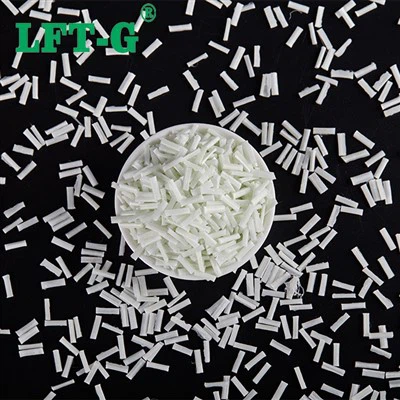
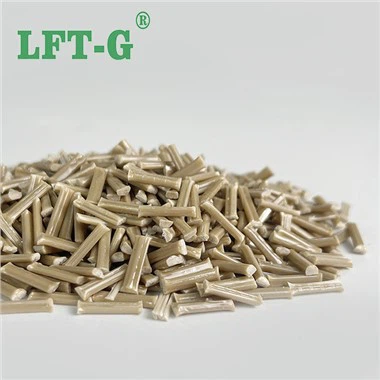
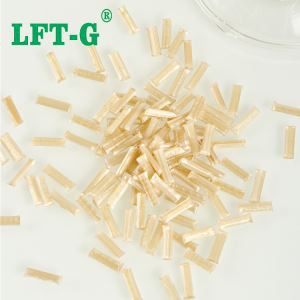
LFT-G® PEEK is a high-performance polyaryletherketone material system designed for demanding engineering applications requiring a combination of thermal, mechanical, chemical, and dimensional performance.
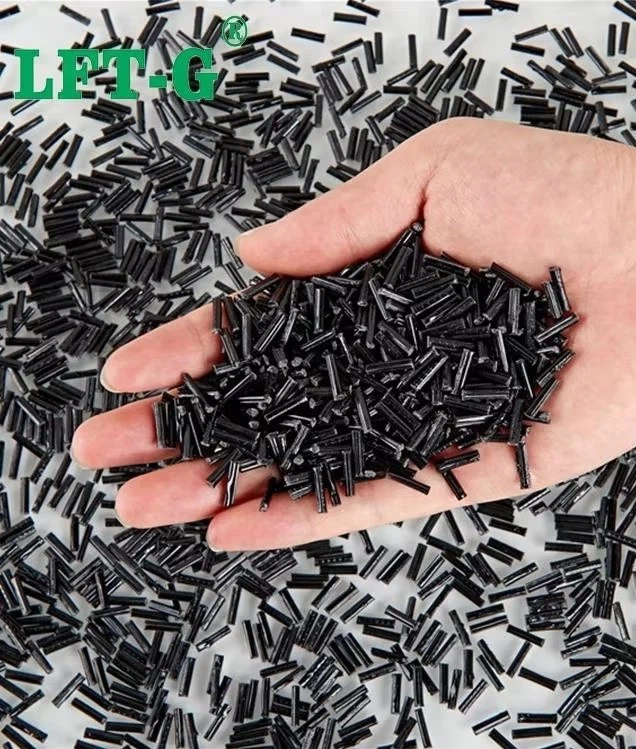
For eVTOL component development, reinforced PEEK grades can be evaluated where higher stiffness and mechanical performance are required. At the same time, factors such as fiber orientation, shrinkage, warpage, injection processing windows, and post-processing conditions should be incorporated into the overall design validation.
From an application perspective, the key evaluation dimensions include:
- Lightweighting: Potential weight reduction compared with conventional metal components in suitable applications.
- Heat Resistance & Creep Performance: Suitable for components exposed to elevated temperatures and long-term mechanical loading.
- Electrical Insulation & Flame Retardancy: Relevant to electrical, battery, and protective components where safety and insulation are important.
- Chemical & Environmental Resistance: Supports applications exposed to fluids, chemicals, humidity, and demanding outdoor environments.
PEEK and the Emerging Low-Altitude Economy
The rapid development of the low-altitude economy is creating new opportunities for high-performance materials in eVTOL and related applications. As aircraft manufacturers move closer to engineering validation and commercial deployment, material selection is becoming increasingly connected with component design, processing capability, reliability, and supply consistency.
For PEEK and reinforced PEEK, the opportunity is not to replace every conventional material, but to provide a high-performance option for selected components where lightweighting and multiple demanding engineering requirements need to be addressed simultaneously.
As eVTOL technology continues to mature, systematic component-level evaluation may become an important pathway for bringing high-performance materials into the next generation of low-altitude mobility systems.