
Meeting the Future of Rehabilitation: What CR EXPO 2026 Means for LFT-G® Materials
We recently returned from CR EXPO 2026, the Care & Rehabilitation Expo China, held in Beijing from September 3–5. The show brought together thousands of rehabilitation and assistive technology products - from intelligent prosthetic hands and powered exoskeletons to wearable brain‑computer interface devices.
Walking the floor, one thing became clear: the rehabilitation industry needs materials lighter, stronger, and more reliable than conventional plastics and metals. And that is precisely where LFT-G® long fiber thermoplastics fit.

Two Needs That Keep Coming Up
The need for lighter structures. Patients wear rehabilitation devices for hours every day. Every gram matters. Whether it is a knee brace, a prosthetic socket, or the structural frame of an exoskeleton, weight directly affects comfort, compliance, and quality of life. At CR EXPO 2026, carbon fiber was everywhere - exoskeletons with carbon fiber frames weighing under 3 kg, prosthetic components built from composite laminates, orthotic devices designed around high strength‑to‑weight ratios.
The need for structural reliability. Rehabilitation devices are not disposable. They must withstand repeated loading, daily wear, and long‑term use without cracking, creeping, or losing their shape. Short‑fiber plastics often fall short. Metals are heavy. Thermoset composites are strong but difficult to process and impossible to recycle.
This is the gap that long fiber thermoplastics are designed to fill.
What LFT Brings to Rehabilitation Devices
LFT-G® materials have already been adopted in medical structural components where metal and short‑fiber thermoplastics are being replaced. Typical applications include chassis, gear systems, and load‑bearing components that require high mechanical performance and dimensional stability.
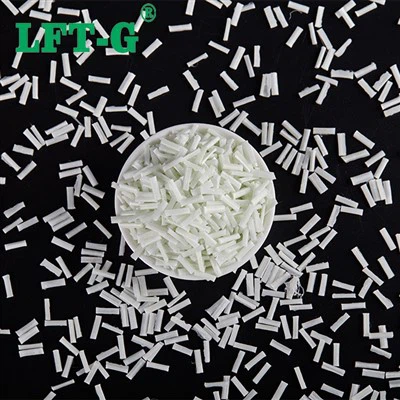
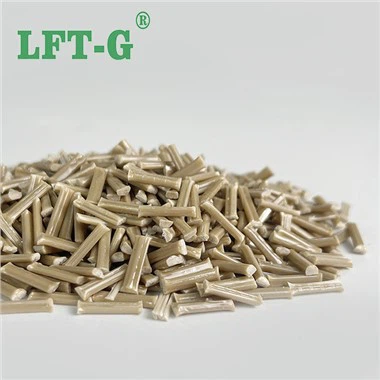
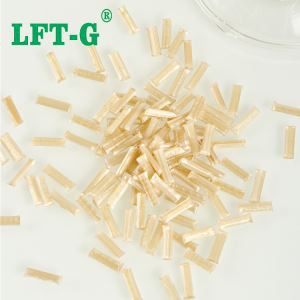
The reason is straightforward. Long glass or carbon fibers, preserved in LFT-G® pellets, form a three‑dimensional reinforcing network inside the molded part. This network delivers:
- Weight reduction - density of 1.2–1.6 g/cm³ compared to 2.7 g/cm³ for aluminum, with strength‑to‑weight ratios that rival or exceed metal
- Impact resistance - long fibers bridge and arrest micro‑cracks, delivering up to 4× the impact performance of short‑fiber compounds
- Creep resistance - the fiber network restricts polymer chain mobility, keeping parts dimensionally stable under sustained load
- Design freedom - complex geometries achievable in a single injection molding step, eliminating secondary machining and assembly
A recent patent for an orthopedic knee brace hinge illustrates the practical impact. By switching from a thermoset carbon fiber construction with metal hinge inserts to a long fiber reinforced thermoplastic design, the brace weight dropped from 700 grams to 430 grams - a 39% reduction - while eliminating the need for metal inserts and secondary finishing operations.
Lighter devices improve patient comfort and compliance. Stronger devices last longer and require less maintenance. LFT‑G® delivers both - without the weight penalty of metal or the processing limitations of thermoset composites.

Why This Matters for Rehabilitation Designers
The rehabilitation market is moving fast. Devices are becoming smarter, more connected, and more personalized. But at the core, every device still has to carry a load, hold its shape, and last. LFT‑G® materials offer a combination that few other materials can match:
| Requirement | LFT-G® Advantage |
|---|---|
| Lightweight | 30–50% lighter than aluminum |
| High strength | Load‑bearing capability comparable to metal |
| Durability | Fatigue and creep resistance for long‑term use |
| Design flexibility | Complex, integrated shapes in one molding step |
| Recyclability | Thermoplastic - remeltable and reprocessable |
For rehabilitation equipment manufacturers, this means thinner, lighter, and more patient‑friendly devices - without sacrificing structural integrity.
Looking Ahead
CR EXPO 2026 confirmed what we already believed: the rehabilitation industry is ready for better materials. The demand for lightweight, durable, and high‑performance structural components is only going to grow as the population ages and assistive technology becomes more sophisticated.
LFT‑G® has been engineering long fiber thermoplastics for over 20 years. Our portfolio spans PP, PA6, PA66, PPS, PPA, PBT, TPU, and specialty polymers, reinforced with long glass fiber (LGF) or long carbon fiber (LCF). We are actively exploring applications in rehabilitation devices - from orthotic frames and prosthetic components to wheelchair structural parts and exoskeleton frames.
If you are designing the next generation of rehabilitation equipment and want to explore what long fiber thermoplastics can do, we would like to hear from you.
Contact the LFT-G® technical team
Xiamen LFT Composite Plastic Co., Ltd is a global supplier of long fiber reinforced thermoplastics with 20+ years of innovation. We specialize in LFT‑PP, LFT‑PA, LFT‑PPS, and LFT‑Elastomers – offering high‑strength, lightweight alternatives to metal for automotive, aerospace, medical, and industrial applications.