
JEC World 2026 Innovation Award Winner Confirms: Thermoplastic Composites Are the Future of Aerospace Structures
The aerospace industry's most prestigious recognition has once again validated what material scientists have long argued: thermoplastic composites are the future of high-performance structural applications.
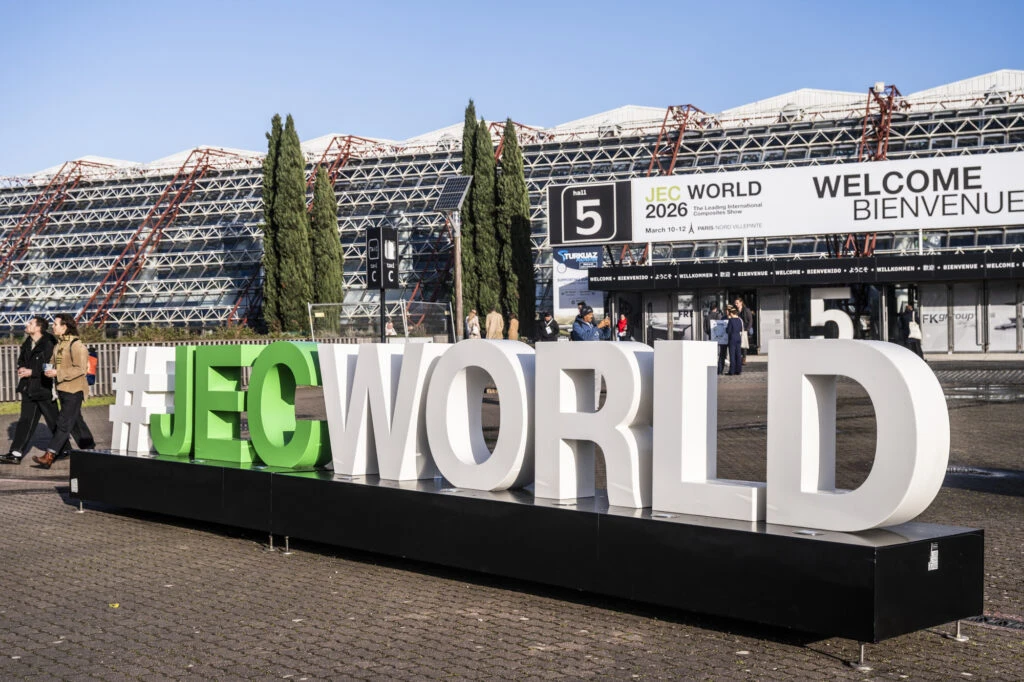
On January 12, 2026, at the JEC World Premiere ceremony in Paris - widely regarded as the "Oscars" of the composites industry - Daher was honoured with the JEC Composites Innovation Award – Aerospace (Parts) for its Highly Loaded Thermoplastic Wing Rib project. Developed for next-generation commercial aircraft, the winning solution represents a breakthrough in aerospace composite technology and sustainable aviation.
A Collaborative Achievement in Thermoplastic Innovation
The award-winning wing rib was the result of a powerful collaboration involving Victrex (provider of VICTREX LMPAEK™ thermoplastic composites), the Luxembourg Institute of Science and Technology (LIST), Cetim, AniForm Engineering, and the French civil aviation authority. Launched in 2021, the project set out to explore the potential of carbon fibre-reinforced thermoplastic (CFRTP) composites in high-rate aircraft rib manufacturing.
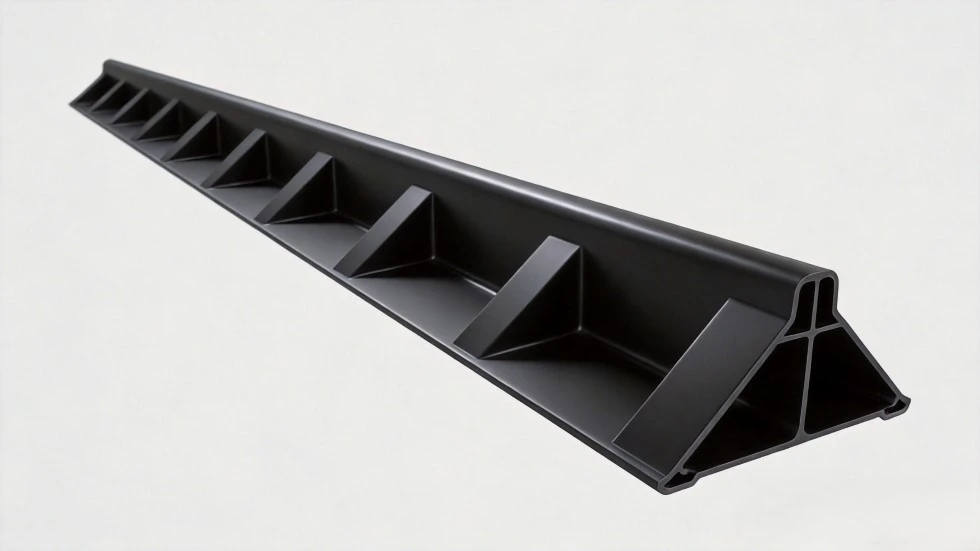
The project team employed VICTREX LMPAEK™ unidirectional tape - a high-performance PAEK-family polymer engineered to melt at a lower temperature than standard PEEK or PAEK grades, offering superior processing efficiency and lower energy demands while maintaining the hallmark properties of toughness, chemical resistance, fatigue resistance and high-temperature capability. The rib features a carbon-fibre-reinforced thermoplastic composite structure reaching up to 64 plies (12 mm thickness) - a significant achievement that demonstrates the viability of thick-section thermoplastic composites for primary aerospace structures.
LIST played a key technological role by developing and applying its patented infrared welding process, enabling rapid, lightweight assembly of thick CFRTP components into a T-shaped wing rib without mechanical fasteners - contributing to weight reduction, cost efficiency and recyclability. The design incorporates ply drop-offs and a wave-shaped profile without stiffeners, optimized through advanced simulation and automated fibre placement combined with direct stamping.
Measurable Benefits That Reshape the Industry
The project delivers four major, quantifiable benefits that address the aerospace industry's most critical challenges:
| Metric | Improvement |
|---|---|
| Weight reduction | 22% vs. aluminium |
| Assembly cost reduction | 15% vs. bolted assembly |
| Production cycle time reduction | 25% |
| CO₂ savings | 12.5 tonnes saved per rib over aircraft lifetime |
| End-of-life | Fully recyclable (thermoplastic advantage) |
The 12.5 tonnes of CO₂ saved per rib over a single-aisle aircraft's lifetime, combined with full recyclability - a key advantage of thermoplastic composites over traditional thermoset materials - demonstrates how material innovation directly contributes to aviation decarbonisation targets.
What This Means for the Composites Industry
The JEC Innovation Award, now in its 28th year, received 154 submissions with only 33 finalists across all categories. Daher's win in the Aerospace – Parts category is not merely an isolated achievement - it signals a broader industry shift.
Thermoplastic composites are no longer confined to secondary structures. The Daher wing rib, with its 64-ply, 12mm-thick carbon fibre-reinforced thermoplastic construction, demonstrates that thermoplastics can now meet the mechanical demands of primary aerospace structures - the most demanding applications in the composites world.
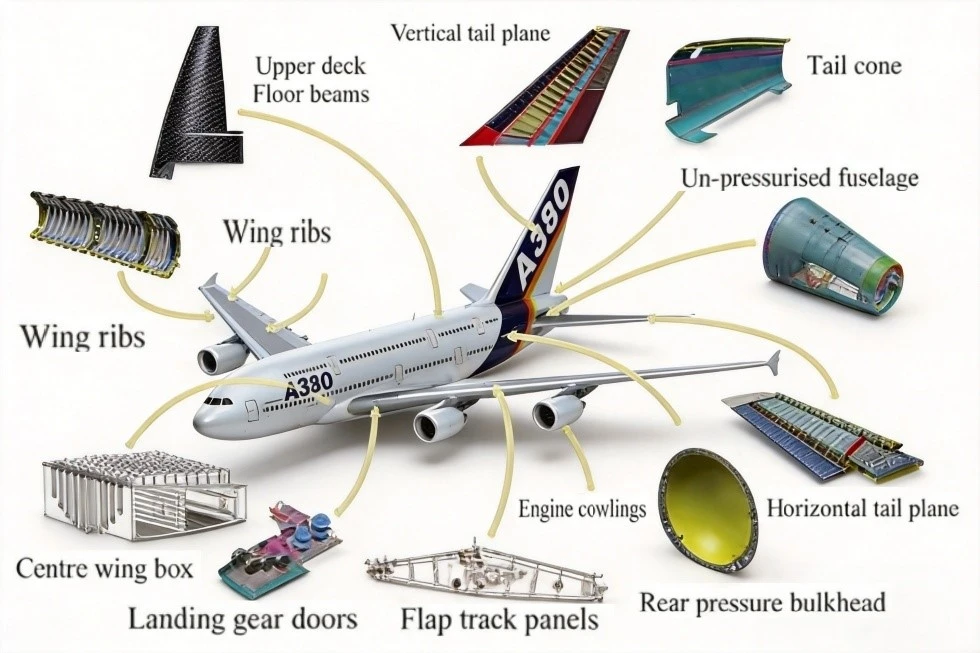
This follows the 2026 JEC award for a mass-production-ready thermoplastic battery housing in the Automotive category and a recycled thermoplastic A380 pylon fairing cover in the Circularity & Recycling category. Together, these awards confirm a clear trajectory: across aerospace, automotive, and industrial sectors, thermoplastics are systematically replacing both thermosets and metals.
Why This Matters for LFT-G®
For LFT-G®, Daher's JEC award-winning project carries three critical implications:
-
Thermoplastic recyclability is now a competitive advantage. The award specifically recognized full recyclability as a key benefit - a feature inherent to all LFT-G® products (PA, PP, PPS, and Elastomers). As sustainability mandates like the EU ELV Regulation reshape automotive material selection, this award reinforces that thermoplastics are the only compliant long-term choice.
-
High-temperature thermoplastics are entering primary structures. The use of VICTREX LMPAEK™ (a PAEK-family polymer) in the wing rib demonstrates that high-temperature specialty thermoplastics are now viable for the most demanding structural applications. LFT-G®'s PPS-based LFT series, with continuous use temperatures exceeding 240°C, is positioned to serve this exact market - where aerospace, oil & gas, and semiconductor industries require extreme thermal stability combined with structural integrity.
-
The industry is moving toward "design for circularity." The Daher wing rib was designed from the start for end-of-life recyclability - a principle LFT-G® has championed from day one. Our materials are engineered with high-purity virgin polymers not just for performance, but to enable true closed-loop recycling.
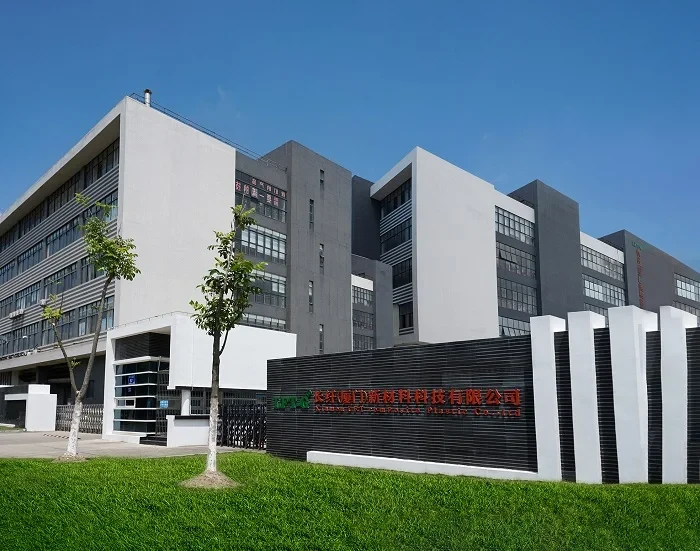
Xiamen LFT Composite Plastic Co., Ltd is a global supplier of long fiber reinforced thermoplastics with 20+ years of innovation. We specialize in LFT‑PP, LFT‑PA, LFT‑PPS, and LFT‑Elastomers – offering high‑strength, lightweight alternatives to metal for automotive, aerospace, and industrial applications.