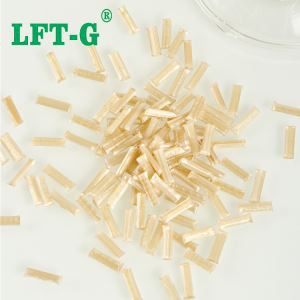

 Time to Ditch Metal? 5 Data-Backed Reasons to Switch to LFT Thermoplastics
For decades, steel and aluminum have been the default choices for structural components in automotive and industrial applications. But persistent challenges with weight, corrosion, and complex manufacturing processes are forcing engineers to look for smarter alternatives. The solution might be hiding in plain sight: Long Fiber Thermoplastics (LFT).
If you're still relying on metal, you could be missing out on significant performance gains and cost savings. This article provides a data-driven comparison to show why LFT composites are not just a viable replacement, but often a superior one.
What You'll Learn:
How LFT achieves metal-like strength at a fraction of the weight.
The design and production advantages of parts consolidation.
Why LFT parts inherently resist corrosion and chemicals.
A breakdown of cost savings in tooling and cycle time.
The hidden benefits of improved noise and vibration performance.
1. Unbeatable Strength-to-Weight Ratio
The number one driver for metal replacement is weight reduction. LFT composites offer stiffness and strength comparable to metals like aluminum and zinc, but at a significantly lower density. This is crucial for the automotive industry's push towards electrification and improved fuel efficiency. A lighter component reduces overall vehicle mass, which directly translates to extended range for EVs and lower emissions for combustion engines.
|
Material (40% Long Glass Fiber LFT-PP) |
Density (g/cm³) | Tensile Strength (MPa) |
Specific Strength (Strength/Density) |
|---|---|---|---|
| LFT-G®PP-GF40 | 1.19 | 150 | 126 |
| A380 Aluminum (Die-Cast) | 2.70 | 324 | 120 |
| Mild Steel | 7.85 | 400 | 51 |
As the data shows, LFT-PP offers a superior specific strength compared to both aluminum and steel, delivering more performance per gram.
2. Superior Design Freedom & Parts Consolidation
Metal fabrication often involves multiple steps: stamping, welding, bending, and assembly. This complexity adds time, cost, and potential points of failure. LFTs, processed via injection molding, unlock incredible design freedom. Engineers can consolidate multiple metal components-brackets, ribs, mounts, and housings-into a single, complex, net-shape part. This not only slashes assembly time and labor costs but also improves structural integrity by eliminating weak points like welds and fasteners.

See it in Action
Read our latest case study on how we helped an automotive Tier 1 supplier consolidate 7 steel parts into one LFT front-end module.
Read The Case Study3. Inherent Corrosion & Chemical Resistance
Rust is the eternal enemy of steel components, requiring expensive and environmentally sensitive coatings like e-coating or galvanizing. Aluminum is more resistant but can still suffer from galvanic corrosion when in contact with other metals. LFT composites are polymers, meaning they are inherently inert to rust and many common automotive and industrial chemicals. This eliminates the need for secondary protective coatings and ensures long-term part performance, especially in harsh environments.
- ● Resistant to road salts and de-icing agents.
- ● Unaffected by common automotive fluids like glycol, brake fluid, and oils.
- ● Ideal for battery enclosures in EVs, providing chemical resistance and electrical insulation.
4. Significant Cost Reduction: Tooling and Cycle Time
While raw material costs fluctuate, the total cost of a finished part is heavily influenced by manufacturing efficiency. Injection molding for LFTs offers a distinct advantage over metal die-casting or stamping. Tooling for injection molding is typically less expensive than high-tonnage steel stamping dies. More importantly, cycle times are dramatically shorter-often under 60 seconds per part, compared to several minutes for a multi-stage metal assembly process. This high-speed production leads to a lower cost per part and higher throughput.
5. Enhanced NVH (Noise, Vibration, and Harshness) Performance
Metals are excellent at transmitting noise and vibration, which can lead to a poor user experience in vehicles and machinery. LFT composites have natural damping characteristics. The internal network of long fibers within the polymer matrix is effective at absorbing and dissipating vibrational energy. This reduces radiated noise and improves the overall acoustic performance of the final assembly, a feature that is increasingly critical in the quiet cabins of electric vehicles.
Ready to Evaluate LFT for Your Next Project?
The evidence is clear: LFT composites offer a compelling combination of lightweighting, design flexibility, durability, and cost-efficiency. Stop over-engineering with traditional materials and start designing smarter.
Request a Free Material Sample Consult an Engineer
Written by Dr. Michael Ji (Candy, assistance)
Chief Materials Scientist at LFT-G® Global with over 15 years of experience in thermoplastic engineering. He specializes in metal-to-plastic conversion for the automotive and industrial sectors. Connect on Email.
Frequently Asked Questions
Q: What is the maximum continuous use temperature for LFT-PP?
A: The maximum continuous use temperature for LFT Polypropylene (LFT-PP) can range from 120°C to 140°C, depending on the specific grade and the stress applied. For applications requiring higher heat resistance, LFT-PA (Nylon) grades are often recommended.
Q: How does the cost of LFT raw material compare to aluminum?
A: While the per-kilogram cost of LFT raw material can be comparable to or slightly lower than aluminum, the real cost savings come from processing. Injection molding is a faster, less energy-intensive process than die-casting, and the lighter part weight reduces material consumption, leading to a lower overall part cost.
Q: Is LFT recyclable?
A: Yes, Long Fiber Thermoplastics are fully recyclable. As thermoplastics, they can be re-melted and re-processed. This makes them a more sustainable choice compared to many thermoset composites and aligns with circular economy principles in manufacturing.