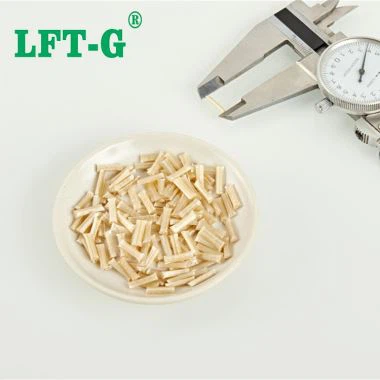


High Temperature Resistant Glass Fiber PPS Material
In today's industrial design, the pursuit of material performance has entered an "extreme challenge" mode. Engineers are no longer satisfied with a single advantage; what they need is a comprehensive solution that remains as stable as a mountain under multiple tests such as high temperature, high pressure, strong corrosion, and high precision. This is why glass fiber reinforced PPS (GF PPS) composite stands out among numerous high-performance engineering plastics.
Are you in search of a material that can replace cast metal for light weighting purposes, without sacrificing strength and heat resistance? Are you tired of the premature failure of ordinary plastics in critical applications due to creep, hydrolysis or chemical erosion? Choose GF PPS material. It has certain unique advantages in terms of material structure and core performance, making it a wise choice for achieving product innovation and cost reduction while increasing efficiency.
Polyphenylene sulfide (PPS) is itself a highly "genetic" high-performance polymer. Its molecular main chain is composed of alternating connections of rigid benzene rings and flexible sulfide bonds. This unique chemical structure endows it with three inherent advantages: Firstly, it has extremely high thermal stability, making it difficult to decompose; secondly, it has excellent chemical inertness, meaning it is almost insoluble in any organic solvent below 200 °C; finally, it has inherent flame retardant, requiring no addition of any flame retardants and emitting very little smoke during combustion.


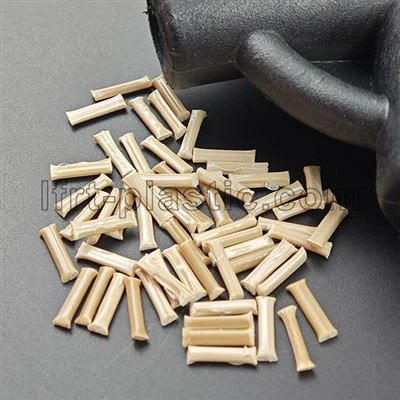
The outstanding performance of GF PPS Polymer
This composite of glass fiber and PPS materials has fully unleashed the heat resistance potential of PPS.
This powerful mechanical performance and heat resistance directly gave rise to the core value of "replacing steel with plastic". Taking PPS-GF40, a mainstream product in the market, as an example, its rigidity (bending modulus) is comparable to or even exceeds that of some die-cast aluminum alloys, but its density is only about half that of aluminum. In the automotive and aerospace industries, "light weighting" is equivalent to "energy conservation and emission reduction". Replacing traditional metal die-cast parts (such as water pump housings and throttle valve bodies) with GF PPS not only enables a significant weight reduction of over 40%, but also through efficient injection molding processes, complex structures can be manufactured in one go, significantly reducing the costs of secondary machining and anti-corrosion treatment required for metal parts.
Another "all-round" advantage of GF PPS lies in its top-notch dimensional stability, which is the lifeline for precision components. It is hardly affected by environmental humidity, with the saturation absorption rate being so low that it can be negligible; at the same time, the strong restraint of glass fibers makes its linear thermal expansion coefficient (CLTE) extremely low, approaching that of metals. This means that whether in the rainy season in the south or in the dry north, regardless of how drastic the temperature changes are, the precision connectors and sensors made from it will not undergo size changes due to moisture absorption or thermal expansion and contraction, thus eliminating the risks of poor contact or assembly failure. Its excellent creep resistance ensures that the components can maintain their original shape even under long-term high temperatures and heavy loads (such as screw tightening), and will not loosen.
Finally, it is not afraid of the harsh chemical and fluid challenges. GF PPS exhibits extremely strong "immunity" to almost all automotive fluids (gasoline, engine oil, antifreeze, brake fluid), industrial solvents, and even strong acids and bases. In the battery cooling systems of new energy vehicles, chemical pumps and valves, or automotive exhaust gas treatment (EGR) systems, this tolerance is crucial for ensuring sealing and structural integrity, effectively preventing catastrophic leaks caused by material corrosion, swelling or cracking.


What is GF PPS Used For?
This unique combination of properties determines that GF PPS is only used in "essential" critical areas that cannot be compromised.
The automotive industry is its largest stage, perfectly meeting the triple demands of automobiles for high temperature resistance, oil resistance and light weighting. In traditional fuel vehicles, it is used in turbocharging systems, EGR valve bodies, thermostat seats and pump impellers as an alternative to brass. In the "three-electricity" system of new energy vehicles (EVs), it is the core choice, used to manufacture the bus bars of battery modules, inverter housings and high-voltage connectors. Its V-0 flame retardant and high insulation properties provide a guarantee for high-voltage safety.
In the field of electronics and electrical engineering, GF PPS is one of the few "survivors" that can withstand the high-temperature reflow soldering process in SMT surface mounting technology. It is widely used in the manufacturing of precision connectors, CPU sockets and coil frames, and its outstanding dimensional stability ensures the coplanarity of the pins after welding.
In the fields of industrial fluids and household appliances, from the pump bodies and impellers of chemical pumps to the high-temperature internal components of ovens and water heaters, GF PPS is quietly playing the role of the "endurance pioneer".
FAQ
Q: What is the most crucial advantage of GF PPS material?
A: Extremely long-term heat resistance and dimensional stability. At the same time, it hardly absorbs water and its size remains almost unchanged even in humid or high-temperature conditions.
Q: When using GF PPS injection molded products, what is the most important thing to pay attention to?
A: High melt temperature control. This is the most crucial process point. GF PPS polymer must be molded at a fixed range of high melt temperature to ensure complete crystallization. If the mold temperature is too low, the product will be extremely brittle and its heat resistance will be greatly reduced.
Q: Where is GF PPS plastic pellet mainly used?
A: Automotive (engine periphery, water pump, turbocharger components, high-voltage components of new energy vehicles), electronic and electrical (coil frame), as well as chemical pumps and valves, etc. - these are demanding fields.
GF PPS compound resin is far more than just a "high-temperature resistant plastic". It embodies an advanced engineering design concept: it creates a high-value "third path" between the performance boundaries of metals (weight, corrosion, processing cost) and the performance ceilings of ordinary plastics (temperature, strength, stability). By sacrificing a certain initial material cost, it achieves unparalleled reliability throughout the product's lifecycle and a significantly lower total cost of ownership.
Hot Tags: high temperature resistant pps material, China, manufacturers, suppliers, factory, buy, customized