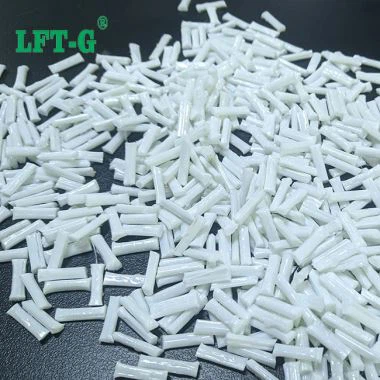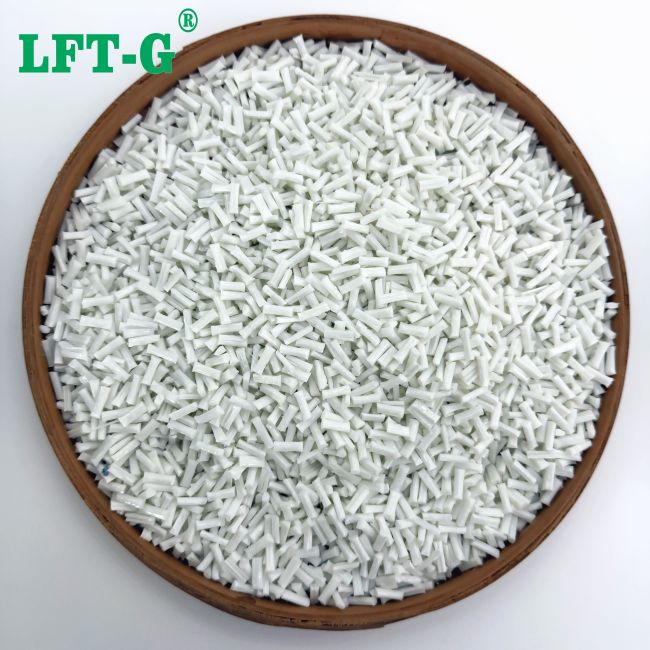


LGF PBT Composite Glass Fiber Polybutylene Terephthalate
LGF PBT: A High-Performance Engineering Material
An LGF PBT composite is a robust thermoplastic material created by reinforcing a Polybutylene Terephthalate (PBT) polymer matrix with long glass fibers. This combination results in a high-performance engineering plastic with significantly enhanced mechanical properties compared to unreinforced PBT or those filled with short glass fibers. The extended length of the glass fibers is instrumental in forming a strong, interlocking internal skeletal structure within the molded part, leading to exceptional strength, stiffness, and impact resistance.
These composites are typically supplied as pellets, ready for use in conventional injection molding processes, making them suitable for the mass production of complex components. The final performance characteristics of a molded part are heavily influenced by the length and orientation of the glass fibers within the finished product.
LGF PBT Material: Key Advantage
The incorporation of long glass fibers imparts a range of beneficial properties to the PBT matrix, making it a versatile material for demanding applications.

A key advantage of LGF PBT composites lies in their superior mechanical performance. The long fibers provide a significant boost in tensile and flexural strength, as well as overall rigidity. This makes the material ideal for components that need to withstand substantial loads. Furthermore, the interconnected network of long fibers is highly effective at absorbing and dissipating energy, resulting in excellent impact resistance and durability.
In terms of stability, LGF PBT composites exhibit enhanced dimensional stability due to a reduced coefficient of thermal expansion and low moisture absorption. This means components are less likely to warp or change shape when exposed to fluctuating temperatures and humidity. They also demonstrate excellent creep resistance, showing minimal deformation under sustained loads, particularly at elevated temperatures.
Inheriting the properties of the PBT matrix, these composites also boast good thermal and chemical resistance, making them suitable for use in harsh environments where they may be exposed to heat and various chemicals, such as automotive fluids and industrial solvents.
GF PBT: From Fiber to Finished Part
Compounding: The initial stage involves the production of LGF PBT pellets. A common technique is pultrusion, where continuous strands of glass fibers are pulled through a die and impregnated with molten PBT resin. This ensures a thorough wetting of the fibers. The resulting composite strands are then chopped into pellets, typically ranging from 5 to 25 millimeters in length.
Injection Molding: These pellets are then used in standard injection molding machines. A critical aspect of this stage is to minimize fiber breakage to preserve the reinforcing benefits of the long fibers. This is achieved through careful control of processing parameters like screw speed and injection pressure, and by using specially designed screws and nozzles. The flow of the molten composite into the mold determines the orientation of the fibers, which ultimately influences the mechanical properties of the final component.
LFT PBT Polymer: Application Range
Automotive Industry
These composite materials play a significant role in reducing the weight of vehicles. They are used to manufacturing structural components and semi-structural components, such as front load-bearing parts, dashboard frames, door modules, and seat structures. Their thermal stability and chemical stability also make them suitable for applications within the engine compartment, such as engine hoods and battery trays.
Electrical and electronic industry
Its common applications include connectors, sockets, circuit breaker components, as well as protective casings for electronic control units and power tools.
Industries and consumer goods
LGF PBT composite materials are used in components of household appliances such as washing machines and dryers because these components need to have high strength, heat resistance and detergent resistance. Additionally, they are also used to manufacture sturdy pump housings, impellers and various sports equipment.

Weighing the Pros and Cons
Advantages:
Significantly improved mechanical properties (strength, stiffness, and toughness) over short-fiber composites.
Excellent dimensional and thermal stability.
Good resistance to a wide range of chemicals.
Enables the replacement of heavier metal parts, contributing to weight reduction.
It can be processed using conventional and efficient injection molding techniques.
Disadvantages:
Higher material cost compared to unreinforced or short-fiber-reinforced plastics.
The surface finish of molded parts can sometimes exhibit visible fiber patterns.
The material's properties can be anisotropic, meaning they can vary depending on the orientation of the fibers. This requires careful consideration during the design and manufacturing process.
Improper processing can lead to fiber breakage, diminishing the material's performance benefits.
FAQ
Q: What are the core advantages of LGF PBT compared to SGF PBT material?
A: The core advantage of LGF PBT composite lies in its outstanding mechanical properties and lower warpage. Long fibers can more effectively transfer stress and form a stronger internal network structure.
Q: What are the key points that need to be paid attention to during the injection molding process of LGF PBT polymer?
A: The key lies in maximizing the length of the glass fibers. To achieve this goal, attention needs to be paid to aspects such as screw design, process parameters, and mold design.
Q: What are the key performance parameters of LGF PBT materials?
A: The key performance parameters mainly include mechanical properties (tensile strength and modulus), thermal properties (heat distortion temperature (HDT)), and physical properties (material density (g/cm³))
The LGF PBT material of LFT-G has been widely applied in various fields and has accumulated certain experience. If you are interested in this kind of material, you can communicate and exchange ideas with our material experts. Our material experts will provide you with more relevant information. Click below,
Hot Tags: lgf pbt composite, China, manufacturers, suppliers, factory, buy, customized