

When regular TPU can't handle the job and metal is too heavy, LCF40 TPU offers you a smarter alternative.
What Is LCF40 TPU Material?
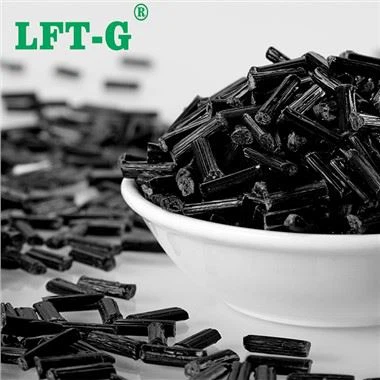
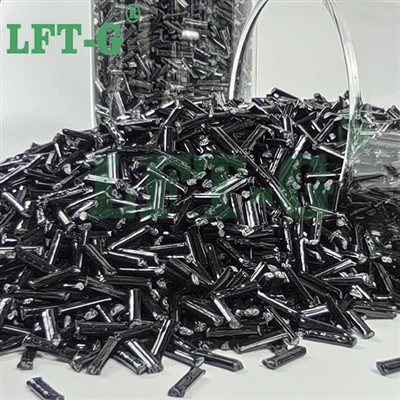
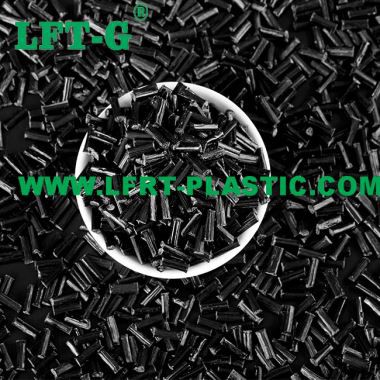
LCF40 TPU is a high-strength structural grade thermoplastic composite material that is based on thermoplastic polyurethane (TPU) and reinforced with 40% long carbon fibers.
It is not an "enhanced version" of ordinary TPU. Instead, it is a material solution specifically designed for bearing, supporting, resisting impact, and lightweight structural components. It lies between traditional engineering plastics and metals in terms of performance levels and can be directly used for functional and structural integrated components.
What challenges will the customers encounter?
The current TPU strength is insufficient, and it often deforms or fails.
Short fiber reinforced materials have unstable fatigue life.
Metal solution: Excessively heavy, complex to process, and high in cost.
High-strength plastic is too brittle and is prone to cracking under impact.
The product needs to be made lighter, but reliability must not be compromised.
Why Choose LCF40 TPU?
The emergence of LCF40 TPU compound resin has been able to effectively address some long-standing but difficult-to-simultaneously-fulfill demands. It is reinforced with long carbon fibers, enabling TPU to achieve stable and predictable structural performance for the first time, while still maintaining its shock resistance, wear resistance, and flexible molding characteristics.
The truly suitable TPU materials for structural components
The LCF40 TPU is not an "attractive parameter" experimental material but an engineering-grade solution developed for structural component applications.
The 40% long carbon fibers retain their effective length after molding, ensuring stable performance under stretching, bending, and combined loads.
The balance plan for strength, rigidity, and toughness
The majority of high-strength plastics come at the cost of increased brittleness, but LCF40 TPU achieves the following balance through the TPU matrix:
High rigidity framework → Ensures structural stability
TPU continuous phase → Absorbs shock and vibration
Long fiber structure → Extended fatigue life
Significant potential for lightweighting
Compared with metals or high-density engineering plastics, LCF40 TPU can achieve significant weight reduction while maintaining structural performance.
This brings not only material replacement to the customers, but also:
System weight reduction
Improvement in energy efficiency or response performance
The degree of freedom in structural design has increased.
Decrease in assembly and maintenance expenses
What Can LCF40 TPU Solve For You?

The truly reliable TPU structural material
40% long carbon fibers are embedded within the material to form a continuous load-bearing framework, enabling the load to be effectively transferred and avoiding the problem of "surface reinforcement but internal failure".
Strength and toughness coexist, avoiding brittle failure risks
The TPU matrix provides energy absorption and buffering capabilities, reducing failure risks under impact, vibration, and sudden loads.
Significant weight reduction, enhanced product performance
Compared to metals or high-density engineering plastics, LCF40 TPU plastic pellets can achieve significant weight reduction, which is conducive to overall performance improvement and design optimization.
Stable and reliable, suitable for long-term use
Excellent anti-fatigue and dimensional stability, suitable for repeated loading and long-term service environments.
How does LCF40 TPU address the customers' issues?
| Actual problem | LCF40 TPU Response strategy |
| Deformable and prone to creep | High modulus + dimensional stability |
| The material is prone to fatigue | Continuous fiber fatigue resistance decreases |
| The component is too heavy. | Structural-level lightweight design |
| Brittle | TPU matrix energy absorption and buffering |
| TPU is unable to bear. | Long carbon fiber constructs the load-bearing structure |
What Can It Be Used For?
LCF40 TPU (40% long carbon fiber reinforced thermoplastic polyurethane) plastic pellet is suitable for use in components that integrate functionality and structure, and it demonstrates significant advantages in the following types of components:
Load-bearing supporting structure
High-strength connecting components and fastening elements
Impact-resistant protective enclosure
Structural components that require repeated application of force
Components that are sensitive to both weight and strength
These components often cannot be produced solely using ordinary plastics, and the metal solutions also have issues related to cost or weight.
Case Study
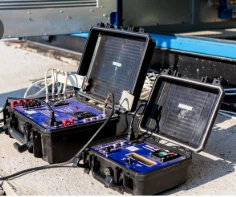
Background: When an industrial equipment manufacturer was developing a portable high-power device, they needed a bracket component that could integrate internal support and protection. This component not only needs to fix and support the internal components of the equipment but also needs to withstand repeated impacts and vibrations during transportation and use.
At the beginning of the project, the client tried several material options, but all of them had obvious problems:
-
Option One: Ordinary TPU
The strength is insufficient. Under continuous load and impact conditions, the support undergoes significant deformation. -
Option Two: Short Fiber Reinforced Engineering Plastic
The impact and fatigue resistance is unstable. During the drop and vibration tests, cracks appeared in some local areas. -
Option Three: Metal Support Frame
Due to weight and design constraints, the overall weight of the device has significantly increased, which is not conducive to a portable design.
The final customer chose the LCF40 TPU material. After adopting LCF40 TPU compound resin, the customers carried out targeted optimization of the support structure:
Utilizing the high modulus property of the material, strengthen the main load-bearing reinforcement positions.
By adopting a reasonable flow design, efforts should be made to maintain the effective length of the long fibers.
Integrate the original multiple parts into a single structure
Have Any Questions About Our Material?
The performance and application effect of LCF40 TPU composite are influenced by various factors such as structural design, working conditions, and processing methods.
To help customers better understand the applicable scope and key characteristics of this material, we are more than willing to answer any questions you may have. Please don't hesitate to contact us at any time.
What is the fundamental difference between LCF40 TPU and ordinary TPU?
The ordinary TPU is mainly used for flexible or cushioning components, while the LCF40 TPU, through the construction of a bearing framework with long carbon fibers, can be involved in the structural force design, resulting in significant improvements in strength and rigidity.
Why use long carbon fibers instead of short fibers for reinforcement?
The long carbon fibers can maintain their effective length even after forming, forming a continuous force transmission path, which helps to enhance the structural strength, fatigue resistance and long-term stability, and the performance is more predictable.
For which typical applications is LCF40 TPU suitable?
This material is commonly used for load-bearing brackets, structural connectors, protective enclosures, and integrated functional-structural components. It is particularly suitable for applications where "ordinary TPU is not strong enough and metals are too heavy".
Hot Tags: lcf40 tpu for supporting component, China, manufacturers, suppliers, factory, buy, customized