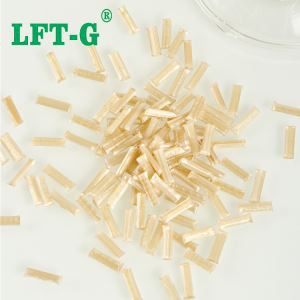

LGF ABS: Industry Positioning and Applications
With the continuous upgrading of the automotive industry, intelligent manufacturing, consumer electronics and industrial equipment, engineering plastics are gradually evolving from "functional materials" to "structural load-bearing materials". With the continuous upgrading of the automotive industry, intelligent manufacturing, consumer electronics and industrial equipment, engineering plastics are gradually evolving from "functional materials" to "structural load-bearing materials". During this process, the materials not only need to have excellent molding processing properties, but also must achieve a balance among strength, rigidity, durability, and cost controllability.
During this process, the materials not only need to have exceptional molding processing performance, but also must achieve a balance among strength, rigidity, durability, and cost controllability.
Traditional short glass fiber reinforced ABS has become insufficient to meet the comprehensive requirements for dimensional stability, long-term mechanical properties, and impact resistance reliability in some structural components. Traditional short glass fiber reinforced ABS has become insufficient to meet the comprehensive requirements for dimensional stability, long-term mechanical properties, and impact resistance in some structural components. While high-end engineering plastics (such as PPS, PPA, etc.) have outstanding performance, they have obvious limitations in terms of cost and processing adaptability. Although high-end engineering plastics (such as PPS, PPA, etc.) have outstanding performance, they have obvious limitations in terms of cost and processing adaptability. Under this circumstance, LGF ABS (Long Glass Fiber Reinforced ABS) has gradually emerged as an important supplementary solution between general reinforcing materials and high-end engineering plastics. Under this circumstance, LGF ABS (Long Glass Fiber Reinforced ABS) compound resin has gradually emerged as a significant supplementary solution between general reinforcing materials and high-end engineering plastics.
The Material Structure of LGF ABS Plastic Pellet
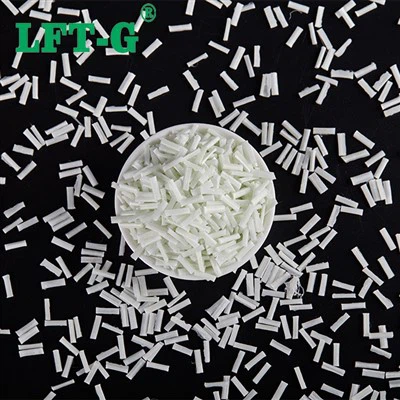
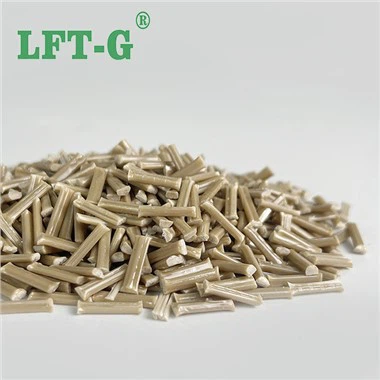
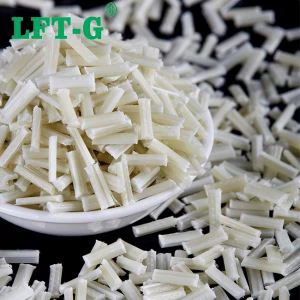
LGF ABS is constructed with ABS resin as the matrix and a continuous or semi-continuous fiber framework structure is formed through the long glass fiber reinforcement technology. Compared with the traditional short fiber reinforcement system, the long fiber structure creates a more stable load transmission path within the material, thereby significantly enhancing the overall structural performance.
From the perspective of material structure, LGF ABS composite possesses the following core characteristics:
Fiber length advantage: The effective fiber length is usually significantly higher than that of short-fiber systems, reducing stress concentration at the fiber ends.
Enhanced efficiency: With the same amount of glass fibers, superior strength and rigidity output can be achieved.
Stronger structural integrity: Can maintain good overall even under complex loading conditions.
Industry Value Under the Performance Dimension

1. Mechanical properties and long-term reliability
In industrial applications, the instantaneous strength of the material is not the only factor to consider. What is more important is the long-term service performance. Compared with traditional reinforced ABS, LGF ABS has significant improvements in tensile strength, bending modulus and impact toughness. Especially under repeated loads, vibration environments and multi-axis stress conditions, the structural stability is more prominent.
This performance feature makes it more advantageous in resisting fatigue failure and stress relaxation, and is suitable for structural components used for long-term applications.
2. Dimensional Stability and Structural Consistency
Due to the formation of a supporting network by the long fibers in the material, LGF ABS composite exhibits superior dimensional stability after molding. Compared to the short fiber system, its warping deformation trend is more controllable, and this is particularly evident in large-sized or parts with significant wall thickness variations.
This characteristic is of great significance for industries that require high assembly accuracy (such as automotive interior and exterior frame structures, and equipment shell structures).
3. Impact Performance and Safety Redundancy
ABS inherently has a good toughness foundation, and the addition of long glass fibers does not significantly compromise this advantage. Through proper formulation design, LGF ABS plastic pellet can maintain high rigidity while achieving high impact absorption capacity, making it particularly suitable for applications that require both structural strength and safety redundancy.
Analysis of Industry Application Directions
1. Automotive and Transportation Field
Driven by the trend of automotive light weighting, LGF ABS has attracted widespread attention in the following areas:
Interior frame and functional support components
Electronic module structural shells
Non-exposed load-bearing components
Its comprehensive performance in terms of cost control, performance stability, and production consistency meets the requirements of medium and large-scale automotive components.
2. Industrial Equipment and Structural Enclosures
In the field of industrial equipment, LGF ABS compound resin is suitable for load-bearing enclosures, supports, and structural modules. Such applications typically require the material to maintain stable mechanical properties under long-term working conditions while also having good processing efficiency.
3. Consumer Electronics and Functional Components In consumer electronics, LGF ABS can be used for internal structural components that require a balance of appearance, structural strength and molding efficiency. It is particularly suitable for applications where rigidity and impact resistance are required, but do not involve high-temperature environments.

From the perspective of the industry material system, LGF ABS does not replace all high-performance engineering plastics. Instead, it offers a solution with an extremely high balance between performance and cost. It fills the application gap between traditional reinforced ABS and high-end engineering plastics, providing more flexible options for engineering design. For industries that prioritize structural reliability, batch manufacturing efficiency, and overall cost control, LGF ABS is becoming an increasingly mature and practical engineering material option.