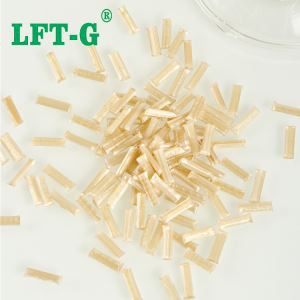

In the pyramid of special engineering plastics and high-performance composite materials, long carbon fiber reinforced nylon 12 (LCF PA12) occupies a unique and crucial ecological position. It is neither as inaccessible as PEEK, nor as susceptible to environmental influences as ordinary glass fiber reinforced PA6.
For engineers who are seeking ultimate light weighting and demanding strict precision in complex working conditions, LCF PA12 is often the "once chosen, it cannot be replaced" ultimate solution.
Why is It The PA12 + Long Carbon Fiber Structure?
To fully understand the power of LCF PA12, one must first dissect the synergy of its two core components:
1. The intelligence of the matrix: The "long-chain" resistance of PA12
The biggest difference between PA12 and common PA6/PA66 lies in their molecular structure. PA12 has longer methylene carbon chains and a low density of amide groups.
Revolution in water absorption: The amide groups are hydrophilic, and the low density means extremely low water absorption rate.
Core value: This solves the biggest pain point of the nylon family - dimensional changes and performance degradation after moisture absorption. LCF PA12 compound resin is the only nylon composite material that can maintain metal-like dimensional accuracy even in damp, underwater, or even chemical solvent environments.
2. Enhanced Artistry: The Skeleton Effect of Long Carbon Fiber (LCF)
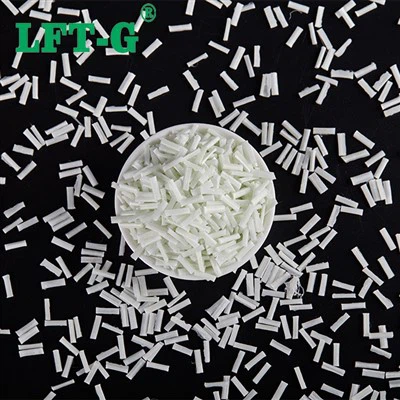
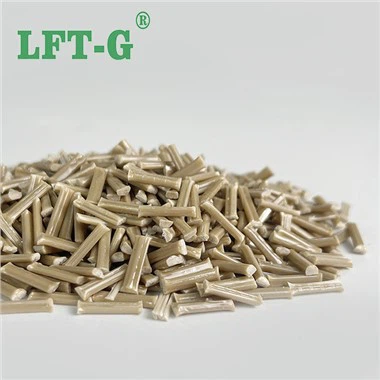
Unlike short-cut carbon fiber (SCF), LCF is fabricated through the pultrusion process, with the fiber length being consistent with the particle length (typically 10-12mm). After injection molding, the long fibers form an interwoven "three-dimensional skeleton network" within the component. Performance Enhancement: This structural framework not only offers extremely high rigidity and strength, but also significantly enhances impact resistance (fibers must expend a great deal of energy to be pulled out) and creep resistance (resistance to deformation under long-term loads).
Where does LCF PA12 stand in the material competition?
In the actual engineering material selection process, LCF PA12 composite is confronted with a "top pressure and bottom squeeze" competitive situation, but it has held its ground by virtue of its unique characteristics.

1. Resistance to PA66/LGF PA66
Challenges: Many customers want to replace PA12 with PA66 due to cost considerations.
If the application involves precise fits (such as gears, sliders) and the environmental humidity is uncontrollable, PA66 has the risk of "stalling". The dimensional stability of LCF PA12 material is an insurmountable barrier for it.
2. Alternative Metals (Aluminum/Magnesium Alloy)
Challenges: Customers believe that plastic is not as reliable as metal.
Under the same rigidity, the weight of LCF PA12 is only about 50% of that of aluminum alloy. Moreover, after metal is formed, complex CNC secondary processing is often required; LCF PA12 can be molded into complex geometries through injection molding, and the overall cost is often lower. At the same time, compared with the rigid transmission of vibration in metal, LCF PA12 plastic pellet can absorb vibration, reducing noise and fatigue loss.
3. Avoid PEEK/PPS Pellet
If the working temperature exceeds 150°C for a long time, LCF PA12 will soften. In such cases, other materials should be used. The main application field of LCF PA12 is the high dynamic and high environmental adaptability range of -40°C to 120°C.
In-depth Exploration of Application Scenarios
High-end sports equipment: The transition from "hard" to "flexible"
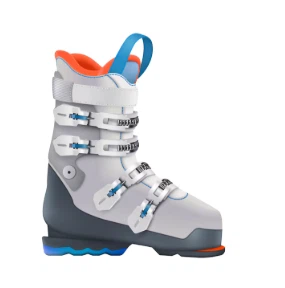
Typical cases: The outer shells of top-level ski boots, professional bicycle transmission components, and midsole supports of high-end running shoes.
Core logic: These products are often used in outdoor environments with low temperatures. Ordinary carbon fiber reinforced materials become brittle and prone to cracking at low temperatures. However, LCF PA12, with the excellent low-temperature toughness of the PA12 matrix, can remain intact even when subjected to force on a -40°C snowy mountain, while the long carbon fibers provide the necessary rebound force (energy feedback).
Automotive Fluids and Brake Systems: The Deepwater Area of Plastic Replacement of Steel
Typical Cases: Quick couplings for fuel lines, valve bodies for pneumatic braking systems, vacuum pump housings.
Core Logic: The chassis and pipelines of automobiles are frequently exposed to chemicals such as fuel, brake fluid, and de-icing agents. PA12 inherently possesses excellent chemical resistance and anti-hydrolysis properties. Combined with the high strength of carbon fiber, it ensures that the sealing components do not leak or burst even under long-term chemical corrosion.
Emerging Fields: Industrial Drones and Robots
Typical Cases: Propeller of agricultural drone, Joint components for logistics robots.
Core Logic: Drones are extremely sensitive to weight (lighter weight = longer flight time). LCF PA12 provides rigidity similar to that of aerospace aluminum, while also solving the problem of metal fatigue cracks that are prone to occur in metal arms under high-frequency vibration.

LCF PA12 plastic granules is not a universal material; rather, it is an "elite material". Its significance lies in addressing the extreme engineering challenges that require it to be both extremely lightweight and extremely strong, while also being resistant to the erosion of wind and rain. It conveys its irreplaceable value throughout its entire life cycle.