
Breaking Through and Reconstructing: In-depth Analysis of LCF PA66 Material
In the evolution history of modern industrial manufacturing, each material iteration has been accompanied by a leap in product performance. From the indestructible steel era to the lightweight and agile aluminum alloy era, we are now standing at a new crossroads.
With the advancement of the "carbon neutrality" goal and the extreme pursuit of energy efficiency in high-end manufacturing, traditional metal materials have reached their physical limits in certain fields. Against this backdrop, LCF PA66 (long carbon fiber reinforced nylon 66) plastic pellet, as a composite material at the top of the pyramid, is quietly changing the manufacturing logic of automobiles, aviation and high-end equipment with its role as a "metal substitute".
Short Fiber Technology (SFT): The fibers are shredded in a twin-screw extruder, with the length typically being less than 1mm, and they are scattered throughout the resin like crushed stones.
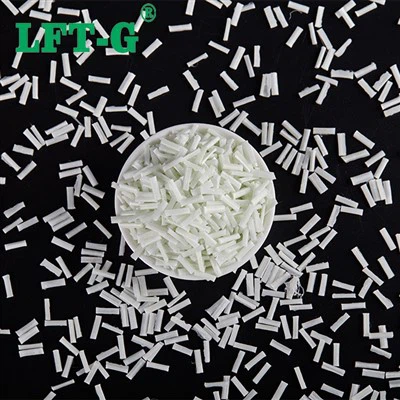
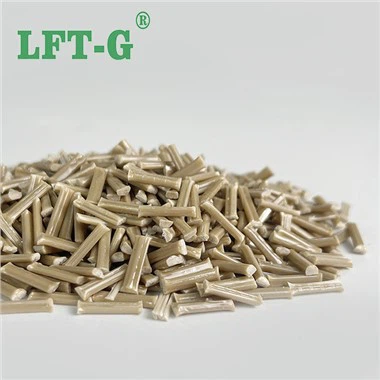
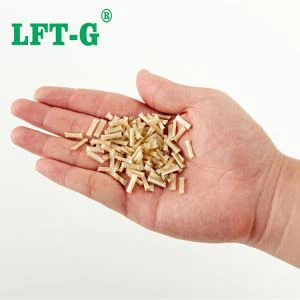
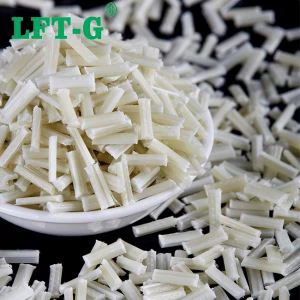
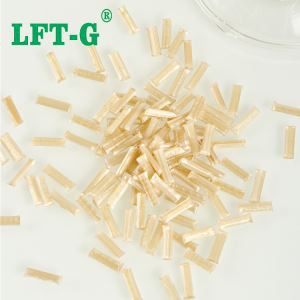
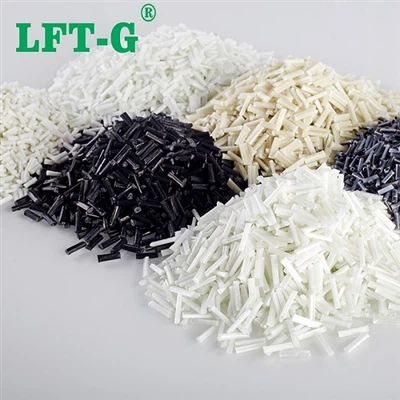
Long Fiber Process (LFT): Continuous carbon fiber bundles are fully impregnated in molten PA66 resin, and then cut into 10mm-12mm sized pellets (with a length range of 5mm-25mm).
The core difference: In the final formed parts, long carbon fibers can retain a length of over 1mm. This seemingly minor length difference is a world of difference in the microscopic world - long fibers entwine and overlap within the matrix, forming a three-dimensional "reinforcement skeleton". This network structure is something short fibers cannot possess.
Performance Decoding: LCF Nylon 66 Polymer
1. Ultra-high specific strength
This is the proudest metric of LCF PA66 material. Although its absolute strength may be slightly lower than that of some high-strength steels, considering its low density, its "strength per unit weight" is astonishing. Under the premise of achieving the same structural rigidity, using LCF PA66 components typically results in weight reduction compared to aluminum alloy parts.
2. Outstanding resistance to creep and fatigue
For components that are subjected to static loads (such as supports) or dynamic cyclic loads (such as gears, connecting rods) over a long period of time, ordinary plastics are prone to "creep" (gradual deformation) or fatigue failure. The internal fiber network in LCF PA66 plastic pellet can effectively prevent the expansion of cracks and disperse stress. Its fatigue resistance limit far exceeds that of glass fiber reinforced materials, making it the preferred choice for dynamic structural components.
3. Similar to the thermal expansion coefficient of metals
Ordinary plastics have severe thermal expansion and contraction, making it difficult to achieve precise cooperation with metal parts. However, carbon fiber has an extremely low (even negative) thermal expansion coefficient, neutralizing the thermal expansion of PA66.
4. Natural Electromagnetic Shielding
Carbon fiber is an excellent conductor. LCF PA66 compound resin does not require the application of conductive paint like ordinary plastics; the material itself can effectively block electromagnetic wave interference. This has extremely high application value in the fields of electronic components for new energy vehicles and precision instruments.
5. High damping property
Compared to the rigid conduction of metals, the friction at the interface between the polymer matrix and carbon fibers endows the material with better damping performance. This means that mechanical arms or motion equipment made of LCF PA66 composite can absorb vibrations more quickly, enhancing the stability and comfort of the system.
The cost paradox of "replacing steel with plastic"
1. Integrated cost reduction
Metal solution: Aluminum alloy die casting usually requires multiple processes - die casting, deburring, CNC finishing, tapping, and surface anti-corrosion treatment. Each process incurs costs.
LCF PA66 solution: Injection molding is a one-step process. Threads, snap-in parts, and complex curved surface designs can all be molded in the mold at once, without the need for post-processing.
2. Mold Life and Efficiency
Although LCF causes wear on molds, compared to die-casting molds, injection molds generally have a longer lifespan and the injection cycle is much shorter than that of metal processing, significantly enhancing production capacity.
3. Weight reduction achieved through functional integration
Due to the high degree of freedom in injection molding, designers can transform components that originally required multiple metal parts to assemble into a complex plastic unit. This reduces the number of parts, thereby lowering assembly costs and minimizing potential failure points.
Application Layout - From the Ground to the Sky


Automotive Industry
Battery Pack Surroundings: Battery tray brackets and protective frames for electric vehicles. They must be of high strength to withstand impacts, and also need to be flame-retardant and lightweight to enhance range.
Structural Components: Dashboard frame, front module, rearview mirror brackets, sunroof frame.
Engine Surroundings: Although there is a trend towards electrification, in hybrid systems, LCF PA66 that is resistant to high temperatures and oil remains an ideal material for components such as timing gear case covers.
Drones and Aviation
Rotary Blade: LCF PA66 provides high modulus, which prevents blade deformation and flutter during high-speed rotation. It is also lighter than ordinary nylon blades, directly increasing flight time.
Frame Structure: It can reduce production costs in both consumer-grade and industrial-grade drones.
Industry and High-End Equipment
Collaborative Robot Joints: Reducing the weight of the arm means reducing the motion inertia, making the robot's movements more agile, stopping more precisely, and lowering the load on the motor.
High-Speed Textile Machine Components: In high-frequency reciprocating motion, light weighting means faster speed and lower energy consumption.
Athletic sports equipment
Ski bindings, bicycle accessories: Utilizing their high toughness at low temperatures (less prone to breaking) and excellent mechanical feedback.
LCF PA66 is not merely a material; it is a combination of materials science and precision manufacturing technology.
With the increasingly stringent global requirements for energy conservation and emission reduction, as well as the accelerating trend of equipment miniaturization and light weighting, the demands placed on materials in the industrial sector have far exceeded the simple notion of "sturdiness". What we need are solutions that are lighter, stronger, more moldable, and more functional.
LCF PA66 is precisely the perfect answer to this trend. It breaks the traditional boundaries between plastics and metals, giving engineers greater design freedom. Mastering and applying this material is not only an upgrade for the product, but also an upgrade in the manufacturing competitiveness of the enterprise.