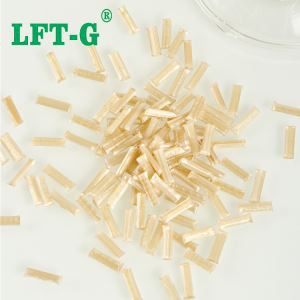

The Strategic Positioning of LCF PPS in the Industry
After the global manufacturing industry entered the era of high-power density, electrification, and high-reliability operation, materials are no longer merely supporting resources but have become the decisive factor for the performance boundaries of systems. New energy vehicles, electric drive systems, energy storage equipment, industrial automation, and high-end electronic and electrical devices have put forward higher requirements for materials:
Long-term high-temperature stability
Structural load-bearing capacity
Lightweight and module integration capability
Chemical corrosion and environmental aging resistance
Dimensional stability and low deformation
Against this backdrop, polyphenylene sulfide (PPS), as an important representative of high-performance thermoplastic engineering plastics, is widely used in high-temperature fields due to its excellent heat resistance and chemical stability. However, a single resin system is no longer sufficient to meet the demands of high-load structures, and thus long carbon fiber reinforcement technology (LCF) has become the key path for material upgrading.
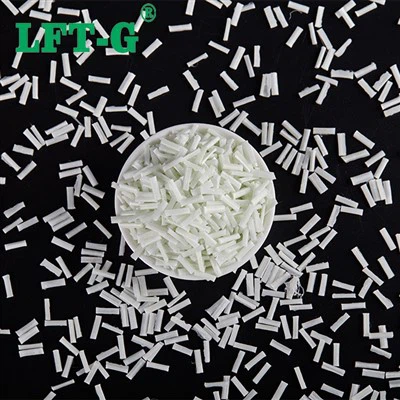
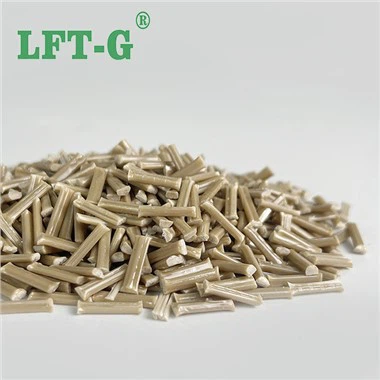
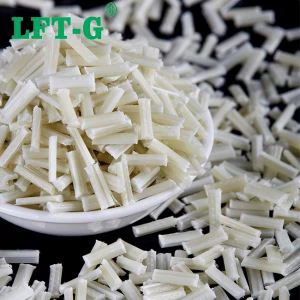
LCF PPS material structure
The mechanical logic enhanced by LCF PPS compound resin
The fundamental difference between long fibers and short fibers
The high-temperature and chemical stability foundation of the PPS matrix
The fiber lengths of traditional short glass fiber reinforced materials are usually within the range of 0.2–0.4 mm. Due to the limitations of injection molding's shear and dispersion methods, their stress transmission paths are relatively short. In contrast, the fiber lengths of long carbon fiber reinforced systems can remain at the millimeter level, forming a continuous load-bearing network in the products, resulting in significant differences:
Higher bending modulus and tensile strength
Better impact toughness
Longer fatigue life
Lower creep deformation rate
The PPS material itself has the following characteristics:
It can withstand temperatures above 200℃ during long-term use.
Its melting point is approximately 285℃.
It has inherent flame-retardant properties (achieving high flame-retardant levels without the need to add flame-retardants).
It has a low water absorption rate and splendid dimensional stability.
Furthermore, it has high tolerance to fuel, lubricating oil, solvents, and acidic and alkaline environments.
This structural network effect enables LCF PPS to possess a structural rigidity close to that of metals while maintaining the lightweight advantage of plastic materials.
When PPS is combined with long carbon fibers, the material forms a unique performance range in the high-temperature structural field, filling the gap between ordinary reinforced nylon and high-end specialty plastics.

Expansion of industry applications
The industry value of LCF PPS is not limited to a single sector but spans multiple high-tech industries.
New Energy Vehicles and Electric Drive Systems
The electric drive system is exposed to high temperatures, high vibrations, and electromagnetic environments for a long time, which imposes comprehensive requirements on the materials:
Electrical insulation stability
Long thermal aging life
Strong structural support capacity
Friendly to lightweight design
The LCF PPS plays a crucial role in components such as the motor housing structural support parts, the electronic control module frame, and the internal supports of the inverter. Compared to traditional aluminum structural components, it can achieve a weight reduction of 15–30%, while avoiding the risks of metal conductivity and electromagnetic interference.
Oil and gas as well as chemical equipment
In corrosive environments, metals are prone to oxidation and fatigue damage. LCF PPS composite, with its outstanding chemical corrosion resistance, can be used for pump body components, valve body assemblies, connection components, etc.
The joint components of industrial robots, high-temperature conveying systems, and corrosion-resistant mechanical structural parts need to balance strength and environmental resistance. The high rigidity and chemical resistance of LCF PPS plastic pellets enable them to gradually replace metal components in high-end industrial equipment.

Energy storage and high-power electronic devices
The energy storage module and power electronic system require the materials to maintain dimensional accuracy in a high-temperature cycling environment. The low CTE property of the PPS matrix performs exceptionally well under high-temperature thermal cycling, while the long carbon fibers enhance structural stability and reduce the risk of deformation.
Under the trend of modular design, materials not only play the role of support but also participate in functional integration and structural integration.
Material Comparison
What are the advantages of LCF PPS compared to other materials? Why would customers be willing to choose this material?
Compared with short glass fiber-reinforced PPS
The LCF PPS has a higher impact strength.
Better anti-fatigue performance
Longer-term load stability is stronger.
Compared with long glass fiber reinforced materials
The density of carbon fiber is lower.
Higher rigidity
Lower thermal expansion coefficient
Compared with PEEK
PEEK performs better in extremely high-temperature environments, but its cost is significantly higher. In the field of high-temperature structures up to 200 °C, LCF PPS is generally regarded as a more economically efficient solution.
The Practical Challenges of Processing
The advantages of LCF PPS can be fully realized through process control. The industry concerns include:
Fiber length retention rate
Excessive shear will cause fiber breakage and reduce mechanical properties.
Optimization of mold runner design
Reasonable gate and runner design helps to achieve better fiber orientation.
Warpage control and internal stress management
High-strength materials are sensitive to mold temperature control and molding parameters.
Interface bonding quality
The carbon fiber surface treatment technology determines the interface strength and long-term stability.
In the future, LCF PPS materials will no longer merely serve as replacements for individual parts. Instead, they will be integrated into the overall design of the modules, thereby reducing the need for fasteners and assembly processes. With the advancement of global carbon neutrality policies, the choice of materials will directly affect the carbon footprint of vehicles and equipment. Lightweight materials occupy an important position in life cycle assessment. LCF PPS can facilitate the development of multi-functional composite materials.