
Why Choose Long Fiber Nylon Pellets ?
What is long fiber PA material?
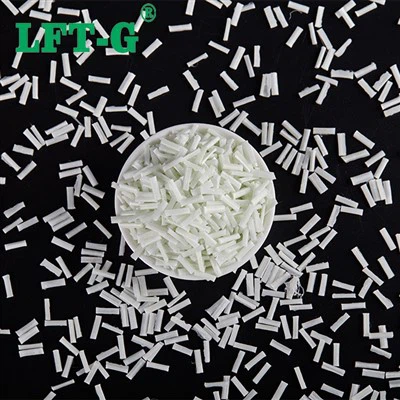
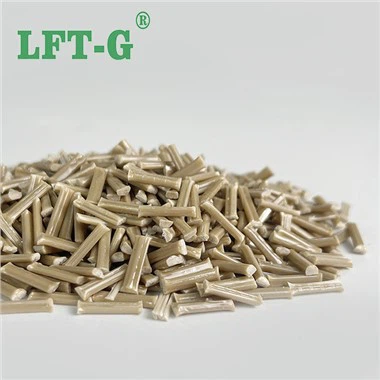
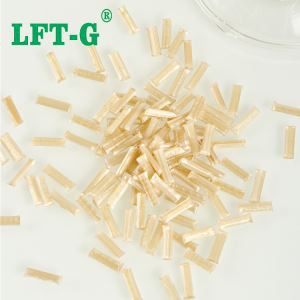
Long fiber nylon material is a kind of high-performance engineering plastic, which is made by uniformly dispersing long fibers (usually glass fibers, carbon fibers or aramid fibers) in a nylon matrix (such as PA6, PA66). Compared with short-fiber reinforced nylon, its fiber length is longer (usually retaining 3 to 12mm), thus having higher mechanical strength, impact resistance, fatigue resistance and dimensional stability.
The production of long-fiber nylon materials is not done in a single way. We adopt the impregnation process to produce long-fiber nylon materials, which is a key method to fully combine continuous fibers (such as glass fibers and carbon fibers) with molten nylon resin, ultimately forming high-performance long-fiber reinforced composite materials. This material performs outstandingly in engineering applications that require high strength, impact resistance and other high demands.

Why do more and more engineers choose to replace metals or ordinary plastics with long-fiber materials?

In summary, long-fiber nylon is reshaping material choices in multiple industries due to its high strength, lightweight, impact resistance and cost advantages. Whether it is automotive parts that pursue performance or consumer electronics that require durability, it can provide a balance that traditional materials find it difficult to achieve. In today's era of equal emphasis on lightweight and high performance, long-fiber nylon is undoubtedly a "super plastic" for the future.

When should long-fiber nylon be given priority?
Scenarios where weight reduction is required while maintaining strength (such as automotive structural components).
Dynamic loads or high-frequency impact environments (such as sports equipment).
When complex parts replace metals to reduce processing costs.
When is it not recommended to use long-fiber materials ?
Ultra-high temperature environment, exceeding the threshold that long-fiber materials can withstand.
Ultra-low cost demand (short-fiber nylon or ordinary plastic is more economical).